fetching data ... 
Background: Raynaud's phenomenon is a symptom complex characterized by episodes of pallor or cyanosis with tingling of the peripheral extremities, particularly the finger and toes that is caused by a vasospasm of small arteries and arterioles. This spasm is induced by sudden change of temperature or by stress. Raynaud's phenomenon affecting the oral cavity is a rare but known symptom in patients with connective tissue disease. There are only few reports about oral manifestations of Raynaud's phenomenon. To our knowledge this is the first report of this symptom in children.
Results: An adolescent girl, aged 11 years, presented herself 6 weeks after developing Raynaud's phenomenon on fingers, toes and her tongue at our consultation (image 1). This symptom appeared typically after sudden change of temperature or in stressful situations. She didn't describe pain, only a fizzy sensation on the tongue. After some minutes, the coloration went back to normal. Physical examination revealed a heliotrope rash on the face and arthritis of 10 joints. In the first place, blood exams were performed, suspecting connective tissue disease. These tests revealed high level of anti-nuclear-antibodies (ANA >5120 U/ml) and presence of anti-RNP 68 (>100U/ml) and anti-U1-RNP (>100U/ml) but no sign of inflammation. The capillaroscopy did not show any signs of desertification or megacapillaries. In the first place, Hydroxychloroquine was introduced as patient had only few complaints. As articular condition got worse, Prednisone and Methotrexate were introduced with resolution of the articular complaints and decreasing frequency of Raynaud's phenomenon.
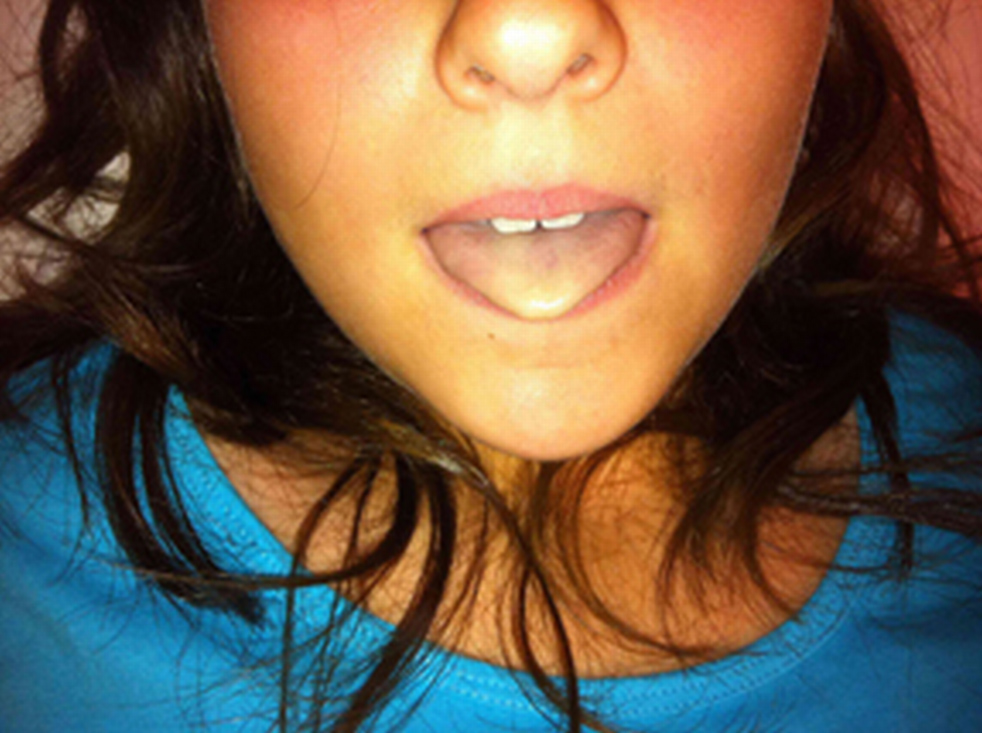
Conclusions: Primary Raynaud's phenomenon involves mainly distal extremities. Presentation of this symptom involving the tongue is highly suspect for a secondary Raynaud's phenomenon, in our case mixed connective tissue disease. Therefore, patients presenting with this manifestation need to be referred promptly to a (pediatric) rheumatologist.
Disclosure of Interest: None Declared