fetching data ... 
Background: Methotrexate remains the anchoring drug for the treatment of rheumatoid arthritis (RA). Patients with RA often have comorbidities e.g. diabetes or pulmonary disease. Although methotrexate has been used for decades, little is known about the impact of various comorbidities on treatment outcomes.
Objectives: To describe the prevalence of comorbidities in csDMARD naïve RA patients initiating treatment with methotrexate in routine care and to explore the impact of common comorbidities on methotrexate treatment outcomes (achieving remission and adherence to treatment).
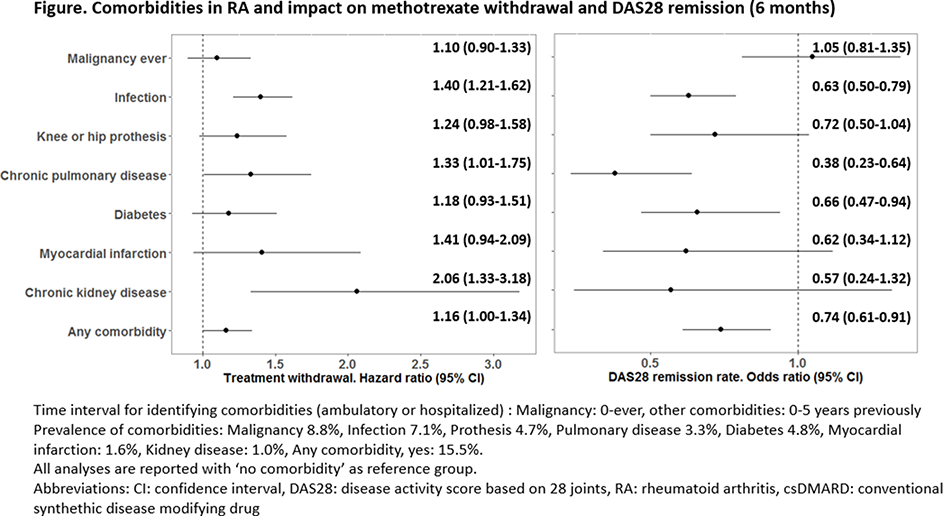
Methods: Observational cohort study based on the Danish nationwide quality registry, DANBIO. Adult RA patients who started treatment with methotrexate (oral or injection) as first csDMARD year 2010-2017 and who had been followed since onset of disease with regular controls were included. Concomitant treatment with other DMARDs were allowed. Treatment outcomes after ≈ 6 months of treatment were identified in DANBIO. Data were censored by April 2018. Seven different comorbidities (Figure) prior to start of methotrexate were identified in the national patient registry (NPR) through linkage by social security numbers.
Impact of each comorbidity was explored as 1) overall methotrexate treatment retention rate and 2) DAS28 remission rate (after 6 months’ treatment). Analyses were by Cox- and logistic-regression analyses (adjusted for gender and age). The comorbidities were included one by one in the models. Finally, similar analyses were performed summed for all the seven comorbidities as any comorbidity yes/no.
Results: 5828 patients were included (66% female, median age 61 (IQR 51-70) years), whereof 906 (15.5%) had ≥1 of the predefined comorbidities (63% female, median age 68 (60-74) years). Only 70 patients (1.4%) had ≥2 comorbidities.
Patients with comorbidities had increased withdrawal rate of methotrexate with hazard ratios ranging from 1.10-2.06 (Figure). Similarly, patients with comorbidities had poorer remission rate with odds ratios ranging from 0.38-0.74 except for previous cancer.
Conclusion: In this nationwide cohort of >5000 RA patients treated with methotrexate in routine care, approximately 15% of patients had comorbidities at treatment start. Patients with comorbidities had higher rate of withdrawal and poorer remission rates. This warrants specific attention when treating these patient groups in routine care.
Acknowledgement: Thank you for the Danish departments of Rheumatology for reporting to DANBIO
Disclosure of Interests: Bente Glintborg Grant/research support from: Biogen, Pfizer, AbbVie, Niels Steen Krogh: None declared, Frank Mehnert: None declared, Merete L. Hetland Grant/research support from: BMS, MSD, AbbVie, Roche, Novartis, Biogen, Pfizer, Consultant for: Eli Lilly, Speakers bureau: Orion Pharma, Biogen, Pfizer, CellTrion, Merck, Samsung Bioepis
DOI: 10.1136/annrheumdis-2019-eular.4023