fetching data ... 
Background: Human parvovirus B19(HPVB19) is a member of the large Parvoviridae family and, as a human pathogen, is responsible for various diseases. 1) In children, HPVB19 infections usually presents as red rash, which is often described as a“slapped cheek.” However, the presentation varies in adults. 2) HPVB19 outbreaks mostly occur in the winter and spring. 1) The serum IgM test is the preferred means for diagnosing acute HPVB19 infections. 2)
Objectives: We investigated the epidemiology, clinical symptoms, and time course of HPVB19 infections in real-world practice by examining patients treated at a community hospital in Japan.
Methods: We studied adult patients with HPVB19 infections at Suwa Central Hosptial from April 2010 to November2019. Patients who were age 18 years or older, anti HPV B19 IgM antibody-positive, and symptomatic were included. We retrospectively examined the patients’ medical records to determine onset days, clinical symptoms and antinuclear antibody(ANA)-postitive rates. We defiend day 1 as the day when clinical symptoms first appeared.
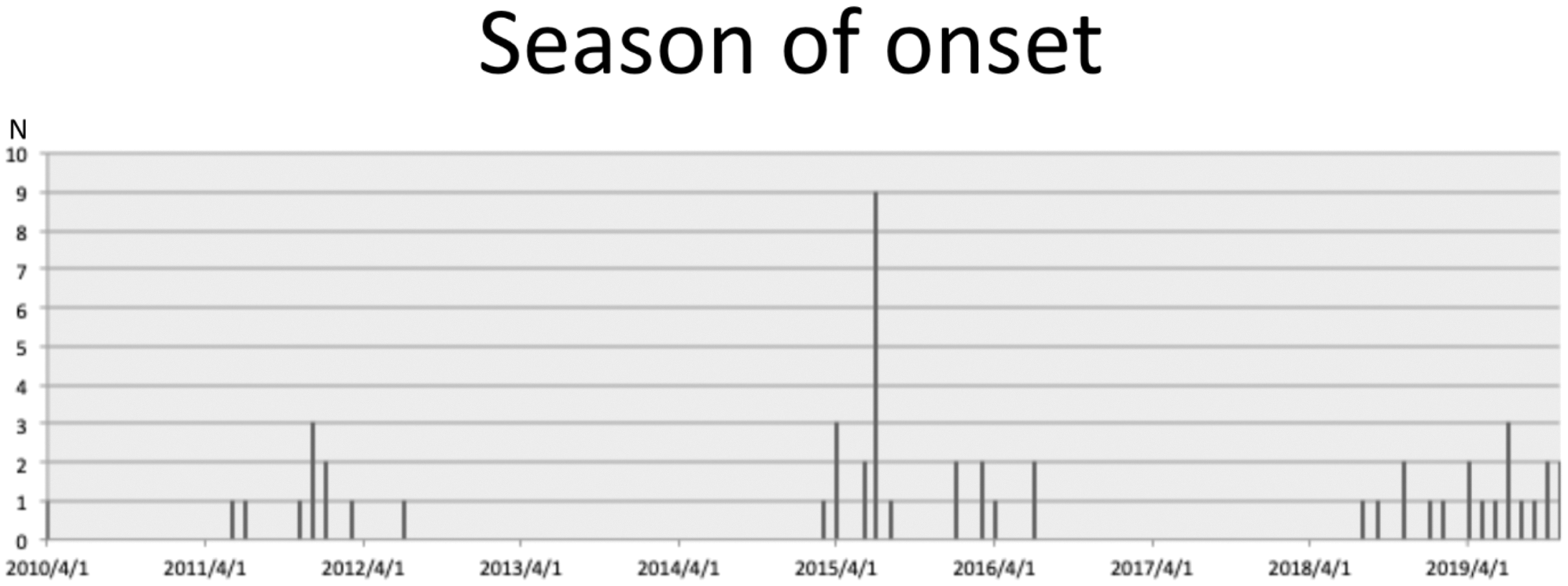
Results: 53 patients were included in the study. Patient characteritistics were mean age 43 years, female 79.2%, mean period from onset to diagnosis 13days. Epidemic season were 4year cycle. (
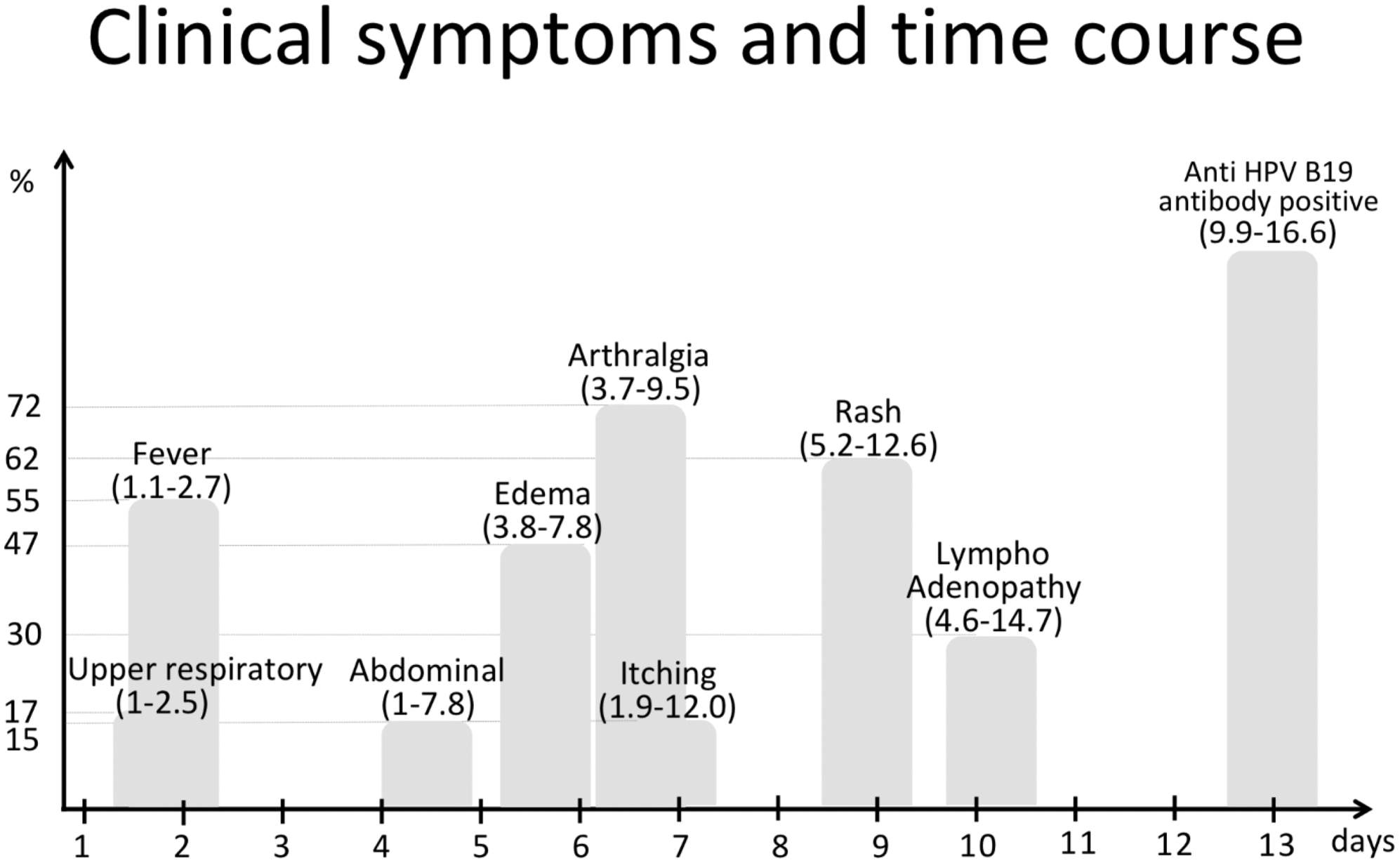
Conclusion: 53 adult patients infected HPVB19 in 10 years at community hospital in Japan. Epidemic season were 4year cycle and skin eruption and joint symptoms appeared 4-5 days after upper respiratory symptoms. Previous study show that a second-phase illness with rash and arthralgia appear 10-11 days after the appearance of upper respiratory sympotms. 3) In our study, a second-phase symptoms appeared about one week earlier than in previous study. Half of the patients were weakly ANA positive.
REFERENCES:
[1]Human Parvoviruses. Jianming Qie, Maria Soderlund-Venermo, Neal S. Young. Clinical Microbiology Reviews 2017; 30: 43-113
[2]Clinical Presentations of Parvovirus B19 Infection. Jessica T. LT COL, etc. American Family Physician 2007; 75: 373-6
[3]Experimental Parvoviral Infection in Humans. M J Anderson, etc. J Infect Dis 1985; 152: 257-65
Disclosure of Interests: None declared