fetching data ... 
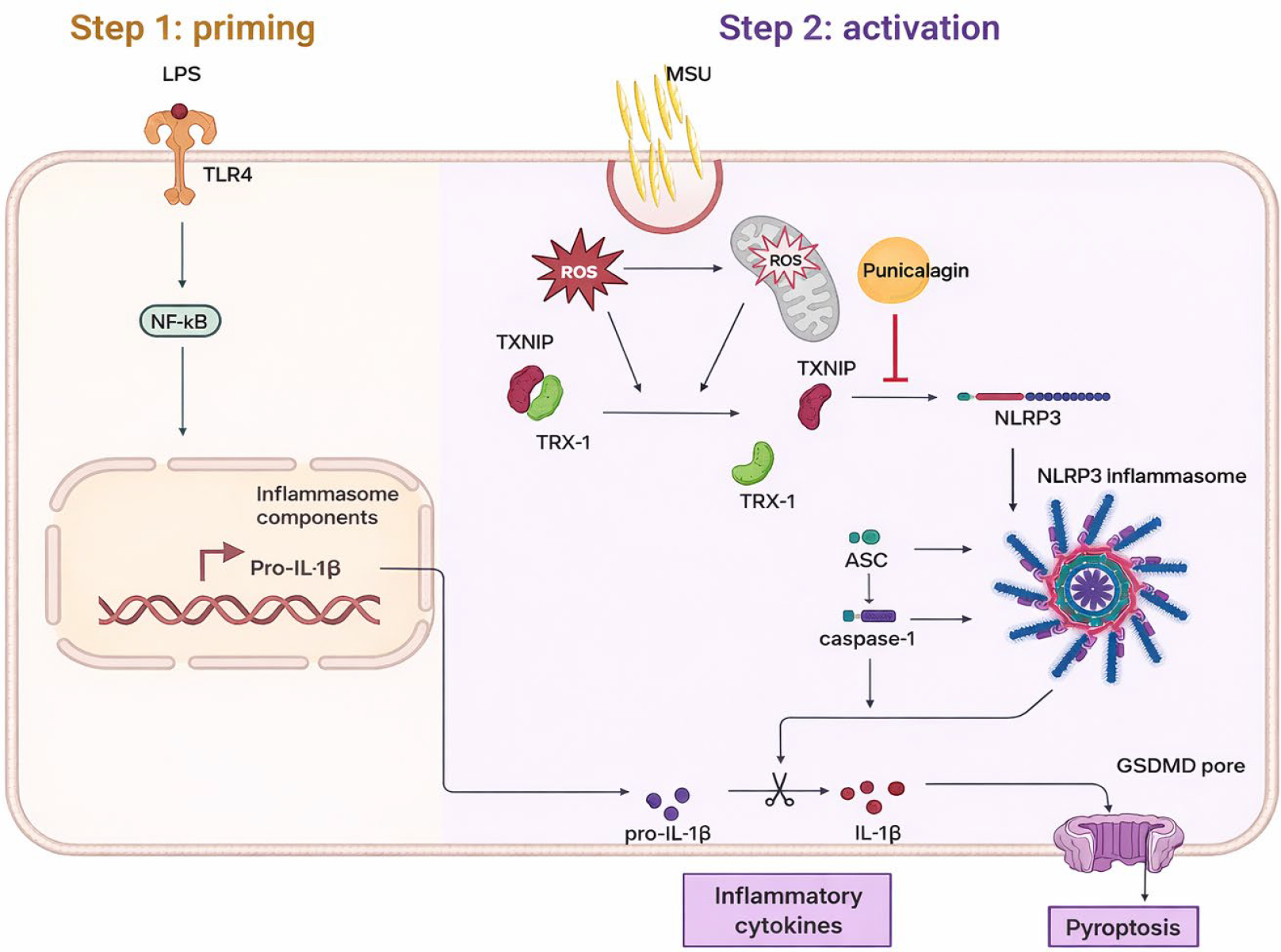
Background: Gout is an inflammatory arthritis caused by hyperuricemia, leading to monosodium urate (MSU) crystal deposition in joints and periarticular tissues. MSU crystals trigger acute inflammation primarily through activation of the NLRP3 inflammasome. This process is mediated by reactive oxygen species (ROS) generation, which promotes thioredoxin-interacting protein (TXNIP) binding to NLRP3, resulting in caspase-1 activation and release of pro-inflammatory cytokines such as interleukin-1β (IL-1β) and IL-18.
Objectives: This study aimed to evaluate whether punicalagin, a polyphenolic compound derived from pomegranate, can inhibit MSU-induced NLRP3 inflammasome activation by suppressing ROS-dependent TXNIP-NLRP3 interaction, and to assess its therapeutic potential in acute gout inflammation.
Methods: The effects of punicalagin on MSU-induced NLRP3 inflammasome activation were examined in vitro by assessing TXNIP-NLRP3 interaction and downstream cytokine production. An MSU-induced acute gout mouse model was used to evaluate the anti-inflammatory effects of punicalagin in vivo. Outcomes included footpad thickness, pro-inflammatory cytokine expression, histological assessment of inflammatory changes, and symptom scorings.
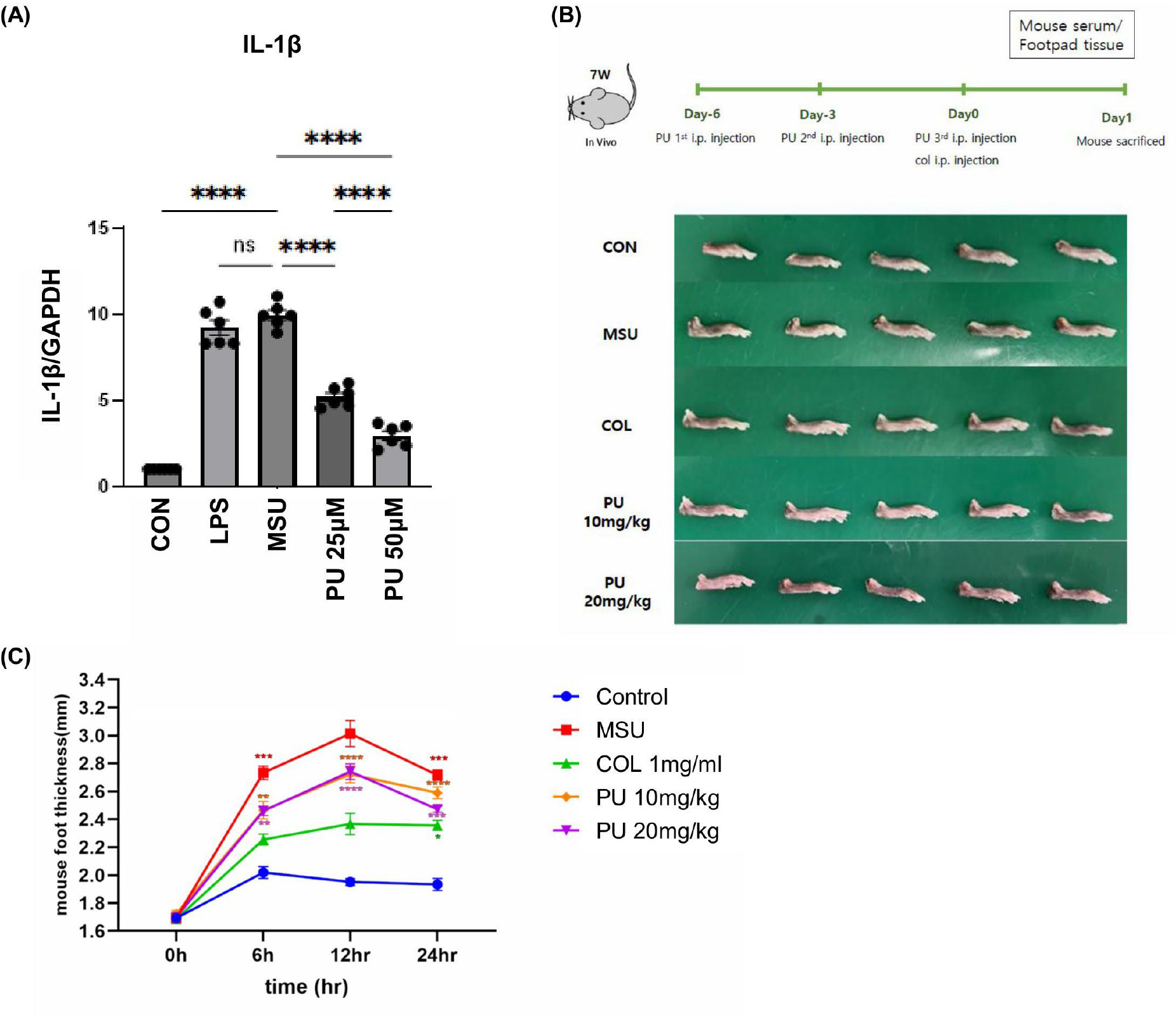
Results: Punicalagin significantly inhibited ROS-mediated TXNIP-NLRP3 binding and subsequent NLRP3 inflammasome activation in vitro. In the gout animal model, punicalagin treatment reduced MSU-induced footpad thickness and significantly decreased IL-1β and IL-18 levels compared with untreated MSU controls. These effects were comparable to those observed with standard anti-inflammatory treatment.
Conclusions: Punicalagin attenuates acute gout inflammation by suppressing TXNIP-dependent NLRP3 inflammasome activation and downstream pro-inflammatory cytokine release. These findings support the potential of punicalagin as a candidate therapeutic agent for acute gout.
(A) In-vitro suppression of MSU-induced IL-1β expression by punicalagin, (B) In-vivo experimental design and gross morphology of MSU-induced gout model with punicalagin treatment, and (C) effect of punicalagin treatment on MSU-induced footpad thickness over time.
Schematic illustration of punicalagin-mediated inhibition of the TXNIP-NLRP3 inflammasome pathway
REFERENCES: NIL.
Acknowledgments: NIL.
Disclosure of Interests: None declared.