fetching data ... 
Background: Anti-synthetase syndrome (ASS) is an autoimmune disease characterized by the presence of anti aminoacyl-tRNA synthetases (ARS) antibodies in the serum, frequently associated with recurrent and refractory interstitial lung disease (ASS-ILD). However, its pathogenesis remains poorly understood.
Objectives: Aiming to elucidate the disparate changes and intrinsic links between the peripheral circulation and the local lung immune landscape in ASS-ILD patients
Methods: We recruited patients with newly diagnosed ASS-ILD and performed single-cell RNA sequencing (scRNA-seq) on paired peripheral blood mononuclear cells (PBMC) and bronchoalveolar lavage fluid (BALF) samples. Additionally, Pro-DIA proteomics was conducted on paired plasma and BALF samples. In vitro experiments was performed to replenish the results of scRNA-seq and proteomics.
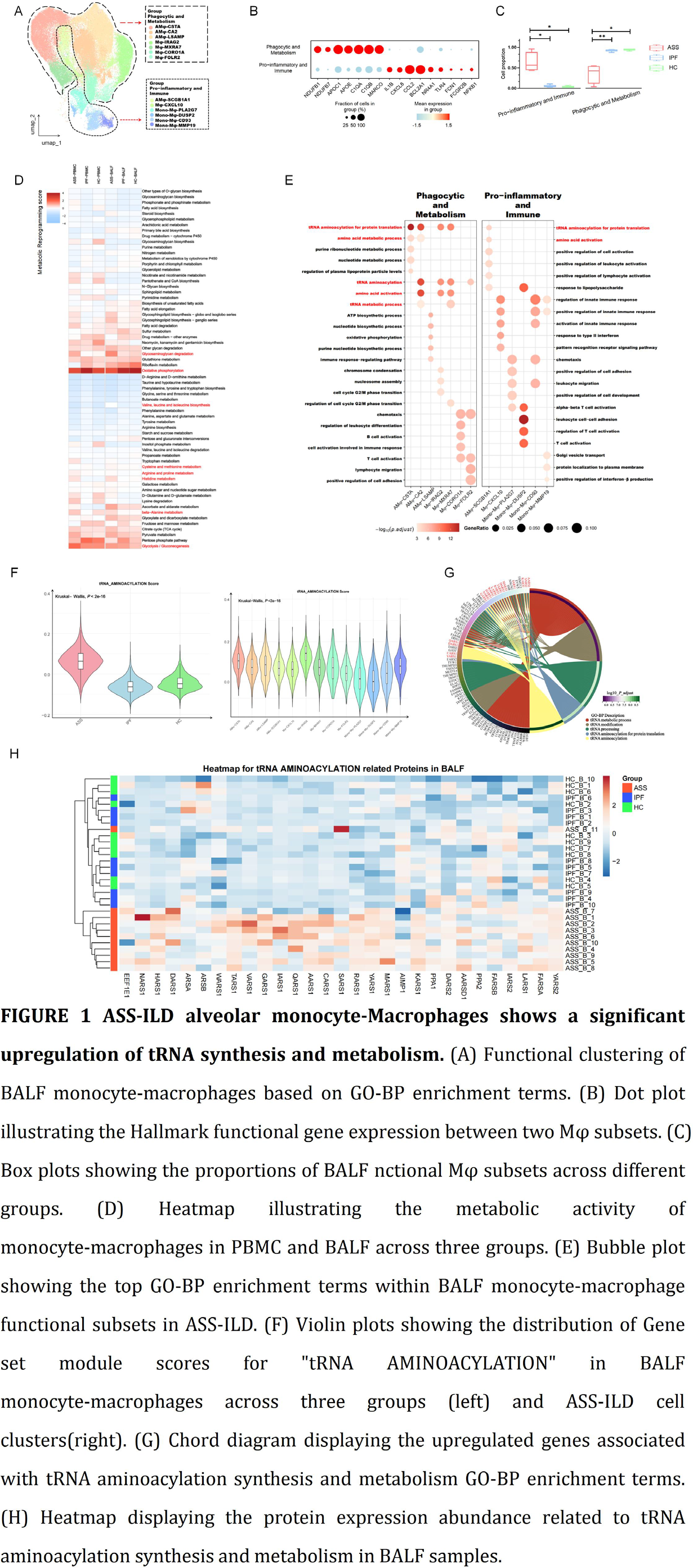
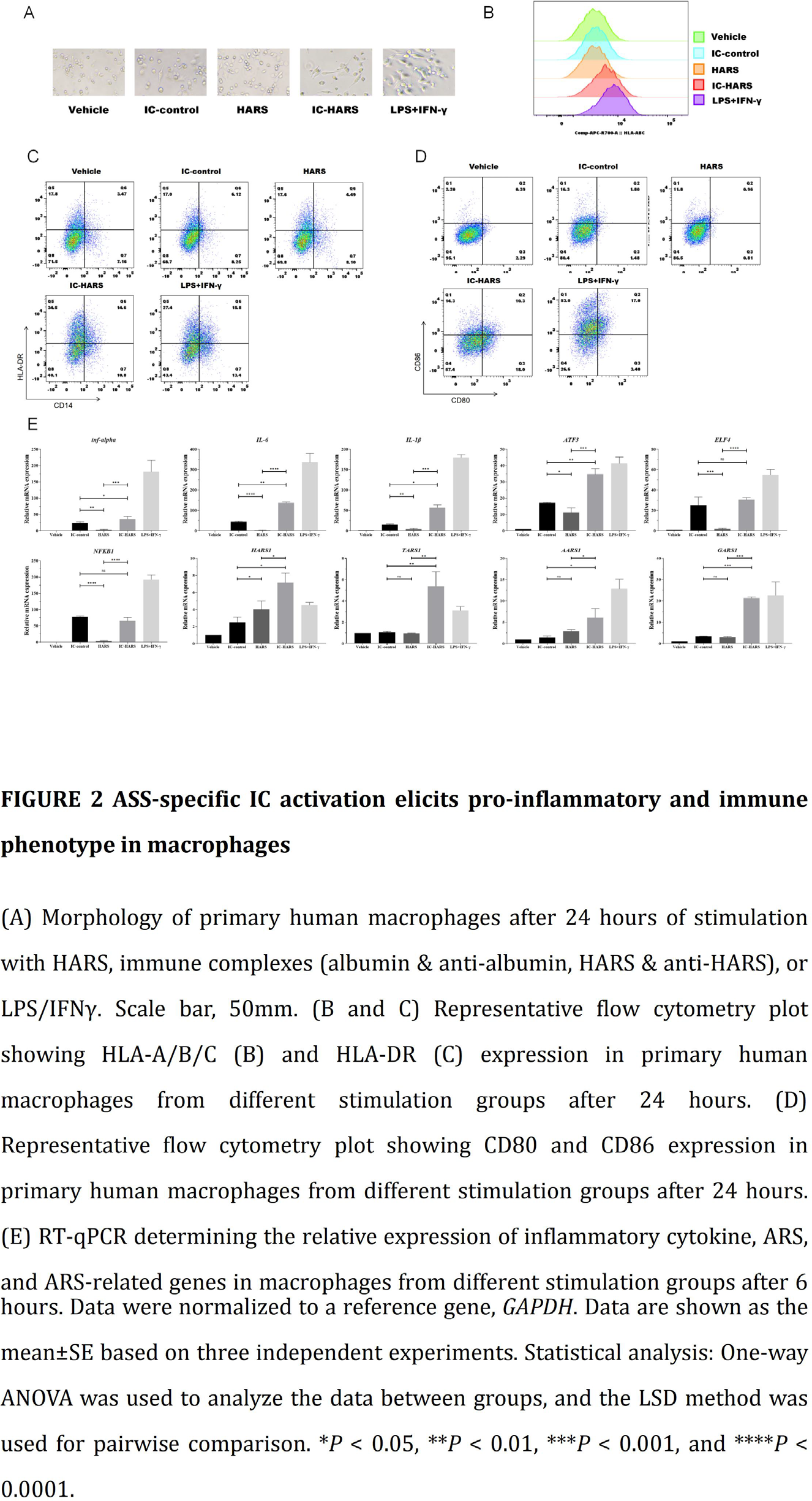
Results: The immune landscapes of the peripheral and alveolar micro-environments in ASS-ILD patients exhibited distinct characteristics. The alveolus displayed a stronger pro-inflammatory phenotype and autoimmune responses. Different BALF monocyte-macrophage (Mφ) subsets, derived from peripheral MDSC-like cells and stimulated by ARS immune complex(IC), contributed to pulmonary autoimmunity and inflammation through high expression of autoantigens (ARS), metabolic reprogramming, active cellular communication with neutrophils and CD8+ T cells, antigen presentation, and upregulated apoptosis.
Conclusions: Our findings provide novel insights into the pathogenesis of ASS-ILD, and the pathogenicity of ARS antigen-antibody IC. These results highlight the critical role of disease-specific monocyte-Mφ activation in the immunopathogenesis and pave the way for developing targeted therapies focusing on IC and aberrant monocyte-Mφ dynamics.
REFERENCES: NIL.
Acknowledgments: NIL.
Disclosure of Interests: None declared.