fetching data ... 
Background: Dysregulated macrophage activation is a cornerstone of rheumatoid arthritis (RA) pathogenesis. We previously identified LncRNA ANKRD33B-2 as a novel regulator of macrophage pyroptosis in vitro. However, its functional role in RA pathophysiology in vivo and its therapeutic potential remain unexplored.
Objectives: To investigate the in vivo role of Lnc-ANKRD33B-2 in the synovial inflammation and joint destruction of RA, and to evaluate the efficacy of its targeted inhibition as a potential therapeutic strategy.
Methods: A collagen-induced arthritis (CIA) model was established in rats. An adenovirus vector delivering shRNA against Lnc-ANKRD33B-2 (2.5×10 10 viral genomes per rat) was administered via intra-articular injection to achieve local knockdown. Therapeutic effects were assessed by: arthritis clinical scoring; histological evaluation (H&E staining) of synovial hyperplasia, inflammatory infiltration, and pannus formation; and quantification of pro-inflammatory cytokine mRNA levels in joint tissues via qPCR.
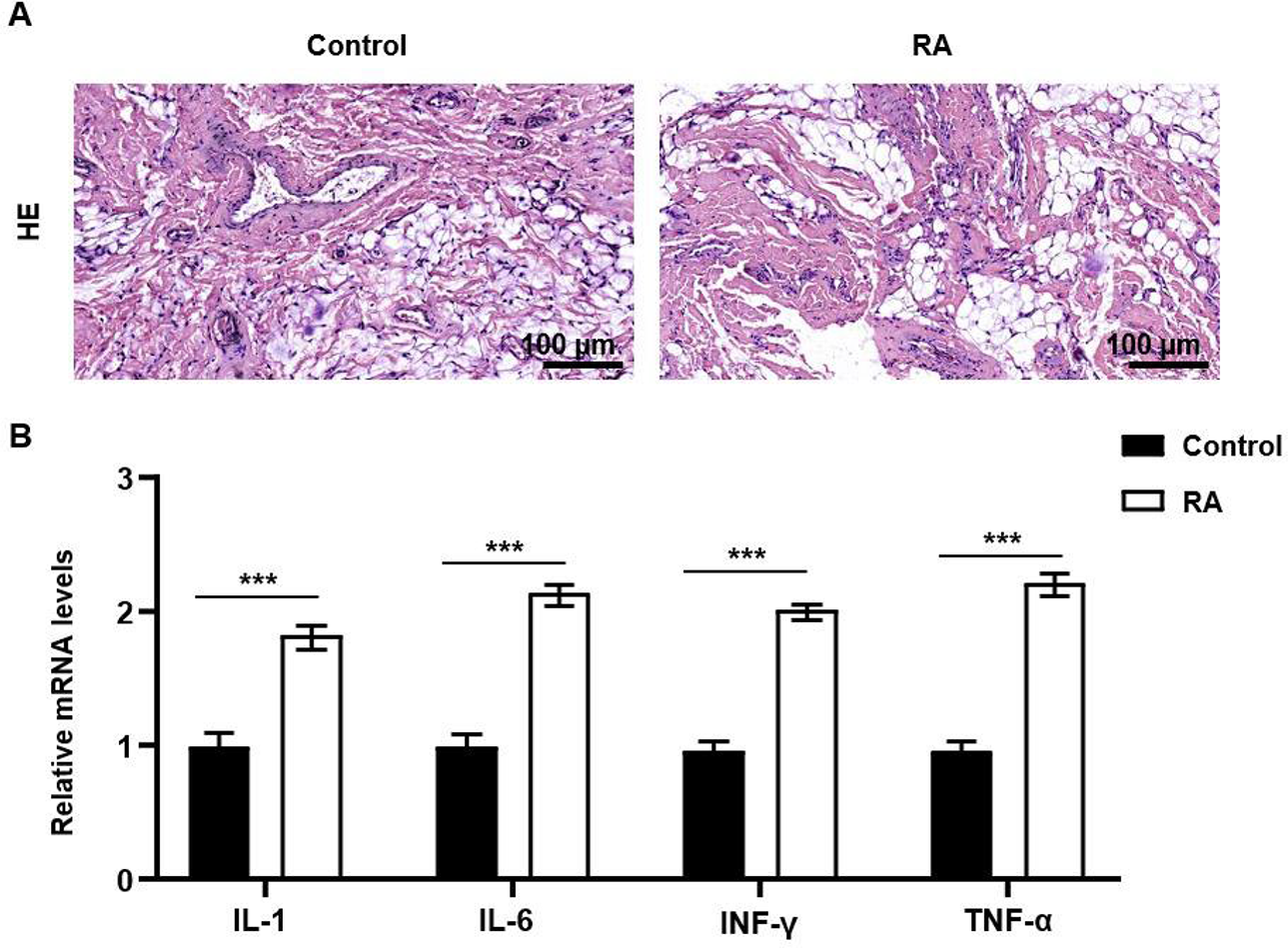
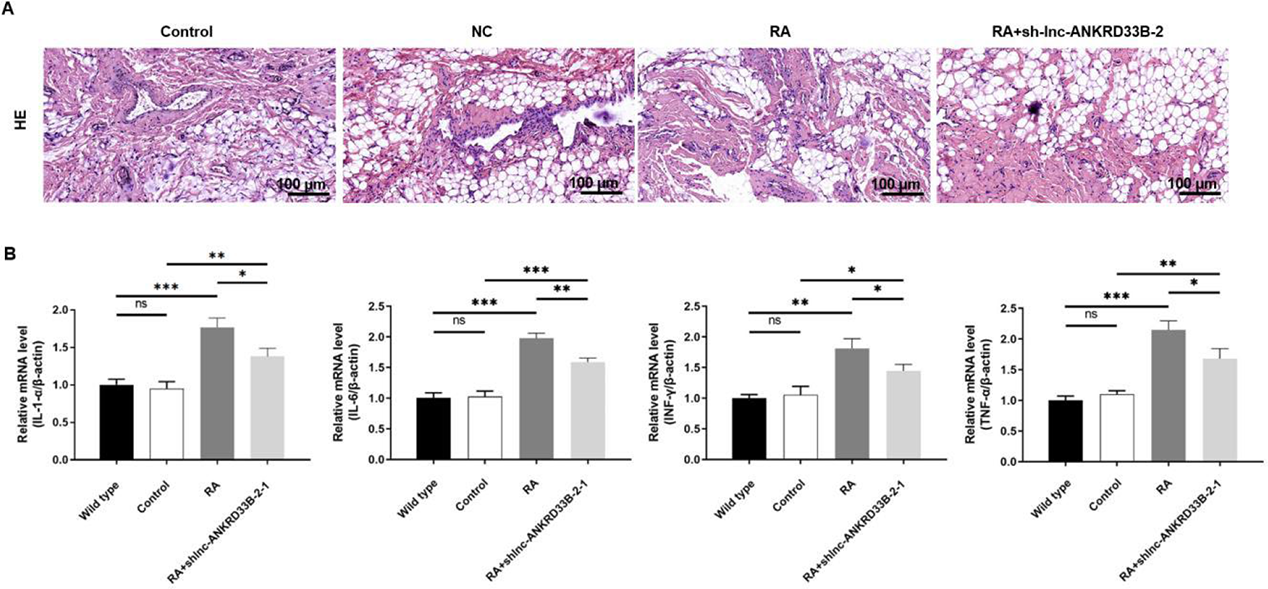
Results: Compared to the CIA model group (clinical score: 7.67 ± 1.25), targeted knockdown of Lnc-ANKRD33B-2 for four weeks significantly ameliorated disease severity, reducing the joint swelling index by approximately 50% (P < 0.001). Histopathological analysis demonstrated markedly attenuated synovial hyperplasia, minimal inflammatory cell infiltration, and suppressed pannus formation. Concordantly, the mRNA expression of IL-1β, IL-6, TNF-α, and IFN-γ in joint tissues was significantly downregulated (P < 0.05).
Conclusions: This study provides the first in vivo evidence that Lnc-ANKRD33B-2 is a key driver of synovitis and joint destruction in RA. Targeted inhibition of this lncRNA represents a promising novel therapeutic strategy for RA by effectively alleviating clinical symptoms and suppressing local inflammatory responses.
Pathological changes in the joints of CIA model rats.
Effect of Lnc-ANKRD33B-2-interfering adenovirus on the histopathological changes of synovial and cartilage tissues in rat joints.
REFERENCES: NIL.
Acknowledgments: NIL.
Disclosure of Interests: None declared.