fetching data ... 
Background: Successful pregnancy establishment relies on the intricate regulation of the maternal-fetal interface to sustain a immune-tolerant microenvironment that promotes fetal growth. Systemic lupus erythematosus (SLE) is associated with an elevated risk of adverse pregnancy outcomes (APOs), but the in situ molecular and cellular dysfunction at the SLE maternal-fetal interface in early pregnancy remain poorly understood.
Objectives: To study the mechanism of SLE early pregnacy loss at the maternal-fetal interface.
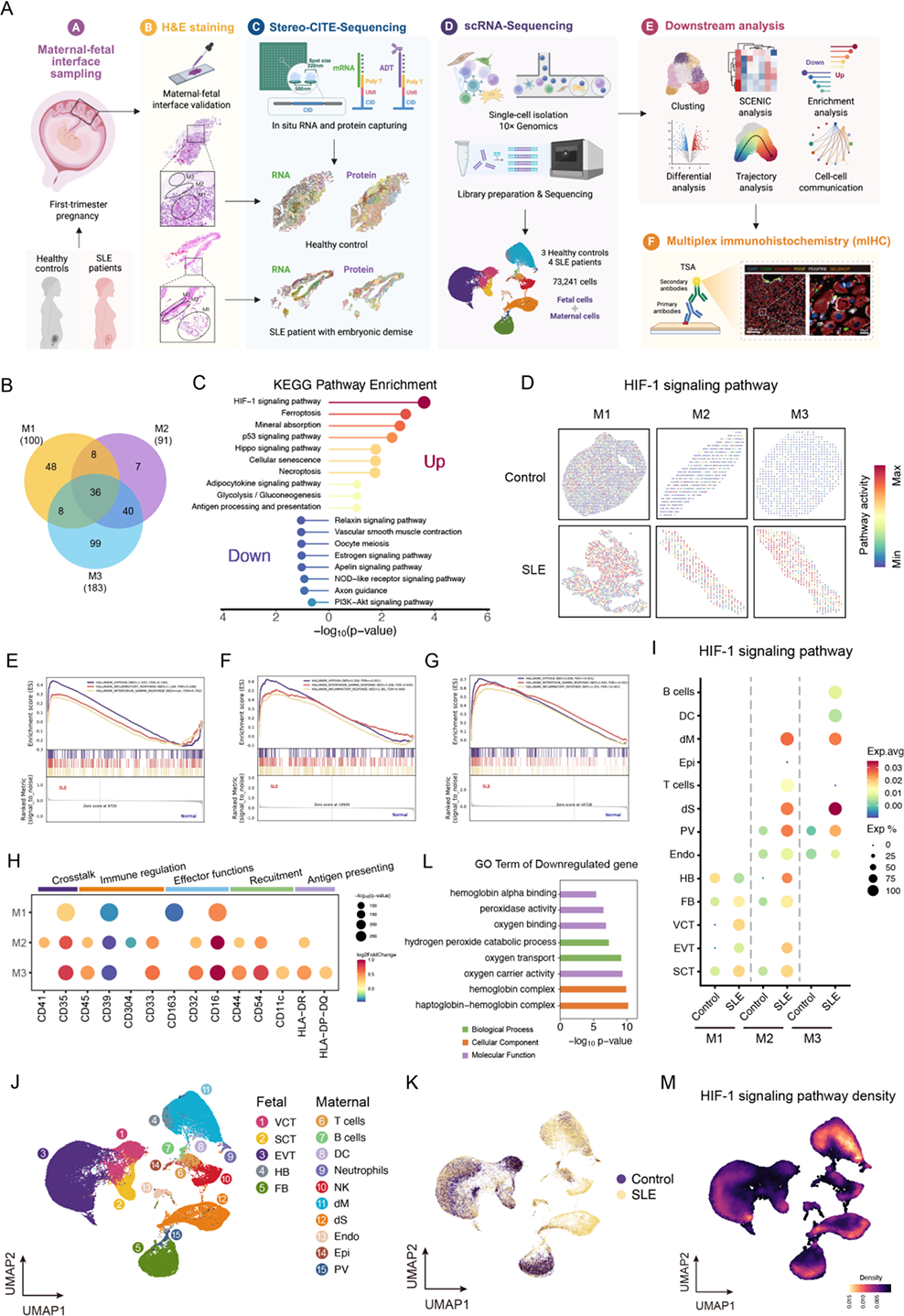
Methods: We used integrating single-cell RNA sequencing (scRNA-seq), spatial transcriptomics and proteomics sequencing (Stereo-CITE-seq), and multiplex immunohistochemistry (mIHC) to explore the pathogenisis of SLE early pregnancy loss.
Results: We identified a pervasive pathological hypoxic microenvironment in first-trimester of SLE pregnancy, charactering by aberrant HIF-1 signaling activation at maternal-fetal interface, especially in the decidual macrophage (dM) and decidual stromal cell (dS) compartment. Hypoxia-mediated reprogramming drives a phenotypic switch in one hypoxia-sensitive dM subset towards a pro-inflammatory state while simultaneously triggering intrinsic inflammatory and Epithelial-Mesenchymal Transition (EMT) programs within dS. This stromal pathology is further amplified by paracrine Platelet-Derived Growth Factor (PDGF) and Vascular Cell Adhesion Molecule (VCAM) signaling from the pro-inflammatory dM subset. The dysfunction of dM and dS found in our study dismantles decidual homeostasis, thus laying a maladaptive foundation for subsequent pregnancy failure in SLE patients.
Conclusions: Collectively, our multi-omics characterization of the SLE maternal-fetal interface uncovers a hypoxia-mediated reprogramming roadmap for cellular dysfunction, offering a foundation for advanced mechanistic exploration as well as bridging the gap between integrated omics profiling and personalized clinical management for high-risk pregnancies in SLE patients.
REFERENCES: NIL.
Acknowledgments: NIL.
Disclosure of Interests: None declared.