fetching data ... 
Background: Abnormal differentiation of Th17 cells plays an important role in the pathogenic mechanism of systemic lupus erythematosus (SLE), especially in the process of kidney damage.
Objectives: RNA binding proteins (RBPs) regulate T cell fate, but the role of BTG1 in Th17 polarization is still unclear.
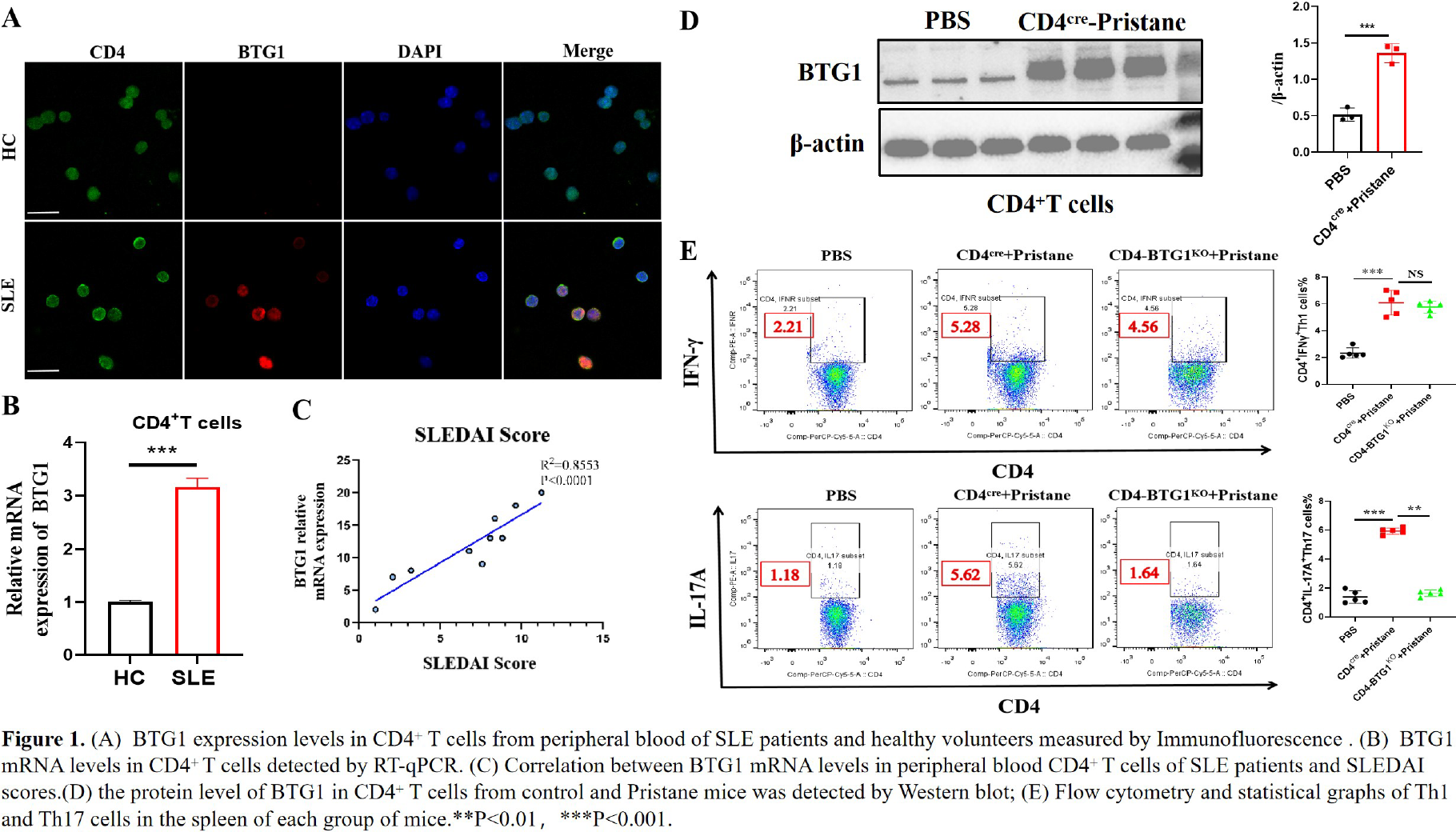
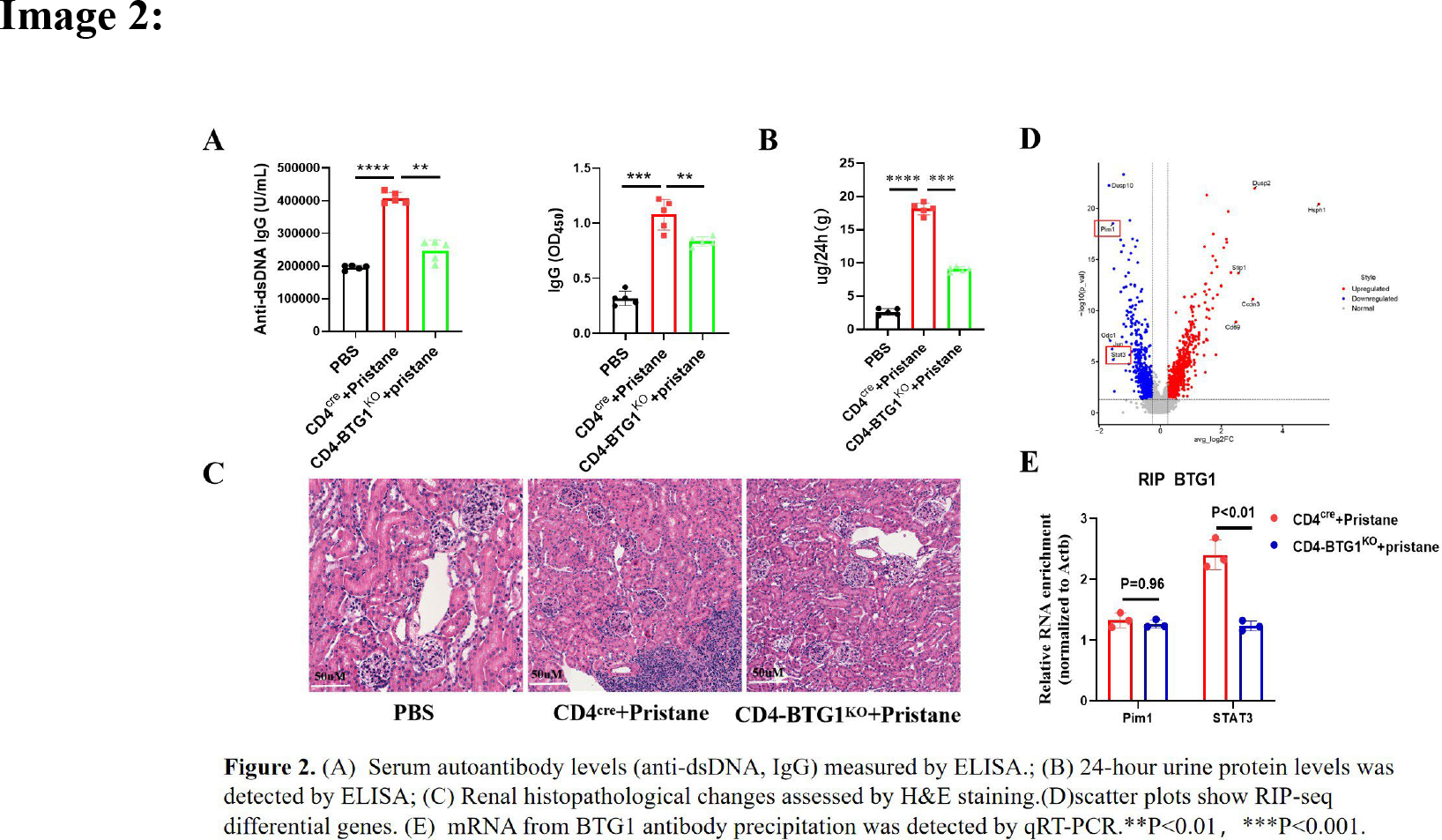
Methods: Analyze the expression of BTG1 in peripheral blood CD4 + T cells of SLE patients. Using the classic lupus mouse model induced by pristane, the mice were divided into: control group, pristane group, and BTG1 knockout + pristane group (constructing CD4 + T cell-specific BTG1 knockout mice and inducing lupus model), observing the expression of BTG1 in CD4 + T cells of each group, flow cytometry was used to detect the frequency changes of each cell subpopulation of CD4 + T cells in each group, enzyme-linked immunosorbent method was used to detect the secretion levels of autoantibodies dsDNA and IgG in serum, as well as 24-hour urine protein levels, and HE and PAS staining were used to detect renal pathological damage. RNA immunoprecipitation (RIP-seq) was used to identify and validate the downstream key site genes bound by BTG1.
Results: Compared with healthy volunteers, the expression of BTG1 in CD4 + T cells of SLE patients is significantly increased and positively correlated with disease activity. Compared to the control group, the expression of BTG1 in CD4 + T cells of the Pristane group is elevated, while compared to the Pristane group, the frequency of Th17 cells in the BTG1 knockout+Pristane group decreases significantly, with no significant changes in other subpopulations (Figure 1 ). The levels of dsDNA and IgG secretion decrease, and the 24-hour urinary protein level significantly decreases, with improvement in renal structural pathological damage. The RIP-seq sequencing results suggest that the downregulation of STAT3 and Pim1 mRNA is most pronounced in the BTG1 knockout + Pristane group, and qRT-PCR validation found that STAT3 binding is impaired in the BTG1 knockout+Pristane group, while there is no significant difference in Pim1 (Figure 2 ).
Conclusions: BTG1 promotes the pathogenicity of SLE by stabilizing STAT3 transcription to enhance Th17 differentiation, thereby exacerbating renal inflammation. Targeting BTG1 may provide a new therapeutic strategy for Lupus Nephritis.
REFERENCES: NIL.
Acknowledgments: NIL.
Disclosure of Interests: None declared.