fetching data ... 
Background: Targeting B-cell depletion is an effective treatment strategy for lupus nephritis. However, it often fails to improve renal function in patients with established kidney fibrosis, a key driver of progressive renal deterioration and eventual loss of function. Fibroblast activation leads to excessive extracellular matrix production, with fibroblast activation protein (FAP) serving as a cell-surface marker of this process.
Objectives: Using a humanized BAFF mouse model, we evaluated the therapeutic effects of belimumab monotherapy versus its combination with a FAP inhibitor (Ac-Gly-BoroPro) on immunological and renal outcomes.
Methods: First, the effective dose of the FAP inhibitor was determined in MRL/lpr mice by testing 0.25, 0.5, and 1 mg/kg/day for biological activity and preliminary efficacy. Subsequently, humanized BAFF mice were used to compare two treatment regimens: (1) belimumab monotherapy and (2) combination therapy with belimumab and the selected dose of the FAP inhibitor.
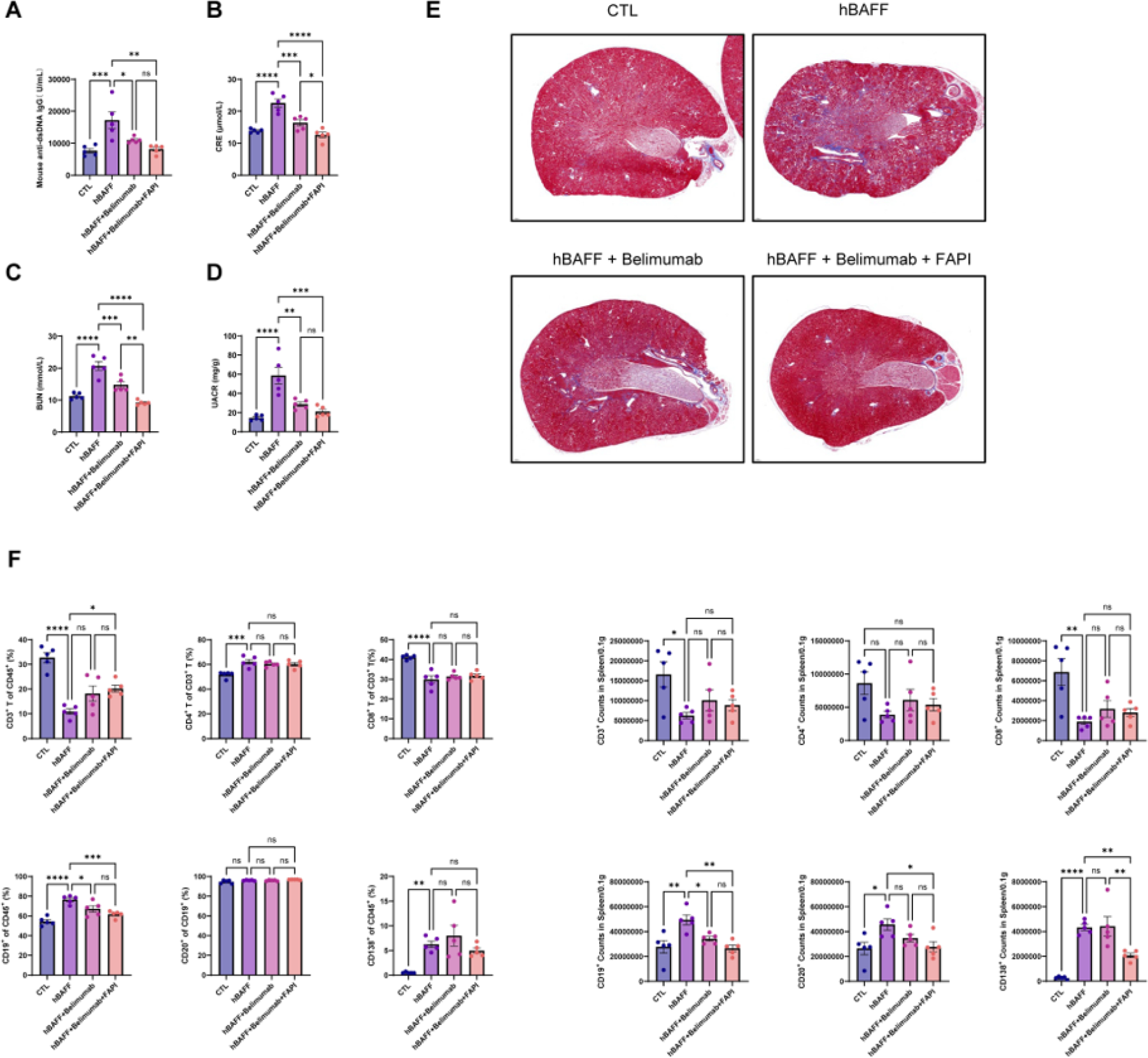
Results: In MRL/lpr mice, the FAP inhibitor at 0.5 mg/kg/day showed the most significant efficacy in improving renal function, as indicated by reductions in serum creatinine, blood urea nitrogen (BUN), urinary albumin-to-creatinine ratio (UACR), and the degree of renal fibrosis. In BAFF humanized mice, the combination of belimumab and the FAP inhibitor (0.5 mg/kg) provided significantly greater renal protection than belimumab alone, leading to more pronounced improvements in serum creatinine, BUN, and UACR, along with marked alleviation of renal fibrosis. Moreover, the combination treatment induced a significantly stronger depletion of both B cells and plasma cells.
Conclusions: This study supports the concept that a combined strategy targeting both B-cell depletion and renal protection represents a promising therapeutic approach for lupus nephritis.
REFERENCES: NIL.
Acknowledgments: NIL.
Disclosure of Interests: None declared.