fetching data ... 
Background: Systemic sclerosis (SSc) is a multisystem autoimmune disease characterized by vasculopathy and progressive fibrosis of the skin and internal organs. Growing evidence suggests that disruption of intestinal homeostasis (dysbiosis) is a prevalent comorbidity in SSc, which may contribute to immune dysregulation and potentially exacerbate fibrotic processes. The modulation of the gut microbiota via probiotics represents a promising therapeutic strategy targeting the gut-skin axis.
Objectives: This study aims to investigate whether oral administration of a triple-combination probiotic ( Lactobacillus acidophilus + Bifidobacterium longum 6-1 + Enterococcus faecalis ) can ameliorate skin fibrosis in a preclinical model of SSc, by evaluating its effects on clinical manifestations, histological architecture, and molecular markers of inflammation and immune dysregulation.
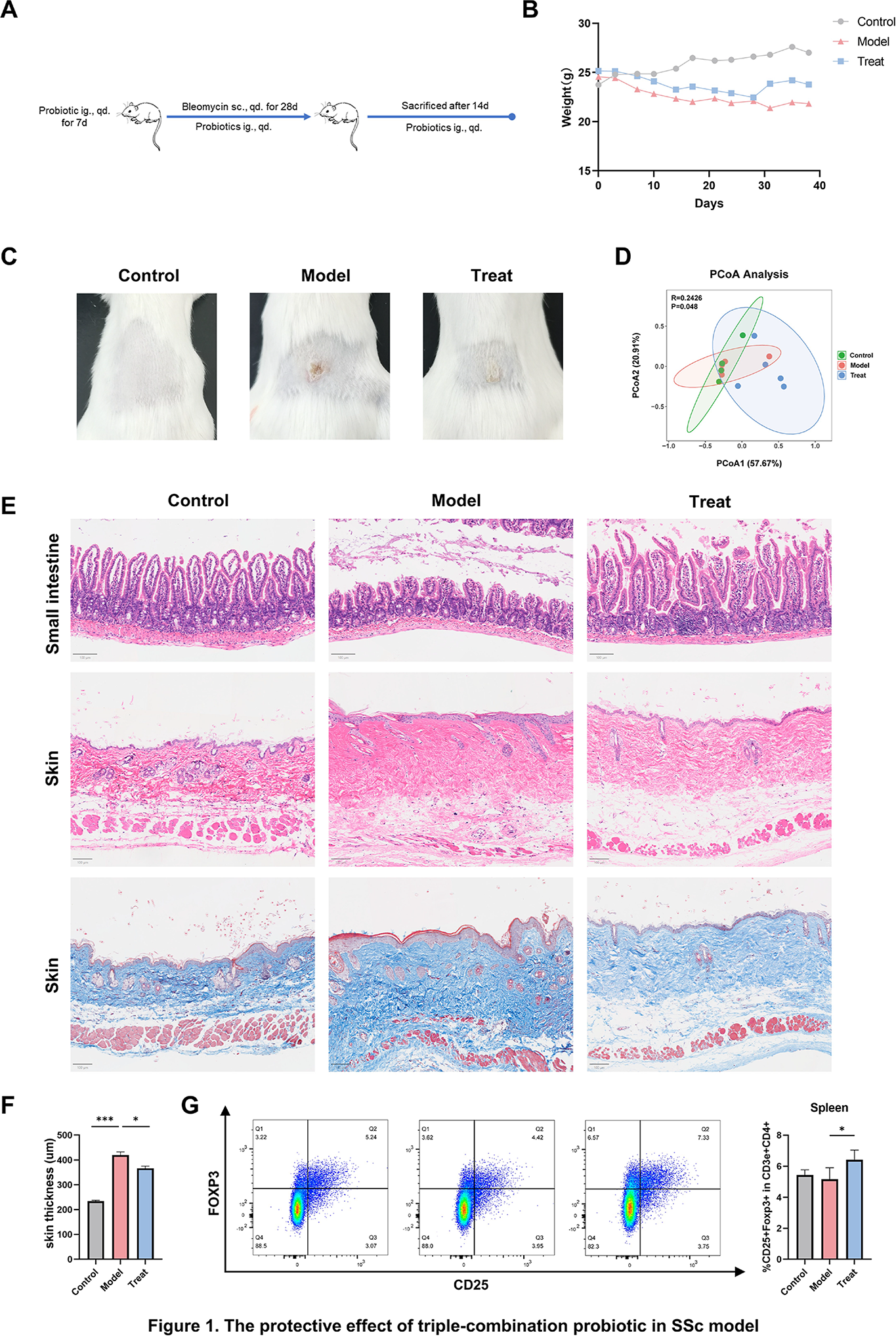
Methods: Mice were randomly allocated into three groups (n=5 per group): (1) control (saline), (2) model, and (3) probiotic intervention. Mice in the probiotic group received a daily oral gavage of the triple-combination probiotic (200 µL, containing 10 8 CFU of each strain) starting 7 days prior to and continuing throughout the model induction period. Fibrosis was induced in both the model group and the probiotic-treated group via daily subcutaneous injections of bleomycin (100 µL, 1 mg/mL) for 28 days. All groups then underwent a 14-day observation period, with the probiotic group maintaining treatment. At the endpoint, skin, small intestine, spleen, and fecal samples were collected for histopathological analysis, RT-qPCR analysis, flow cytometry and 16S rRNA gene sequencing (Figure 1A).
Results: As shown in Figure 1B, body weight changes were monitored throughout the study. At the endpoint, the model group exhibited a significant weight loss compared to the control group (P=0.005). The probiotic-treated group showed an intermediate weight, with no statistically significant difference. Gross observation indicated that probiotic intervention markedly mitigated bleomycin-induced skin hardening and surface lesions (Figure 1C). PCoA analysis revealed a significant alteration in gut microbiota structure following probiotic treatment (ANOSIM, P=0.048) (Figure 1D). Histologically, probiotic administration ameliorated bleomycin-induced villus shortening in the small intestine (H&E). In the skin, H&E and Masson’s trichrome staining demonstrated that probiotic treatment significantly reduced dermal collagen deposition and improved atrophy of the subcutaneous adipose and muscle layers (Figure 1E-F). Furthermore, it downregulated the expression of pro-inflammatory cytokines IL-6 and IL-17 in skin tissue (data not shown). Flow cytometric analysis of splenocytes indicated an increased proportion of Treg cells in the treatment group (Figure 1G), suggesting a systemic immunomodulatory effect.
Conclusions: This study provides preclinical evidence that targeting gut dysbiosis with a defined probiotic combination mitigates skin fibrosis. Therefore, targeting the gut-skin axis through oral probiotic supplementation emerges as a promising translational strategy, making it a viable adjunct to standard therapy for SSc.
REFERENCES: NIL.
Acknowledgments: NIL.
Disclosure of Interests: None declared.