fetching data ... 
Background: Systemic sclerosis (SSc) is a chronic autoimmune disorder characterized by progressive fibrosis of the skin and internal organs. This process is primarily driven by the activation of fibroblasts into myofibroblasts and the excessive buildup of extracellular matrix components. Although important advances have been made in understanding fibrosis, available treatments remain limited, highlighting the need for improved molecular characterization of the disease.
Objectives: This study aimed to define the metabolic and transcriptional programs underlying fibroblast activation in systemic sclerosis and to determine how the antifibrotic drug nintedanib modulates these pathways under profibrotic stimulation.
Methods: Primary dermal fibroblasts from individuals with SSc and healthy donors were cultured and exposed to profibrotic stimulation with TGF-β or treated with the antifibrotic agent nintedanib. Comprehensive, unbiased metabolomic profiling and RNA sequencing were used to assess both baseline molecular differences and treatment-induced changes.
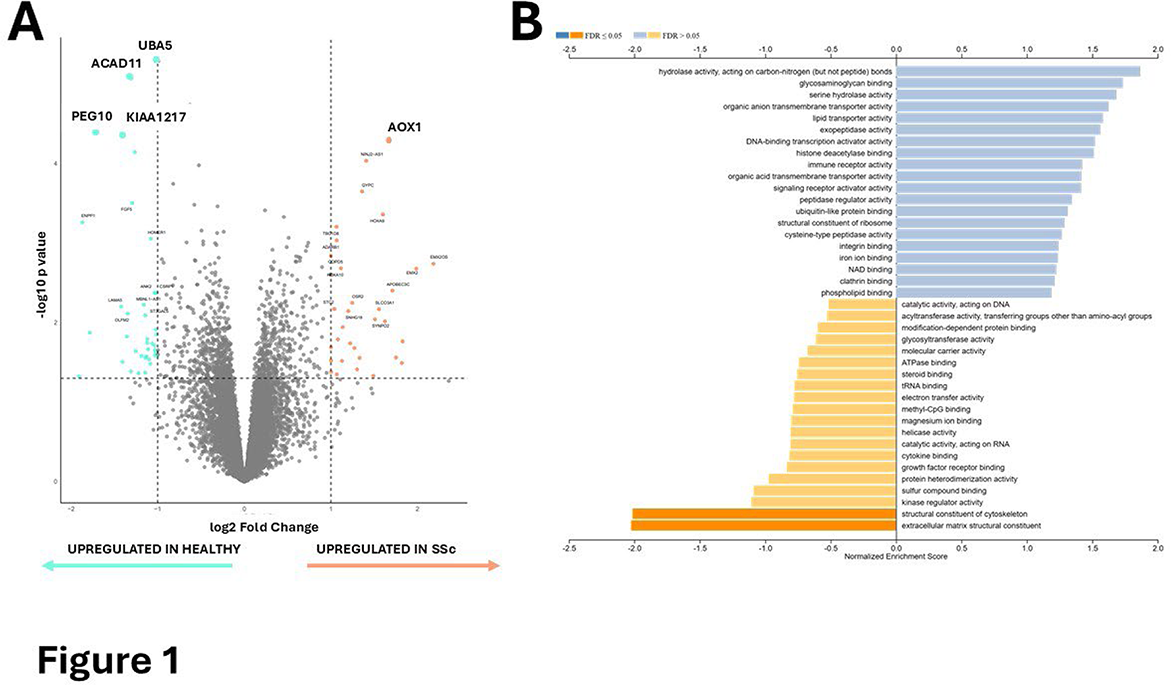
Results: At baseline, metabolomic analysis showed only minor differences between SSc and control fibroblasts, with two metabolites—3-(3-hydroxyphenyl)-3-hydroxypropanoic acid and LysoPE (P-16:0/0:0)—distinguishing the groups. In contrast, transcriptomic analysis identified 951 genes with altered expression, including prominent candidates such as UBA5, ACAD11, PEG10, KIAA1217, and AOX1 , which are involved in metabolic regulation, cytoskeletal organization, and fibrotic activity (Figure 1A). Enrichment analysis further revealed disruptions in pathways related to the cytoskeleton and extracellular matrix (Figure 1B).
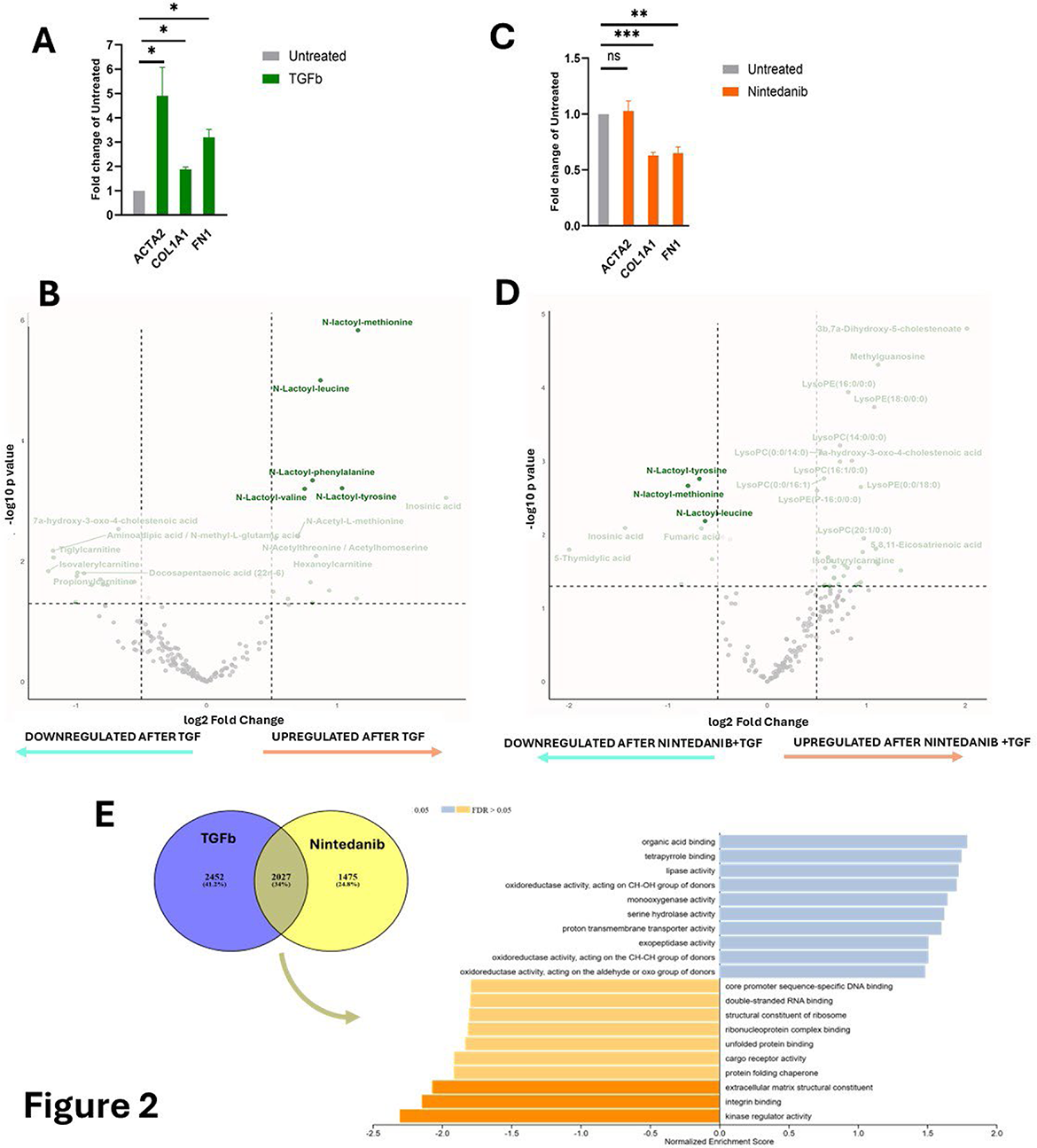
Exposure to TGF-β strongly promoted fibrotic gene expression (Figure 2A) and produced a clear metabolic shift, particularly the accumulation of five N-lactoyl–amino acids (Figure 2B). These compounds, generated from lactate–amino acid conjugation, indicate increased glycolytic activity and altered energy metabolism during fibroblast activation. Pretreatment with nintedanib significantly suppressed both fibrosis-associated gene expression (Figure 2C) and the buildup of N-lactoyl–amino acids (Figure 2D), restoring 34% of TGF-β-regulated genes toward baseline levels (Figure 2E).
These molecular changes were accompanied by altered expression of genes involved in lactate handling, including CNDP2, MCT1, MCT2, and MCT4 , supporting a metabolic transition from oxidative phosphorylation to glycolysis as a defining feature of TGF-β–driven fibrosis.
Conclusions: Integrated metabolomic and transcriptomic analyses reveal that SSc skin fibroblasts display marked transcriptional alterations and distinct metabolic reprogramming under profibrotic conditions, including elevated N-lactoyl–amino acid production and increased expression of lactate-associated genes. These fibrotic signatures are partially reversed by nintedanib, underscoring its role in modulating both metabolic and fibrotic pathways.
REFERENCES: NIL.
Acknowledgments: NIL.
Disclosure of Interests: Amin Ravaei: None declared, Yuan Zhang: None declared, Cecilia Överdahl: None declared, Rille Pullerits: None declared, Oliver Distler 4P-Pharma, Abbvie, Acepodia, Aera, AnaMar, Anaveon, Argenx, AstraZeneca, Avalyn, Boehringer Ingelheim, BMS, Calluna, Cantargia, CSL Behring, EMD Serono, Galderma, Galapagos, Gossamer, Hemetron, Innovaderm, Kali, Lilly, Mediar, MSD Merck, Nkarta, Novartis, Oorja Bio, Orion, Pliant, Prometheus, Quell, Scleroderma Research Foundation, Skyhawk, Tandem, Topadur, UCB and Umlaut.bio., CITUS AG, 4P-Pharma, Abbvie, Acepodia, Aera, AnaMar, Anaveon, Argenx, AstraZeneca, Avalyn, Boehringer Ingelheim, BMS, Calluna, Cantargia, CSL Behring, EMD Serono, Galderma, Galapagos, Gossamer, Hemetron, Innovaderm, Kali, Lilly, Mediar, MSD Merck, Nkarta, Novartis, Oorja Bio, Orion, Pliant, Prometheus, Quell, Scleroderma Research Foundation, Skyhawk, Tandem, Topadur, UCB and Umlaut.bio., 4P-Pharma, Abbvie, Acepodia, Aera, AnaMar, Anaveon, Argenx, AstraZeneca, Avalyn, Boehringer Ingelheim, BMS, Calluna, Cantargia, CSL Behring, EMD Serono, Galderma, Galapagos, Gossamer, Hemetron, Innovaderm, Kali, Lilly, Mediar, MSD Merck, Nkarta, Novartis, Oorja Bio, Orion, Pliant, Prometheus, Quell, Scleroderma Research Foundation, Skyhawk, Tandem, Topadur, UCB and Umlaut.bio., Cristina Maglio Honoraria for lectures from Boehringer Ingelheim.