fetching data ... 
Background: Rheumatic diseases (RDs) such as axial spondyloarthritis (AxSpA), psoriatic arthritis (PsA) and systemic sclerosis (SSc) are associated with chronic pain, functional limitations and impaired health-related quality of life (HRQoL). Although sex differences are frequently reported, gender, encompassing gender identity, roles and norms, relations and expression, remains insufficiently explored, despite its potential influence on symptom perception, healthcare access and outcomes relevant to rheumatology practice [1,2].
Objectives: To map how gender is conceptualized and operationalized in studies on HRQoL in AxSpA, PsA and SSc, to synthesise reported sex/gender differences in HRQoL, and to identify key gaps relevant to patient-centred care and future research.
Methods: A scoping review was conducted using systematic searches in PubMed, Web of Science, EMBASE, CINAHL and PsycINFO. Eligible quantitative or comparative studies examined gender in AxSpA, PsA or SSc, included ≥2 gender categories and were published in English or Dutch. Two reviewers independently screened studies and extracted data. Results were synthesized narratively. The review followed PRISMA-ScR guidelines, and methodological quality and sex/gender reporting were assessed using the AXIS tool and SAGER guidelines.
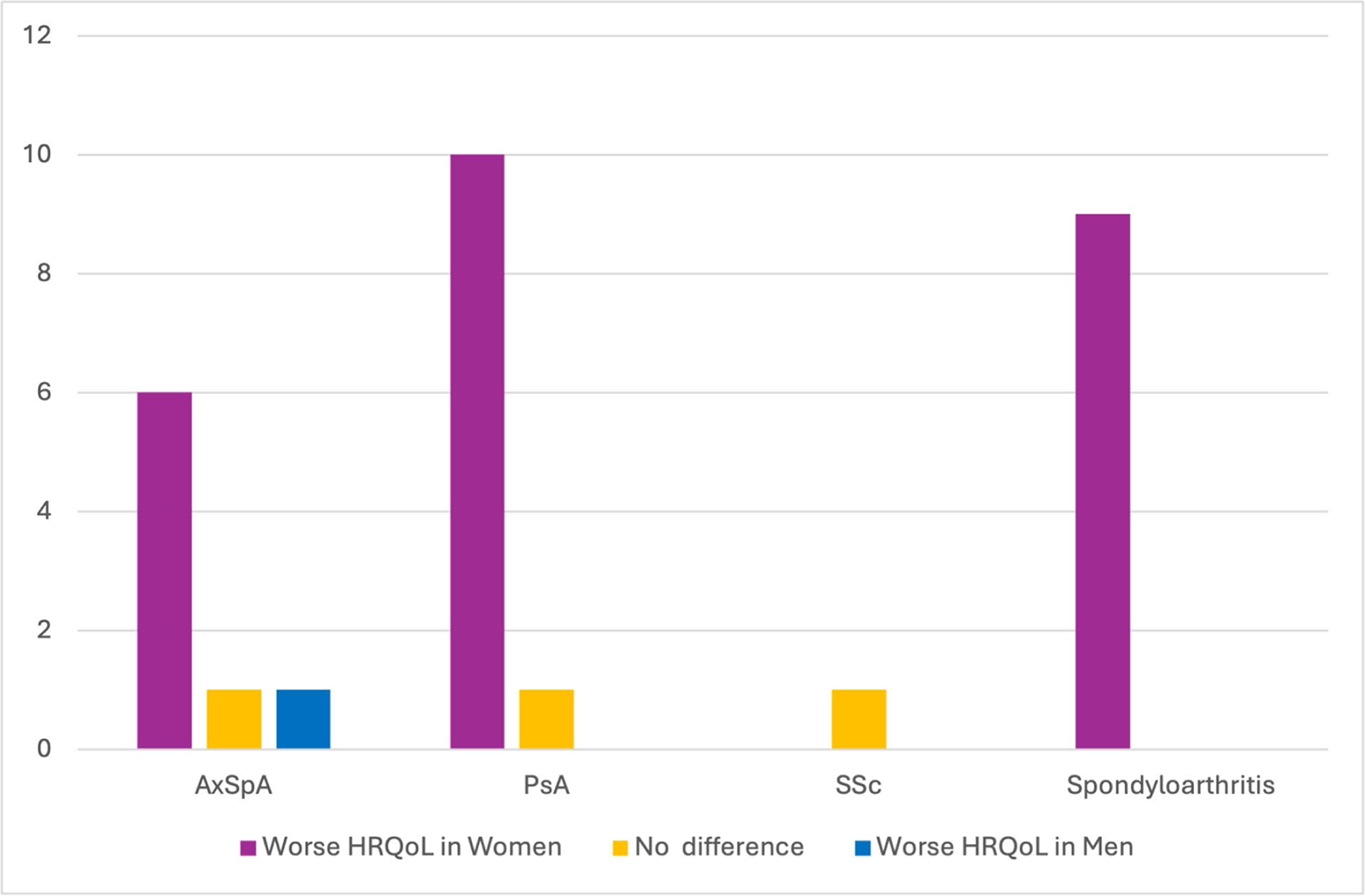
Results: Twenty-nine studies were included. Across all studies, gender was operationalized exclusively as sex assigned at birth, with frequent conflation of sex and gender terminology and without assessment of gender identity, roles, relations or expression. Across diseases, women consistently reported poorer HRQoL than men. This pattern was most robust in PsA, where 10 out of 11 studies reported worse HRQoL among women, and in AxSpA, where 6 out of 8 studies showed the same direction of effect. These differences were observed across both generic and disease-specific instruments. Evidence for SSc was limited to a single study and did not demonstrate sex/gender differences. An overview of sex/gender differences in HRQoL across diseases is presented in Figure 1.
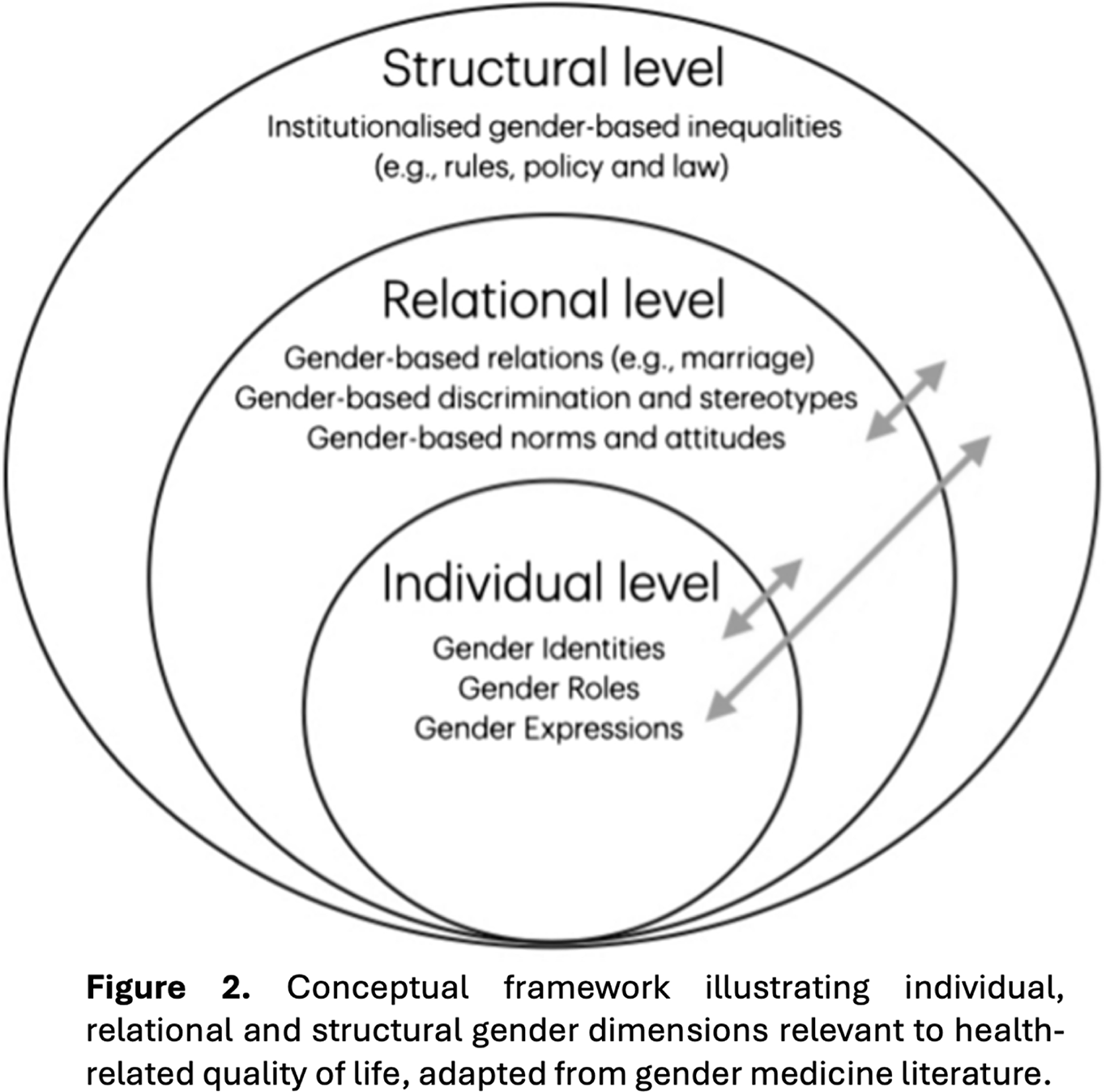
Conclusions: This scoping review demonstrates a consistent HRQoL gap disadvantaging women with AxSpA and PsA across a wide range of populations and measurement instruments. At the same time, the evidence base is characterized by a narrow conceptualization of gender, which is almost universally reduced to biological sex. The increasing number of recent publications highlights growing interest in sex- and gender-related differences in rheumatology, yet current approaches remain insufficient to explain the observed HRQoL disparities. The absence of multidimensional gender measures limits insight into the social, relational and structural mechanisms that may contribute to these differences. Integrating multidimensional gender frameworks (Figure 2) and longitudinal designs into future research is essential to advance understanding of HRQoL inequalities and to support the development of more personalized, equitable and gender-sensitive care in rheumatology.
REFERENCES: [1] Rusman T, van Vollenhoven RF, van der Horst-Bruinsma IE. Gender Differences in Axial Spondyloarthritis: Women Are Not So Lucky. Curr Rheumatol Rep. 2018;20(6):35.
[2] Oertelt-Prigione S. Putting gender into sex- and gender-sensitive medicine. EClinicalMedicine. 2020;20:100305.
Acknowledgments: NIL.
Disclosure of Interests: None declared.