fetching data ... 
Background: Familial Mediterranean Fever (FMF) typically presents during childhood or adolescence. However, late-onset cases are increasingly recognized and may exhibit distinct phenotypic and genetic features. Understanding these differences is essential for improving diagnosis, risk stratification, and treatment strategies.
Objectives: To compare the clinical manifestations, MEFV mutation patterns, and treatment responses of late-onset FMF patients with those of early-onset FMF patients.
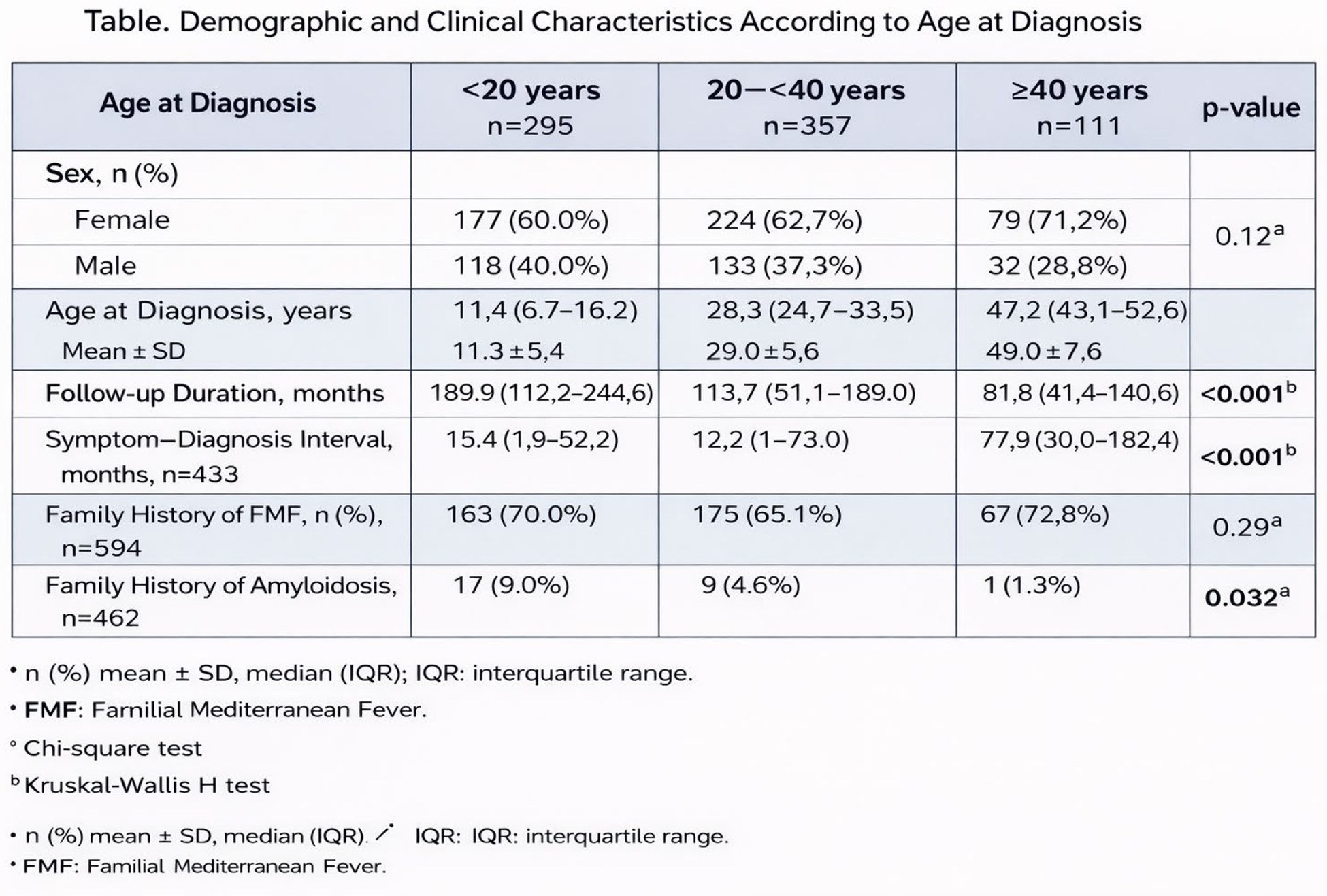
Methods: A retrospective cross-sectional study was conducted on patients aged ≥18 years diagnosed with FMF according to Tel-Hashomer criteria at Ankara University (January 2010–December 2024). Patients were stratified into three age-at-diagnosis groups:
<20 years
>20– <40 years
≥40 years
Demographic, clinical, genetic characteristics and treatment data—including colchicine dose, colchicine resistance, and anti-IL-1 use—were compared across groups. Sample size: n = 763.
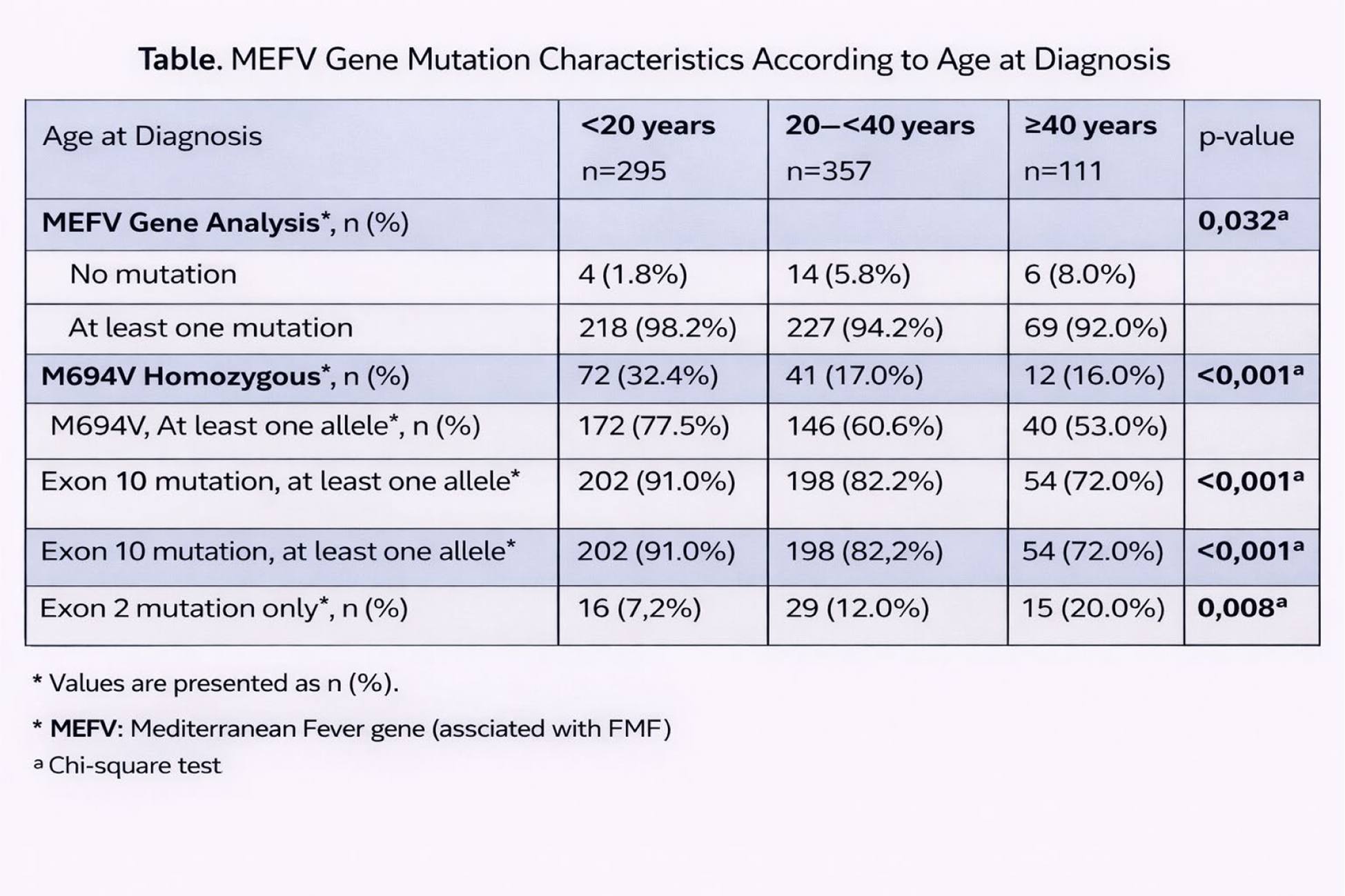
Results: The ≥40 years group exhibited a significantly longer delay from symptom onset to diagnosis compared to younger patients. Isolated exon 2 mutations were more prevalent in late-onset cases, whereas homozygous M694V was significantly more frequent in patients diagnosed before age 20. Proteinuria and amyloidosis at diagnosis were more common in late-onset patients. Across all groups, abdominal pain was the most common presenting symptom. The <20 years group required higher colchicine doses and demonstrated higher rates of colchicine resistance, as well as more frequent anti-IL-1 therapy use compared to older groups.
Conclusions: Late-onset FMF patients exhibit a lower frequency of classic, severe MEFV mutations and differ in their clinical presentation compared to early-onset patients. Age at diagnosis appears to be an important determinant of disease phenotype. Improved recognition of this subgroup may contribute to the development of more individualized diagnostic and monitoring strategies.
REFERENCES: [1] Aydin, O., et al., Late-onset familial mediterranean fever: single-center experience and literature review. Intern Emerg Med, 2022. 17(5): p. 1301-1306.
[2] Lancieri, M., et al., An Update on Familial Mediterranean Fever. Int J Mol Sci, 2023.24(11).
[3] Kishida, D., et al., Late-onset familial Mediterranean fever in Japan. ModernRheumatology, 2020. 30(3): p. 564-567.
[4] Yasar Bilge, N.S., et al., Comparison of early versus late onset familial Mediterranean fever. Int J Rheum Dis, 2018. 21(4): p. 880-884.
[5] Gursoy, D.E., et al., Clinical features, functional status, and quality of life in patients with late-onset familial Mediterranean fever. North Clin Istanb, 2023. 10(4): p. 451-457.
Acknowledgments: NIL.
Disclosure of Interests: None declared.