fetching data ... 
Background: Psoriatic arthritis (PsA) and Rheumatoid arthritis (RA) are chronic Immune Mediated Inflammatory Diseases (IMID) which, if left untreated, lead to joint erosions and permanent joint deformities. Early diagnosis and initiation of appropriate treatment is imperative to prevent disease progression; however, this can be challenging due to a limited number of diagnostic biomarkers. There is ongoing research to help identify highly sensitive and specific biomarkers that can aid diagnosis, prognosis, and monitor response to therapy. Until recently, lipids were thought of as energy stores, but they are now known to be bioactive and can affect several biologic processes including the immune response and gene activation. Due to advances in identification and measurement tools in analysis of lipids there has been rapid progress in this discipline in recent years.
Objectives: In this review article, we aim to review the literature available on the diagnostic, therapeutic and prognostic values of lipid signatures in serum or plasma samples of patients with inflammatory arthritis, specifically psoriatic arthritis and rheumatoid arthritis.
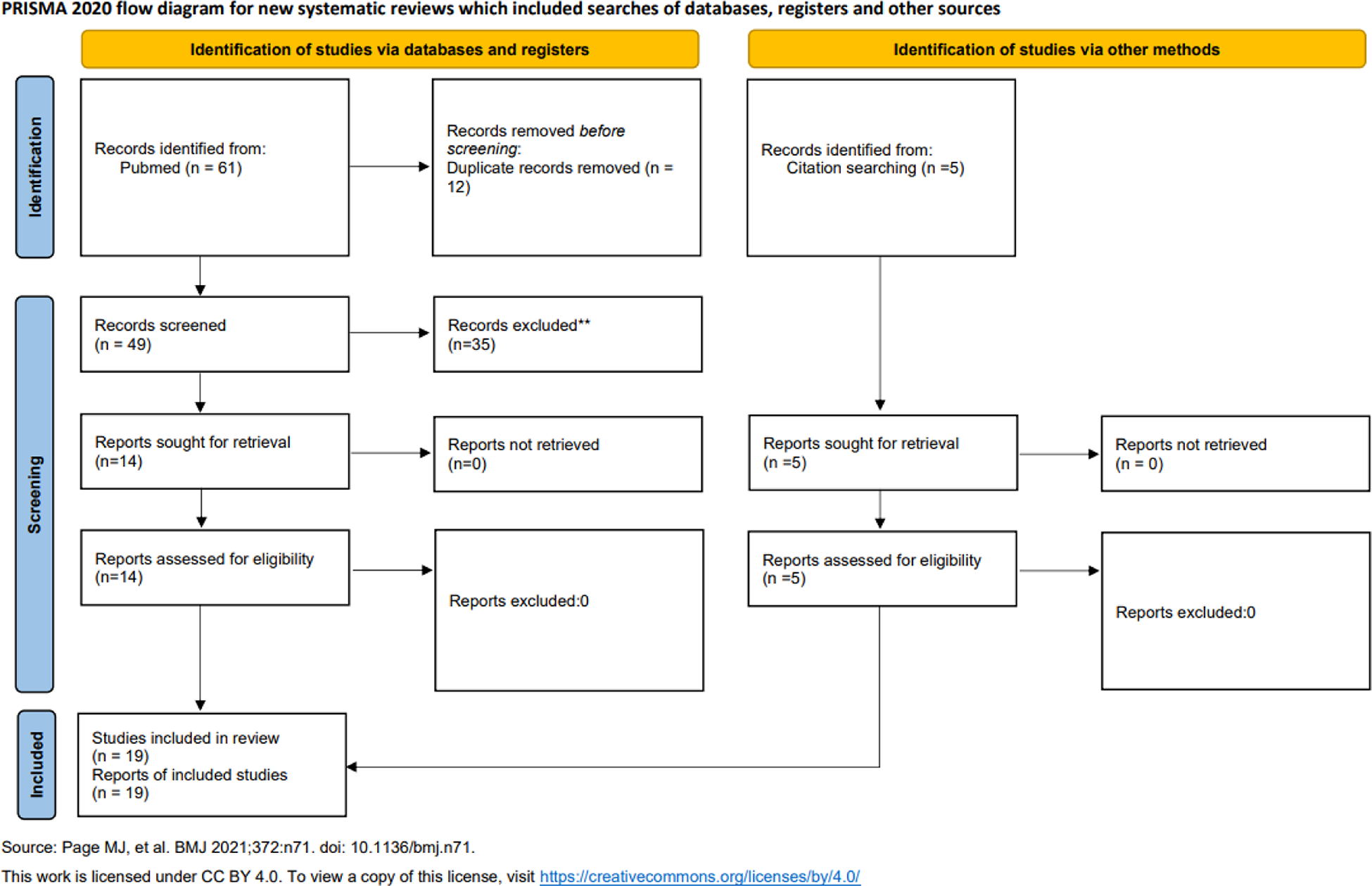
Methods: A search of PubMed was conducted using MeSH Terms and keywords, covering the period from January 2000 to January 2025. Snowballing of articles retrieved was also undertaken to identify eligible studies. Only studies that were in the English language and on human subjects were included. Lipidomic signatures and their significant association with diagnosis, disease activity or treatment response were extracted. The strength of association was compared across studies.
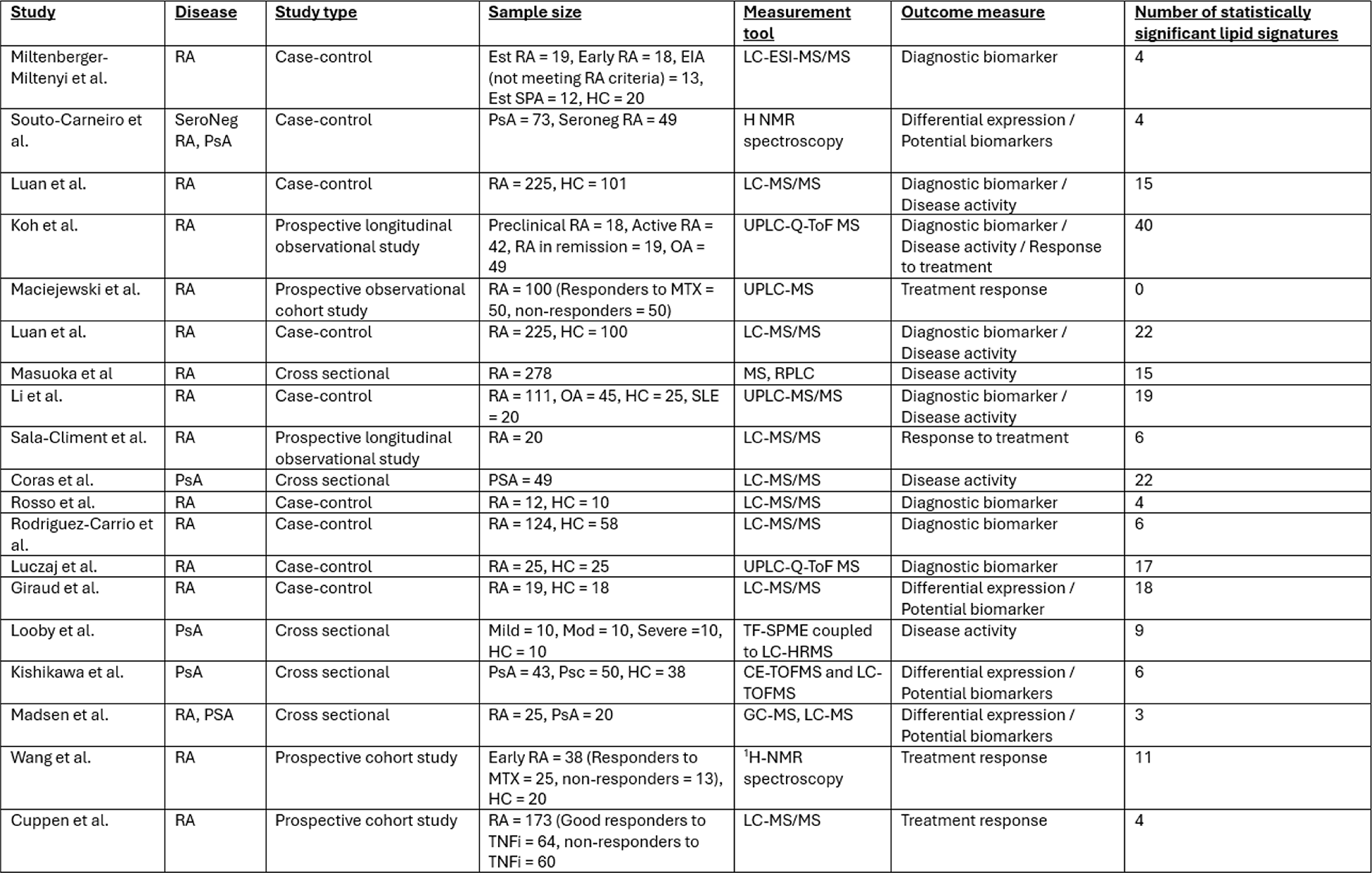
Results: The systematic literature review identified 19 eligible studies evaluating serum or plasma lipidomic profiles in psoriatic arthritis and rheumatoid arthritis. Across studies, multiple lipid classes were associated with disease diagnosis, activity, and treatment response, although methodologies and outcomes were heterogeneous.
In PsA, several studies demonstrated distinct lipidomic signatures differentiating PsA from rheumatoid arthritis, psoriasis, or healthy controls. However, no studies meeting inclusion criteria evaluated lipidomic predictors of treatment response in PsA. In RA, lipidomic profiling showed greater depth and consistency. Diagnostic models demonstrated moderate to strong discriminatory performance between RA and controls, including seronegative RA.
Conclusions: Serum lipidomic profiling demonstrated promising diagnostic and disease-monitoring potential in PsA and RA. However, findings are limited by small sample sizes, cross-sectional designs, heterogeneous analytic methods, and limited external validation. Larger, standardised, longitudinal studies are needed to evaluate lipidomic signatures as a clinically actionable biomarker platform in inflammatory arthritis.
PRISMA flow diagram of study identification, screening, and inclusion for the systematic review of lipidomic biomarkers in inflammatory arthritis.
Summary table of included lipidomic studies, summarising study characteristics, lipidomic methods, and key findings in psoriatic arthritis and rheumatoid arthritis.
REFERENCES: NIL.
Acknowledgments: NIL.
Disclosure of Interests: None declared.