fetching data ... 
Background: IgG4-related disease (IgG4-RD) is a rare immune-mediated fibroinflammatory condition that can involve virtually any organ. Traditional diagnostic criteria (Umehara et al.) combine clinical/radiological evidence of organ involvement, elevated serum IgG4 levels, and characteristic histopathology. However, serum IgG4 elevation is inconsistent, and biopsy is not always feasible. In 2019, the ACR/EULAR classification criteria introduced a point-based system (classification threshold ≥20) to improve disease classification.
Objectives: To assess the performance of the 2019 ACR/EULAR classification criteria in patients with suspected IgG4-RD and to evaluate differences across clinical phenotypes.
Methods: We retrospectively reviewed clinical data from patients with suspected IgG4-RD, defined by typical organ involvement, elevated serum IgG4, and exclusion of alternative diagnoses. Each patient was evaluated according to Umehara diagnostic criteria and scored using the ACR/EULAR classification criteria. Patients were categorized into four clinical phenotypes (head and neck, retroperitoneal/aortitis, systemic, pancreatobiliary) as described by Lanzillotta et al. Statistical analyses were performed using RStudio.
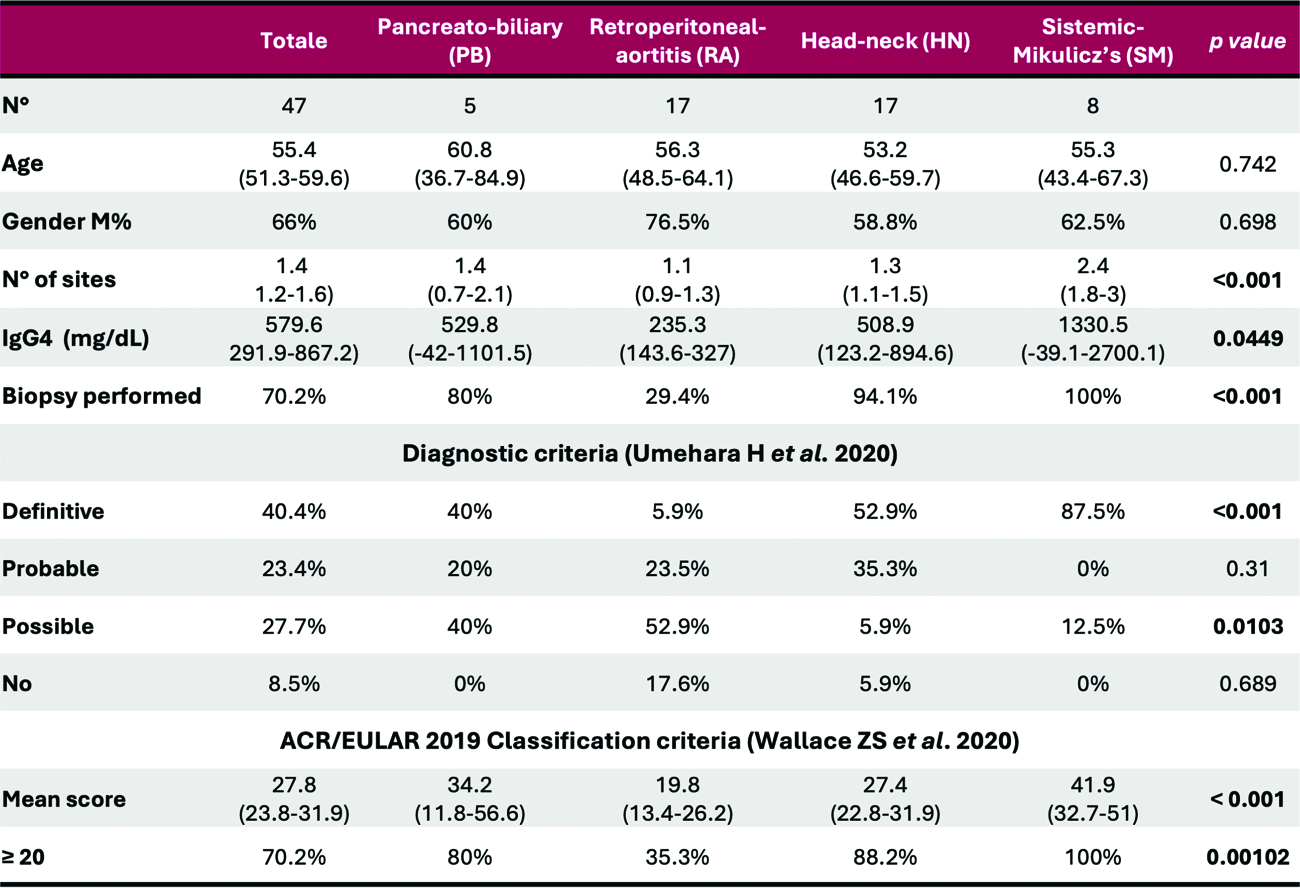
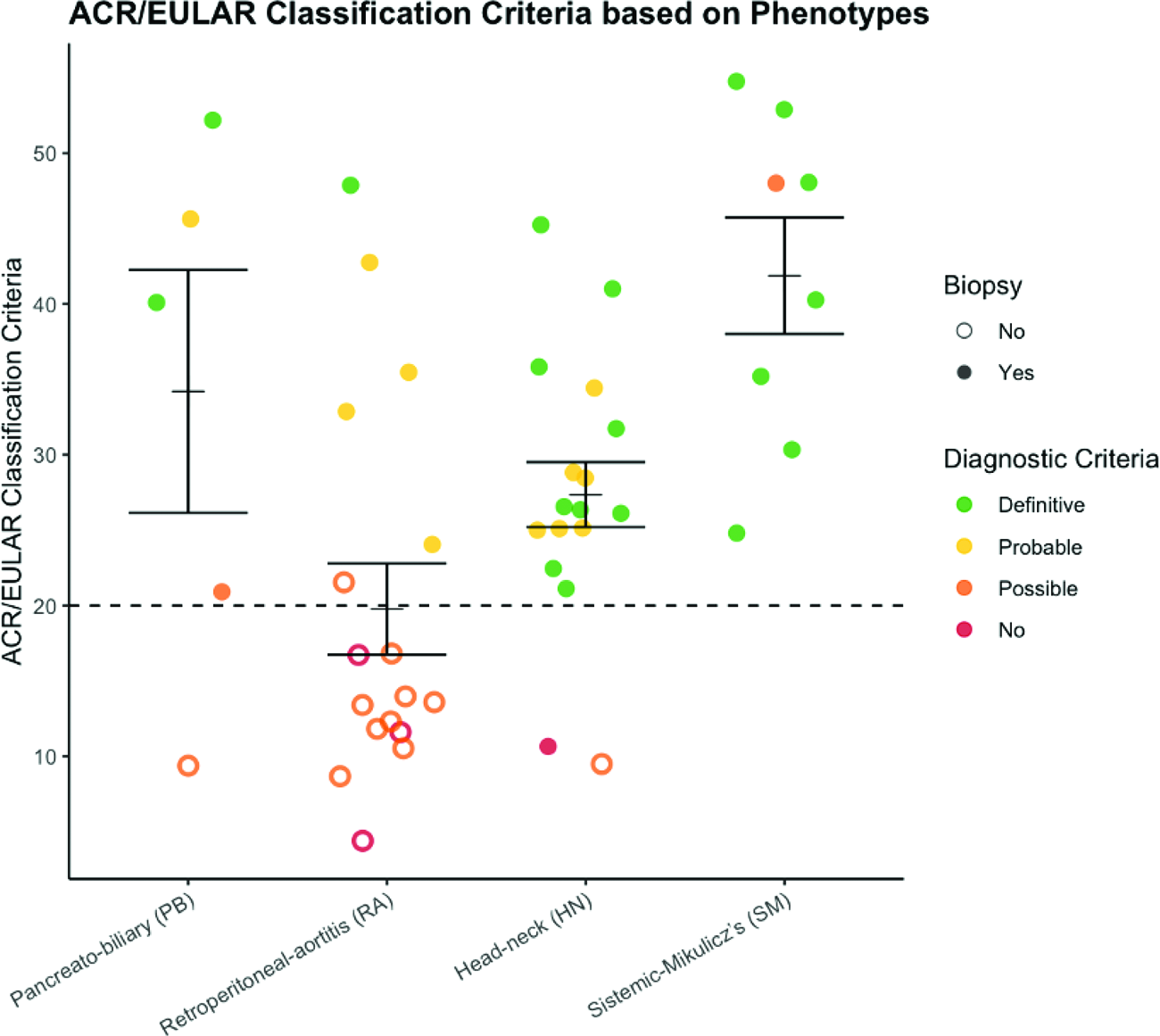
Results: A total of 47 patients were included: 17 head and neck, 17 retroperitoneal/aortitis, 8 systemic, and 5 pancreatobiliary. Mean age was 55.4 years, and 66% were male. The systemic phenotype showed a significantly higher number of involved sites (mean 2.4; p < 0.001). Serum IgG4 levels were significantly higher in systemic cases (mean 1330.5 mg/dL) and lower in retroperitoneal/aortitis cases (235.3 mg/dL; p = 0.0449). Biopsy rates differed across groups, ranging from 29.4% in retroperitoneal/aortitis to 100% in systemic patients (p < 0.001). Using Umehara criteria, a definitive diagnosis was most frequent in systemic disease (85.7%; p < 0.001), whereas retroperitoneal/aortitis cases were more often classified as possible IgG4-RD (62.5%; p = 0.0103). Three patients (8.5%) did not meet either diagnostic or classification criteria. The systemic phenotype had the highest ACR/EULAR score (mean 41.9), while retroperitoneal/aortitis had the lowest (mean 19.8; p < 0.001). All systemic cases scored ≥20 points. Among retroperitoneal/aortitis patients, all non-biopsied cases scored <20, except one. In the head and neck group, two patients scored below threshold: one without biopsy and one not meeting histopathological criteria. One non-biopsied pancreatobiliary case also failed to reach the ≥20-point threshold.
Conclusions: The 2019 ACR/EULAR criteria improve classification of suspected IgG4-RD by integrating clinical parameters; however, this monocentric study highlights that histopathology remains essential for accurate diagnosis. Most non-biopsied patients did not meet the classification threshold, particularly in the retroperitoneal/aortitis phenotype, where biopsy was often not feasible due to high surgical risk. Given that these patients also showed the lowest serum IgG4 levels, these findings underline the unmet need for novel peripheral biomarkers to support diagnosis and classification of IgG4-RD.
REFERENCES: NIL.
Acknowledgments: NIL.
Disclosure of Interests: None declared.