fetching data ... 
Background: Idiopathic granulomatous mastitis (IGM) is a chronic inflammatory breast disease that predominantly affects young women and may be accompanied by psychosocial challenges, including emotional distress, impaired body image, and reduced sexual self-confidence. Although immunosuppressive therapy is widely used for disease control, its impact on psychosocial outcomes remains insufficiently characterized.
Objectives: To evaluate changes in psychosocial outcomes following immunosuppressive treatment in patients with IGM and to explore their associations with baseline inflammatory markers.
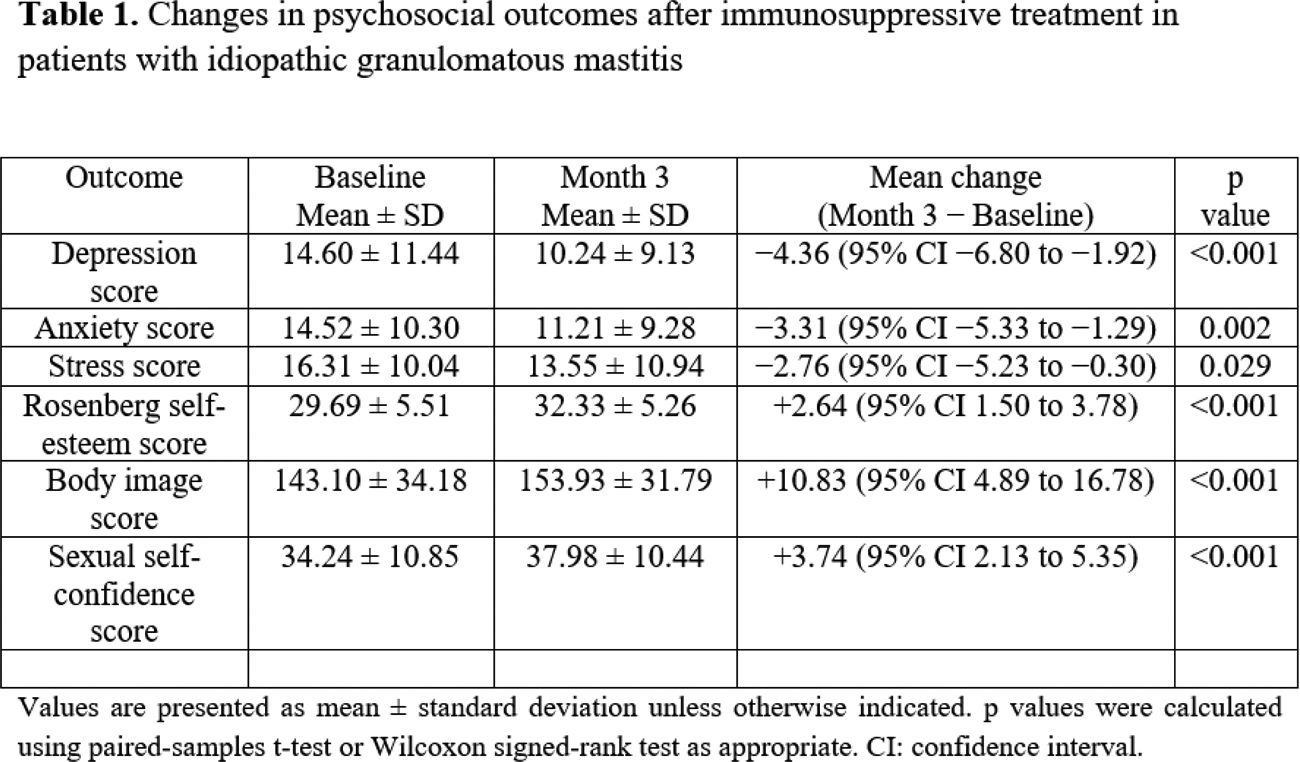
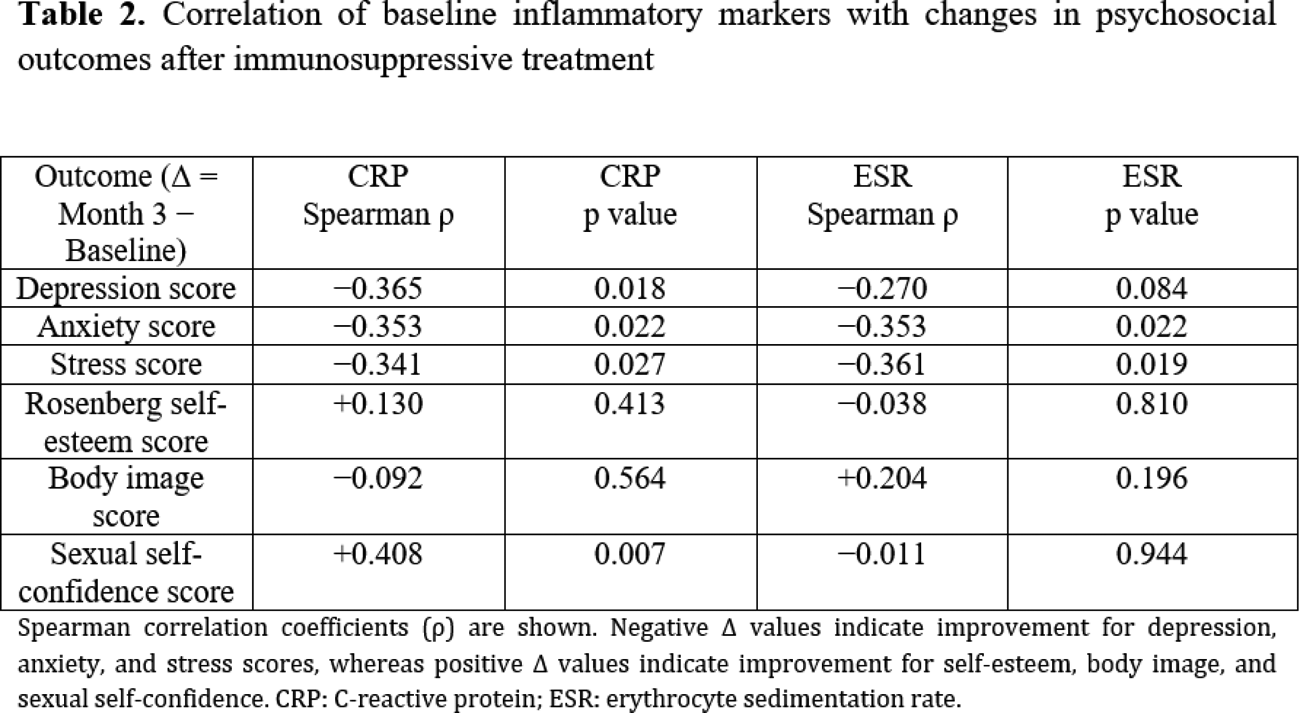
Methods: This prospective observational study included 42 women with IGM who received immunosuppressive therapy. Psychosocial outcomes, including depression, anxiety, stress, self-esteem (Rosenberg Self-Esteem Scale), body image, and sexual self-confidence, were assessed at baseline and at 3 months. Changes in scores were analyzed using paired-samples tests (Table 1). Associations between baseline C-reactive protein (CRP) and erythrocyte sedimentation rate (ESR) levels and changes in psychosocial outcomes were evaluated using Spearman correlation analysis (Table 2).
Results: At 3 months, patients demonstrated significant improvements in psychosocial outcomes, including reductions in depression, anxiety, and stress scores, as well as significant increases in self-esteem, body image, and sexual self-confidence (Table 1). Higher baseline CRP levels were significantly associated with greater improvements in depression, anxiety, stress, and sexual self-confidence, whereas ESR was primarily associated with improvements in anxiety and stress (Table 2). No significant associations were observed between inflammatory markers and changes in self-esteem or body image.
Conclusions: Immunosuppressive therapy in IGM is associated with significant short-term improvements in psychosocial well-being. Baseline inflammatory burden, particularly CRP, appears to influence the magnitude of psychosocial improvement, highlighting the interplay between systemic inflammation and patient-reported outcomes in IGM.
REFERENCES: NIL.
Acknowledgments: NIL.
Disclosure of Interests: None declared.