fetching data ... 
Background: Thrombocytopenia (TP) is a common hematological manifestation in connective tissue diseases (CTDs), yet up to 60% of patients develop refractory or relapsing disease following first-line therapy. Early identification of those at high risk for refractory CTD-TP (CTD-RTP) remains an unmet clinical need.
Objectives: This study aimed to develop and validate a clinically applicable prediction model for CTD-RTP based on readily available clinical and immunological parameters.
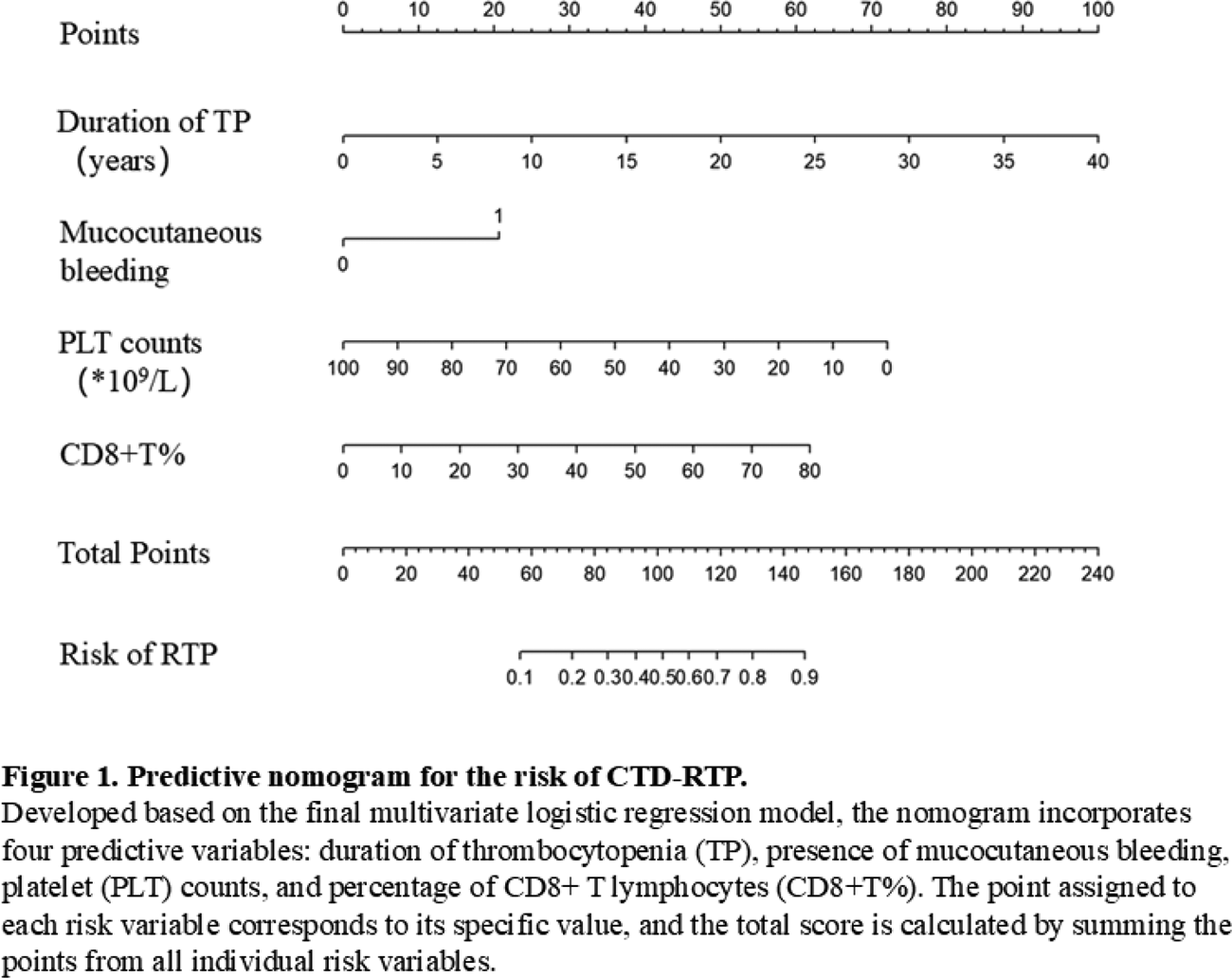
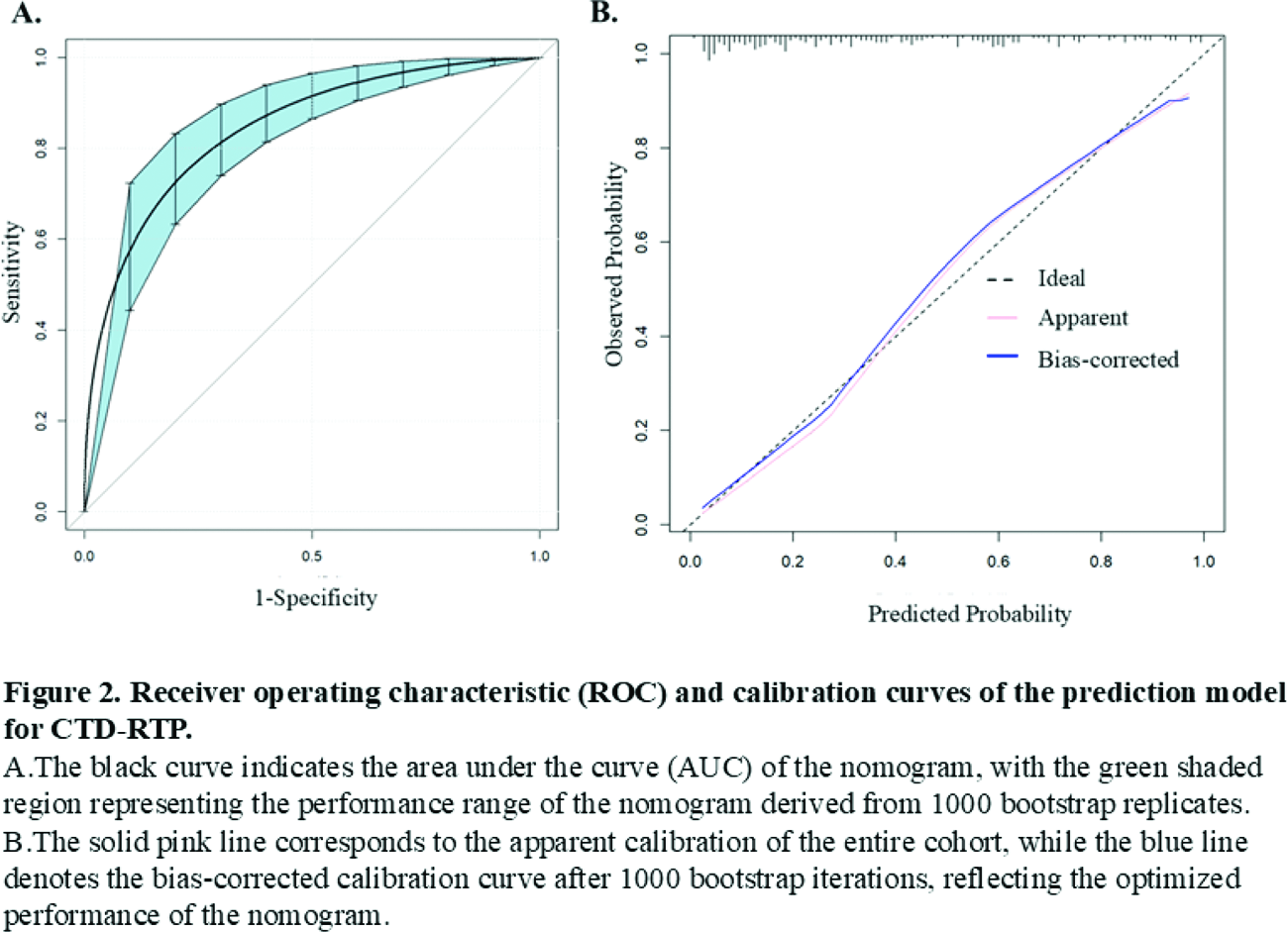
Methods: This retrospective study included a total of 229 patients with CTD-TP, comprising 86 with CTD-RTP and 143 non-refractory controls (non-RTP). A predictive model was developed using LASSO regression and multivariable logistic analysis and was presented as a nomogram. Model performance was assessed by discrimination, calibration and clinical utility.
Results: Four independent predictors for CTD-RTP were identified: mucocutaneous bleeding, duration of thrombocytopenia, platelet count, and percentage of CD8 + T lymphocytes. The model incorporating these factors demonstrated excellent discrimination (AUC 0.857; 95% CI: 0.807–0.907), good calibration (Hosmer-Lemeshow P = 0.263), and robust clinical utility across a wide range of threshold probabilities as validated by decision curve analysis.
Conclusions: We developed and internally validated a novel CTD-RTP prediction model by integrating clinical and T-cell immune profiles, which may facilitate early identification and personalized treatment in high-risk patients.
REFERENCES: NIL.
Acknowledgments: NIL.
Disclosure of Interests: None declared.