fetching data ... 
Background: Non-attendance (also known as ‘did not attend’[DNA], ‘was not brought’, or ‘no show’) at outpatient appointments poses a substantial challenge for the management of chronic rheumatic disease. Young people aged 16–24 years—including adolescent and young adult (AYA) rheumatology—have disproportionately high DNA rates. Missed visits in this group contribute to delayed diagnosis, poor disease control, treatment interruption and increased long-term morbidity. Evidence-based approaches to strengthen AYA engagement remain limited.
Objectives: Funded by the Q community health foundation, The Pathway to Equity project at University College London Hospitals (UCLH) aimed to identify and address drivers of youth clinic non-attendance.
Methods: Using system thinking approach, phase one combined analyses of electronic health records with qualitative interviews, surveys and co-design workshops involving young people and clinicians. A machine-learning DNA prediction model was developed to identify those at highest risk of non-attendance. Phase two piloted three co-designed interventions: (1) DNA Prediction Model: embedded within AYA rheumatology pathways to support targeted outreach. (2) Peer Support Scheme: youth-informed proactive outreach, appointment reminders and personalised barrier identification, co-produced with young people and local school students through structured work experience. (3) Co-designed Resource Hub: a youth-centred digital platform providing accessible health information and support.
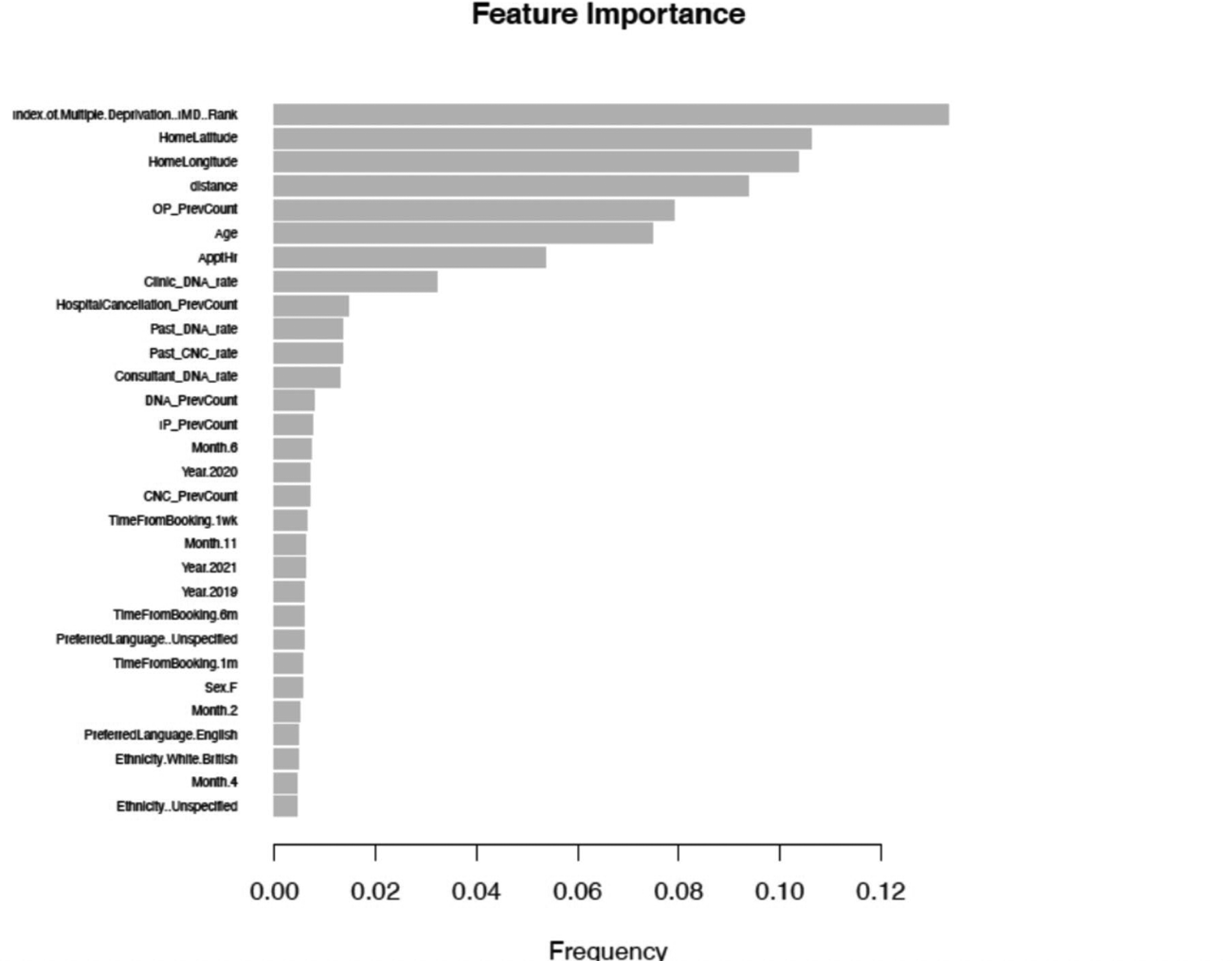
Results: AYA patients at UCLH demonstrated a 16–17% DNA rate, associated with socioeconomic deprivation, increased travel distance and lower engagement with digital patient portals (figure 1). Following implementation of the interventions, outcomes improved substantially. Between September 2024 and February 2025, 69% of contacted young people attended or rescheduled their appointment compared with 36% of those not reached. Monthly DNA rates decreased by 33%, reaching a six-year low of 5.2%. With a sustainable peer support coordinator role, the estimated annual cost savings for AYA rheumatology are £76,000. Qualitatively, staff reported enhanced understanding of AYA experiences and broader adoption of relationship-centred practice. Additionally, a total of 28 students from underserved communities gained meaningful, equity-focused work experience through participation in the programme.
Conclusions: Youth non-attendance reflects structural, logistical and relational barriers that are particularly consequential in AYA rheumatology, where continuity and frequent monitoring are essential. A co-produced model integrating predictive analytics, youth-led peer support and cross-sector collaboration significantly reduced DNAs and improved engagement. The Pathway to Equity approach is scalable and aligns with rheumatology priorities of early intervention, optimised follow-up and equitable transitional care. Embedding this model within AYA rheumatology services may improve outcomes, reduce system strain and promote health equity.
Feature analysis of predictor of clinic non-attendance in adolescent and young adult rheumatology
REFERENCES: [1] Marbouh D, Khaleel I, Al Shanqiti K, Al Tamimi M, Simsekler MCE, Ellahham S, Alibazoglu D, Alibazoglu H. Evaluating the Impact of Patient No-Shows on Service Quality. Risk Manag Healthc Policy. 2020 Jun 4;13:509-517. PMCID: PMC7280239.
[2] Harrison, A., & Williams, S. (2020). Adolescent transition and the impact of chronic illness: A multi-disciplinary approach. Journal of Pediatric Psychology, 45(2), 156-167. [DOI: 10.1093/jpepsy/jsz089].
Acknowledgments: NIL.
Disclosure of Interests: None declared.