fetching data ... 
Background: Regular physical activity is a key non-pharmacological component in the management of rheumatic diseases, yet long-term adherence remains challenging [1]. Digital health applications combined with wearable devices may support self-management, enable continuous monitoring, and provide digital biomarkers reflecting daily activity and physiological responses. However, real-world usability, acceptability, and interpretability of such data in rheumatic diseases are insufficiently characterized [2].
Objectives: To evaluate baseline characteristics, usability, acceptability, and exploratory digital activity and heart rate patterns in patients with rheumatoid arthritis and psoriatic arthritis using the Rheuma-Fit exercise application integrated with wearable technology.
Methods: This pilot clinical study included patients with rheumatoid and psoriatic arthritis using the Rheuma-Fit progressive web application with wearable integration over approximately three months. Baseline sociodemographic and anthropometric data were collected via entry questionnaires. Usability was assessed using the System Usability Scale (SUS) at Visit 1 and Visit 2. Continuous wearable data on step counts and heart rate were analyzed descriptively, including daily trajectories, circadian heart rate profiles, and the association between hourly step counts and mean heart rate. Analyses were exploratory and descriptive.
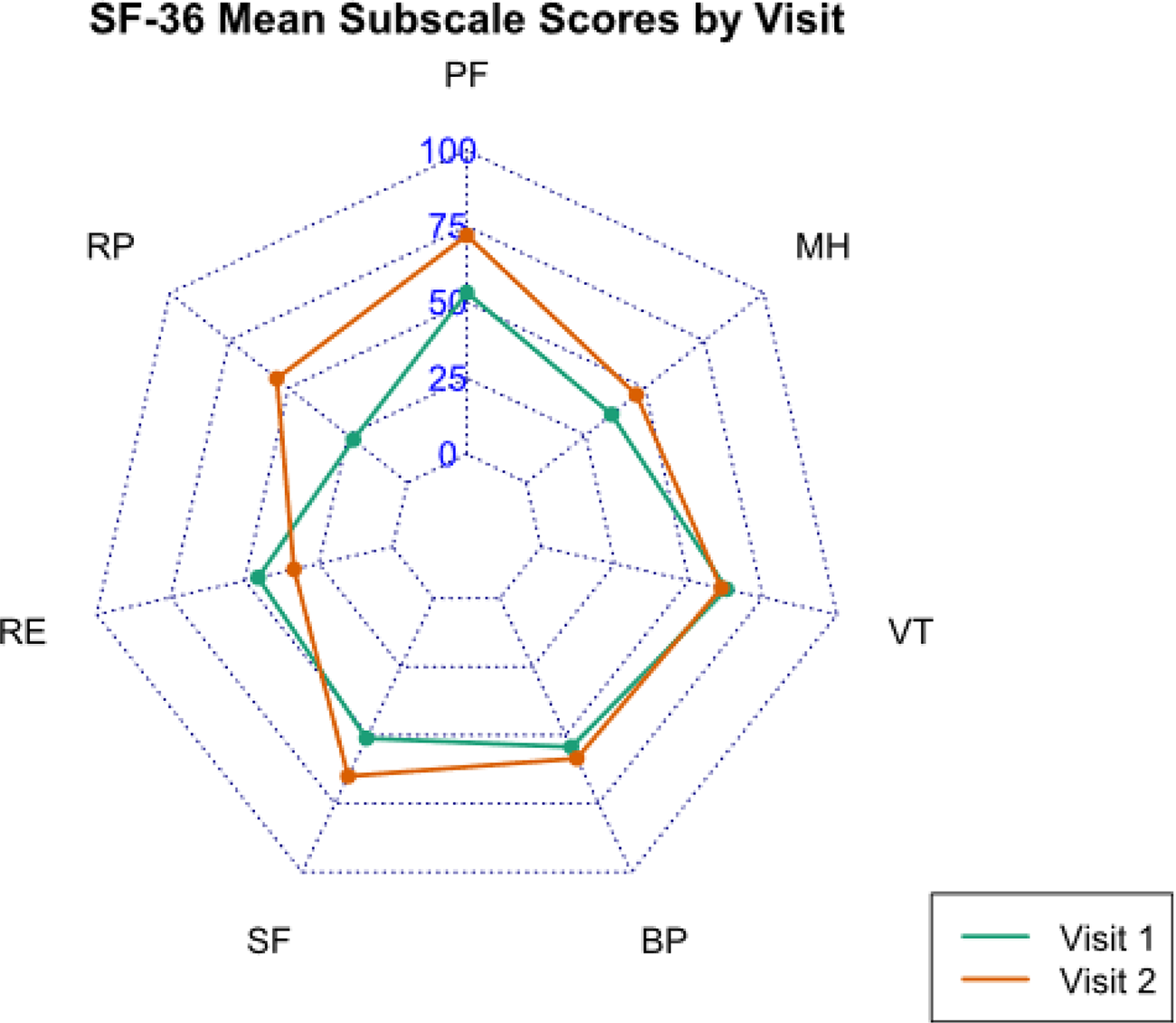
Results: Preliminary data of 14 patients were shown. At baseline (Visit 1, N = 14), sex distribution was balanced (50% female), mean age was 48.1 (SD 12.0) years, and mean BMI was 29.6 (SD 9.8) kg/m 2 , corresponding to the overweight range. SUS scores showed wide interindividual variability (45.0–87.5). Median usability was in the “OK–Good” range, with most participants rating acceptability as marginal to acceptable; a minority reported poor or unacceptable usability. Between visits, individual SUS changes were small and without a consistent overall trend ( Table 1 ). Wearable data demonstrated marked interindividual variability in daily step counts and heart rate. Heart rate profiles were generally stable over time, whereas step counts fluctuated substantially, indicating variable adherence to physical activity. Circadian heart rate analyses revealed a typical diurnal pattern with morning nadirs, midday peaks, and evening decline, supporting adequate wear-time compliance. The relationship between hourly steps and heart rate differed across participants, with steeper associations in some individuals suggestive of step-based aerobic activity and flatter patterns in others compatible with non-step-dominant exercise modalities. Health-related quality of life, assessed using the SF-36, showed slightly higher mean scores at Visit 2 across most subscales ( Figure 2 ). The largest increases were observed in physical functioning, vitality, and pain, while role limitations due to physical and emotional problems showed more modest changes. Overall, the pattern suggests a small global improvement in functional status and wellbeing over the observation period.
Conclusions: In this small pilot cohort, Rheuma-Fit demonstrated moderate usability and acceptability, with substantial heterogeneity between users. Wearable-derived digital biomarkers captured meaningful interindividual differences in activity behavior and physiological response, supporting the feasibility of continuous digital monitoring in rheumatic diseases. These findings justify further optimization of app onboarding and stability and support larger, controlled studies to evaluate clinical effectiveness and the prognostic value of digital biomarkers in personalized exercise therapy.
System Usability Scale (SUS) results by user and visit
| User ID | Visit | SUS (0–100) | Grade | Adjective | Acceptability |
|---|---|---|---|---|---|
| 7 | Visit 1 | 75.0 | B | Good | Acceptable |
| 7 | Visit 2 | 67.5 | D | OK | Marginal |
| 8 | Visit 1 | 57.5 | D | OK | Marginal |
| 9 | Visit 1 | 67.5 | D | OK | Marginal |
| 9 | Visit 2 | 72.5 | C | Good | Acceptable |
| 10 | Visit 1 | 60.0 | D | OK | Marginal |
| 10 | Visit 2 | 62.5 | D | OK | Marginal |
| 12 | Visit 1 | 47.5 | F | Poor | Not acceptable |
| 13 | Visit 1 | 45.0 | F | Poor | Not acceptable |
| 16 | Visit 1 | 55.0 | D | OK | Marginal |
| 16 | Visit 2 | 52.5 | D | OK | Marginal |
| 17 | Visit 1 | 77.5 | B | Good | Acceptable |
| 18 | Visit 1 | 70.0 | C | Good | Acceptable |
| 21 | Visit 1 | 87.5 | A | Excellent | Acceptable |
| 23 | Visit 1 | 72.5 | C | Good | Acceptable |
Individual SUS scores (0–100), grades, adjective ratings, and acceptability categories for each participant at Visit 1 and, where available, Visit 2. Scores demonstrate substantial interindividual variability, with most ratings in the marginal to acceptable range. A minority of participants reported poor or not acceptable usability, highlighting heterogeneity in user experience.
SF-36 mean subscale scores by visit
Radar plot showing mean SF-36 subscale scores at Visit 1 and Visit 2. Visit 2 scores are consistently higher across most domains, with the largest increases observed in Physical Functioning (PF), Vitality (VT), and Bodily Pain (BP). Role Physical (RP) and Role Emotional (RE) show more modest changes. Overall, the pattern indicates a small global improvement in functional status and health-related quality of life over time.
REFERENCES: [1] Rausch Osthoff AK, Niedermann K, Braun J, Adams J, Brodin N, Dagfinrud H, et al. 2018 EULAR recommendations for physical activity in people with inflammatory arthritis and osteoarthritis. Ann Rheum Dis. 2018;77(9):1251-60.
[2] Knitza J, Gupta L, Hügle T. Rheumatology in the digital health era: status quo and quo vadis? Nat Rev Rheumatol. 2024;20(12):747-59.
Acknowledgments: NIL.
Disclosure of Interests: Emilia Tabaga: None declared, Alp Temiz: None declared, Michael Nissen: None declared, Madeleine Flaucher: None declared, Georg Schett: None declared, Harriet Morf Abbvie, Novartis, Pfizer, Galapagos, GSK, UCB, Chugai, Galapagos.