fetching data ... 
Background: Sarcopenia is increasingly recognized as a clinically relevant comorbidity in rheumatoid arthritis (RA), contributing to impaired physical function and frailty. Recently, the concept of rheumatoid sarcopenia , characterized by muscle loss and dysfunction driven by chronic inflammation, reduced physical activity, and disease-related factors, has been highlighted as a distinct and clinically meaningful condition in RA.[1] However, the longitudinal impact of sarcopenia on frailty-related outcomes beyond inflammatory disease activity control remains unclear.
Objectives: To investigate baseline characteristics and one-year changes in clinical outcomes, physical function, and frailty according to longitudinal sarcopenia status in patients with RA.
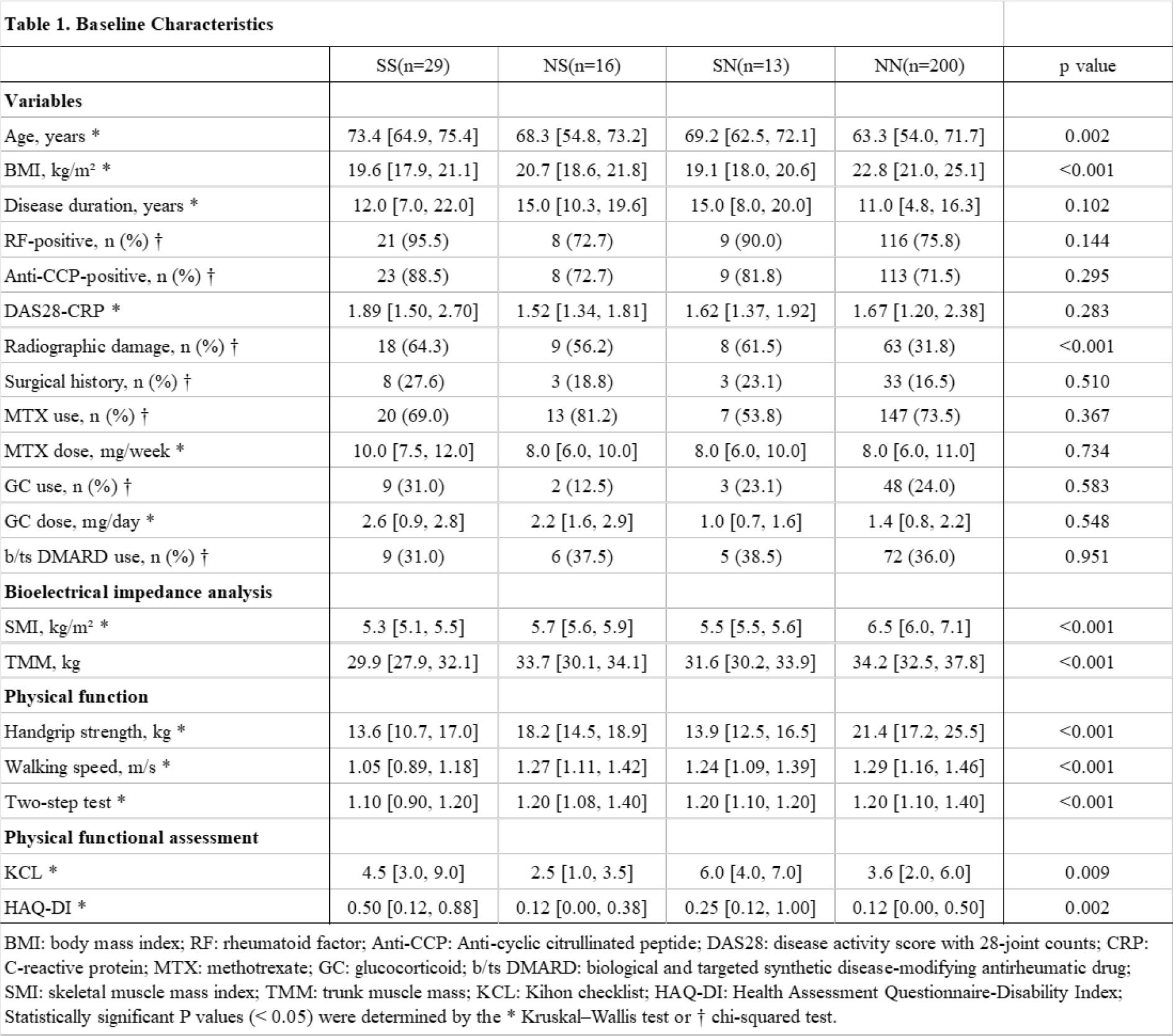
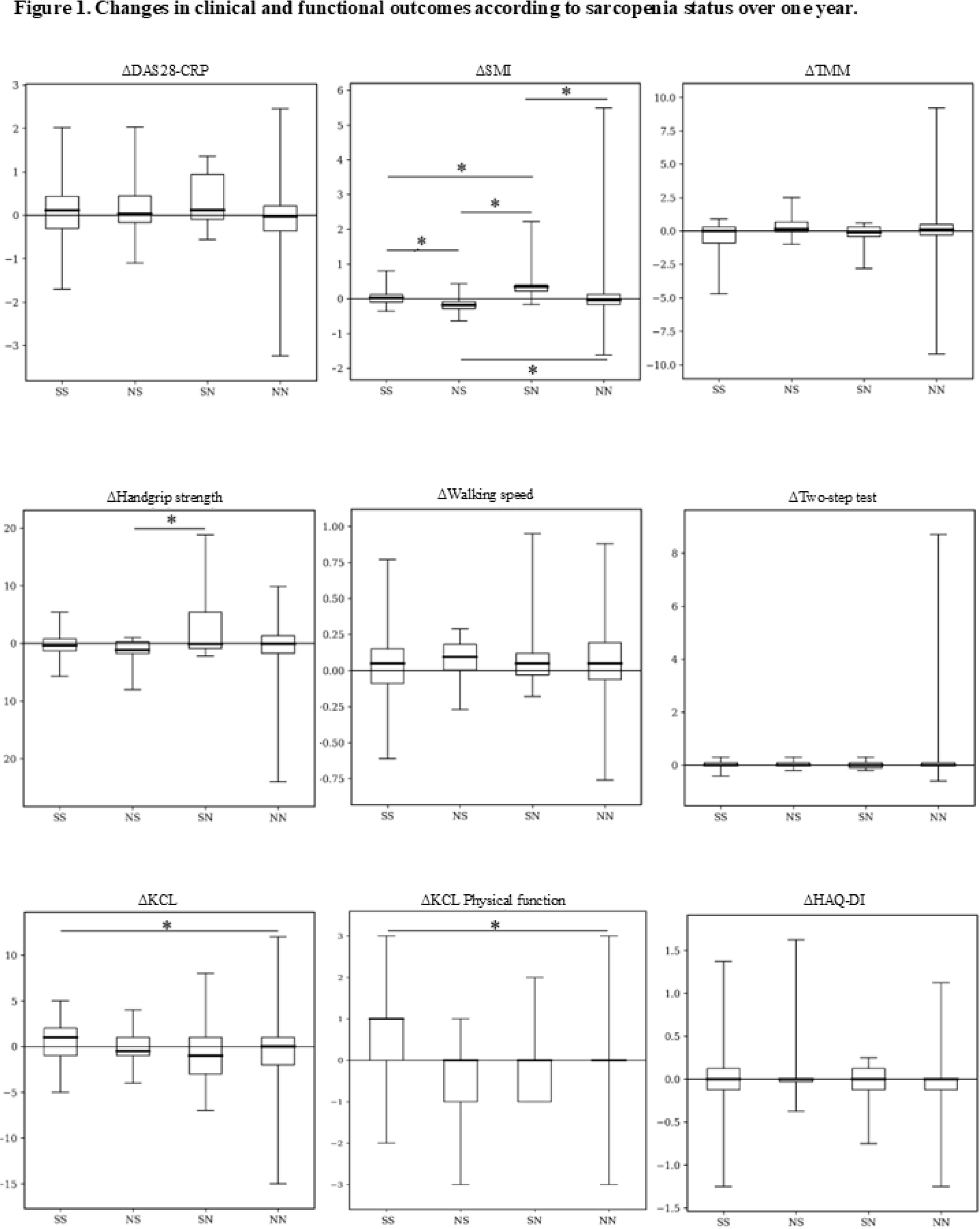
Methods: This study included 258 patients with RA who had complete one-year follow-up in a prospective cohort study (the Fairy Study) conducted between March 2021 and December 2022. Patients were classified into four groups based on sarcopenia status at baseline and one year: persistent sarcopenia (SS), new-onset sarcopenia (NS), resolved sarcopenia (SN), and persistent non-sarcopenia (NN). Sarcopenia was diagnosed based on the Asian Working Group for Sarcopenia 2019 (AWGS 2019) criteria. Baseline characteristics were compared across groups ( Table 1 ). Radiographic damage was defined as Steinbrocker stage III or IV. Changes from baseline to one year (Δ) in disease activity, physical function, body composition, and frailty-related outcomes were compared among groups ( Figure 1 ). Frailty was assessed using the Kihon Checklist (KCL), a validated multidimensional screening tool evaluating physical, social, and psychological vulnerability. Group differences were analyzed using the Kruskal–Wallis test with post hoc pairwise comparisons. Statistical significance was set at P < 0.05.
Results: Among the 258 patients, 29 were classified as SS, 16 as NS, 13 as SN, and 200 as NN. At baseline, significant differences were observed in age and the prevalence of radiographic damage among the four groups. Disease activity at baseline was low across all groups, and all patients had achieved clinical remission. Over one year, group differences were observed in changes in frailty-related outcomes assessed by the KCL. The SS group showed greater worsening in total KCL compared with the NN group (median ΔKCL +1 vs 0, P = 0.014). Notably, the physical function domain of the KCL demonstrated a robust and statistically significant deterioration in the SS group compared with the NN group (median ΔKCL +1 vs 0, P = 0.032). Changes in disease activity over one year were minimal and less discriminatory among groups than changes in physical function and frailty.
Conclusions: Persistent sarcopenia was associated with clinically meaningful worsening of frailty, particularly in the physical function domain assessed by the Kihon Checklist, in patients with RA. These findings highlight the importance of rheumatoid sarcopenia as a determinant of functional decline beyond inflammatory disease activity. Achieving treat-to-target goals alone may be insufficient to preserve long-term function, underscoring the need for RA management strategies that extend beyond inflammation control to address sarcopenia and frailty.
REFERENCES: [1] Bennett RM, et al. Sarcopenia and muscle dysfunction in rheumatoid arthritis. Nature Reviews Rheumatology. 2023.
Acknowledgments: NIL.
Disclosure of Interests: None declared.