fetching data ... 
Background: Tumor necrosis factor inhibitors (TNFi) have transformed rheumatoid arthritis (RA) management, but up to 40% of patients fail to achieve adequate clinical benefit. Current clinical predictors lack sufficient accuracy, highlighting the need for pharmacogenetic biomarkers to optimize biologic selection in routine practice.
Objectives: To identify pharmacogenetic variants associated with TNFi treatment response in RA, with a focus on body mass index (BMI)–dependent effects, using a large real-world precision medicine cohort.
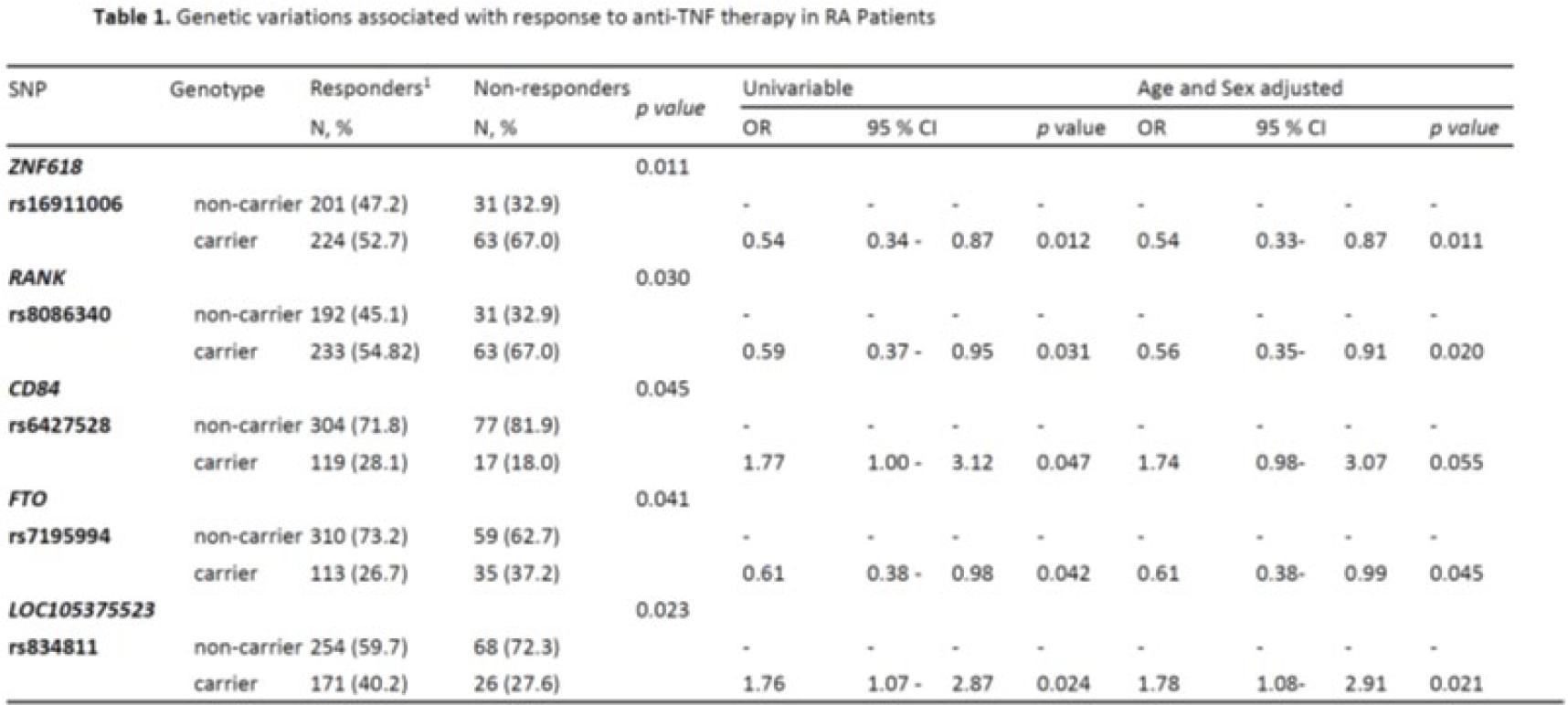
Methods: We analyzed 519 patients with RA who were identified from the Taiwan Precision Medicine Initiative (TPMI), an EHR-linked biobank cohort. Eligible participants were RA patients who had received TNFi therapy for ≥6 months and had available genotyping data. Ninety-seven SNPs previously reported to be associated with TNFi response were initially identified through a PubMed-based candidate gene search. Five variants located in immune-metabolic genes (FTO, ZNF618, RANK, CD84, and LOC105375523) were subsequently analyzed using univariable and multivariable logistic regression models. Subgroup analyses were stratified by BMI to examine potential interaction effects.
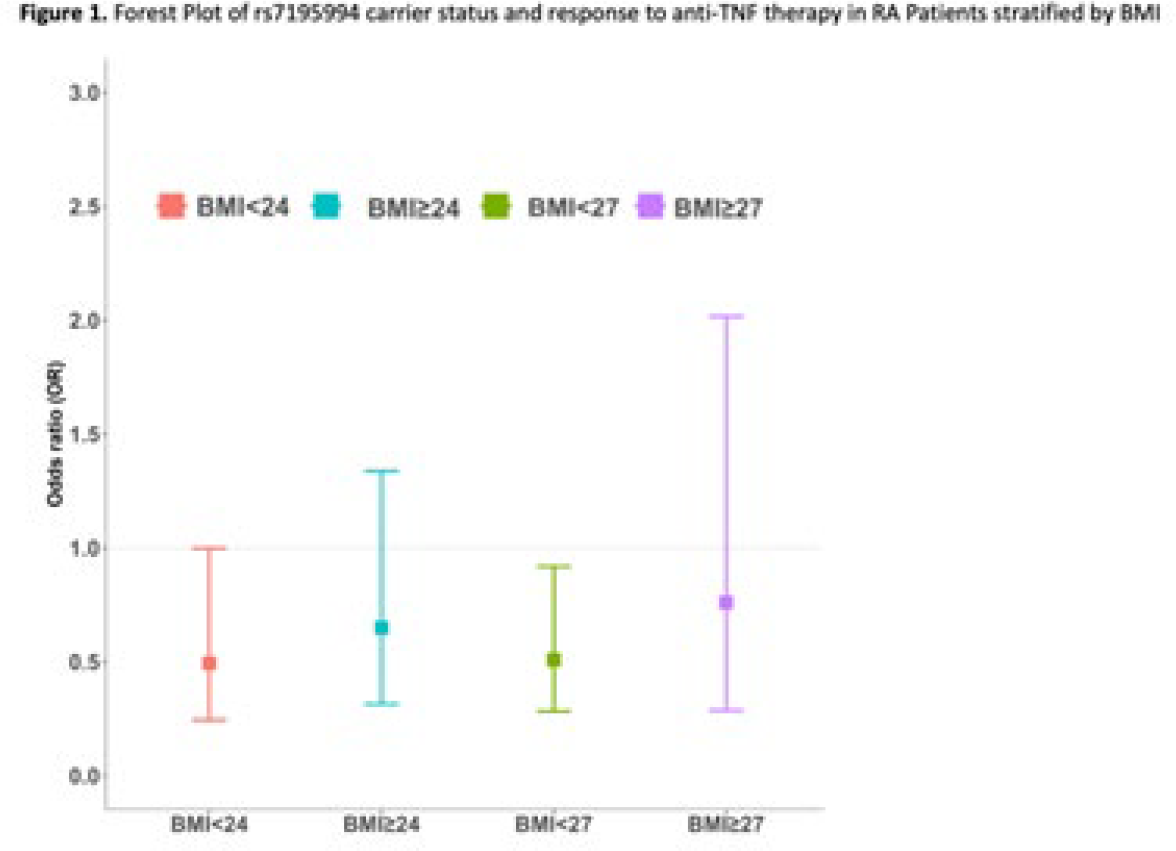
Results: FTO rs7195994, ZNF618 rs16911006, and LOC105375523 rs834811 were significantly associated with TNFi response. In multivariable analysis, only FTO rs7195994 remained an independent predictor of non-response (OR 0.44, 95% CI 0.22–0.87; p = 0.019). Among patients with BMI <27 kg/m 2 , carriers of the rs7195994 risk allele had 49% lower odds of achieving TNFi response (OR 0.51, 95% CI 0.28–0.92; p = 0.0249), while no association was observed in higher-BMI groups.
Conclusions: In this large real-world RA cohort, FTO rs7195994 emerged as a novel, BMI-modulated pharmacogenetic marker of TNFi non-response. Incorporating BMI-stratified genetic testing into RA care pathways may enable early identification of patients unlikely to benefit from TNFi, supporting precision treatment selection and improved musculoskeletal disease management. Replication in multiethnic populations and functional validation are warranted.
REFERENCES: NIL.
Acknowledgments: NIL.
Disclosure of Interests: None declared.