fetching data ... 
Background: Health-related quality of life (HRQoL) is a key outcome in rheumatoid arthritis (RA), particularly in older adults, in whom ageing-related changes, increasing comorbidity burden and functional vulnerability may substantially influence patient-perceived health status. In later life, the relationship between inflammatory disease activity and HRQoL may become less direct, especially for mental well-being. Although sex is frequently included as a covariate in studies assessing HRQoL in RA, evidence specifically addressing sex-related differences, particularly in older populations and with separate evaluation of physical and mental health domains, remains limited and inconsistent.
Objectives: To evaluate HRQoL in adults aged ≥65 years with RA using a sex-stratified, domain-specific analysis of the physical and mental components of the SF-12, and to compare patients with age- and sex-matched control subjects.
Methods: We conducted an observational cross-sectional case-control study including 180 patients with RA aged ≥65 years (65.6% women) and 195 age- and sex-matched control subjects without inflammatory rheumatic disease. HRQoL was assessed using the SF-12 questionnaire, generating Physical Component Summary (PCS) and Mental Component Summary (MCS) scores. Analyses were stratified by sex. Within the RA group, associations between HRQoL domains and clinical variables were explored using correlation analyses and sex-specific multivariable linear regression models, including disease activity (DAS28), functional disability (HAQ) and relevant clinical covariates. Effect sizes (Cohen’s d) were calculated to quantify the magnitude of HRQoL differences between patients and controls across domains and sexes, providing an estimate of clinical relevance independent of sample size.
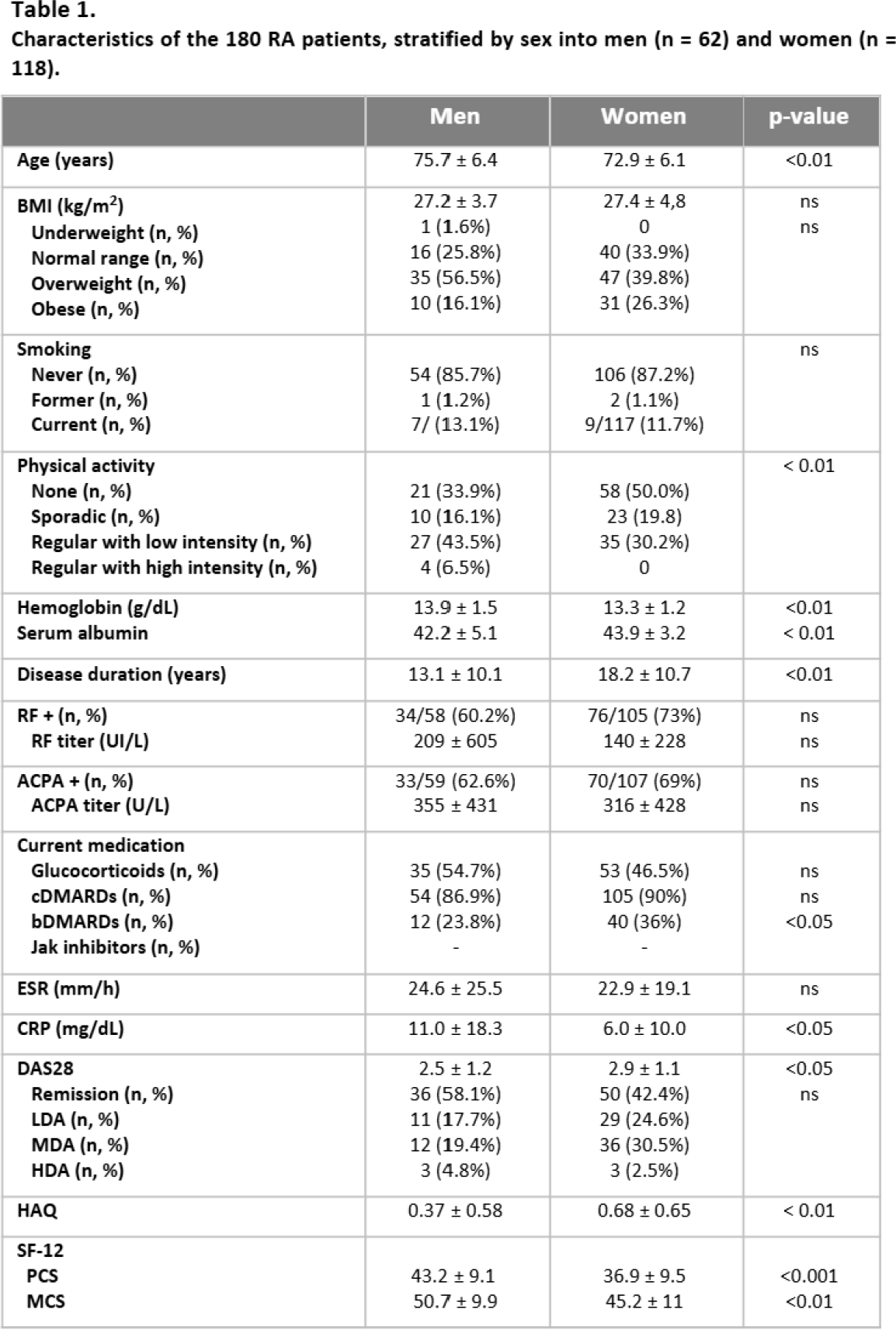
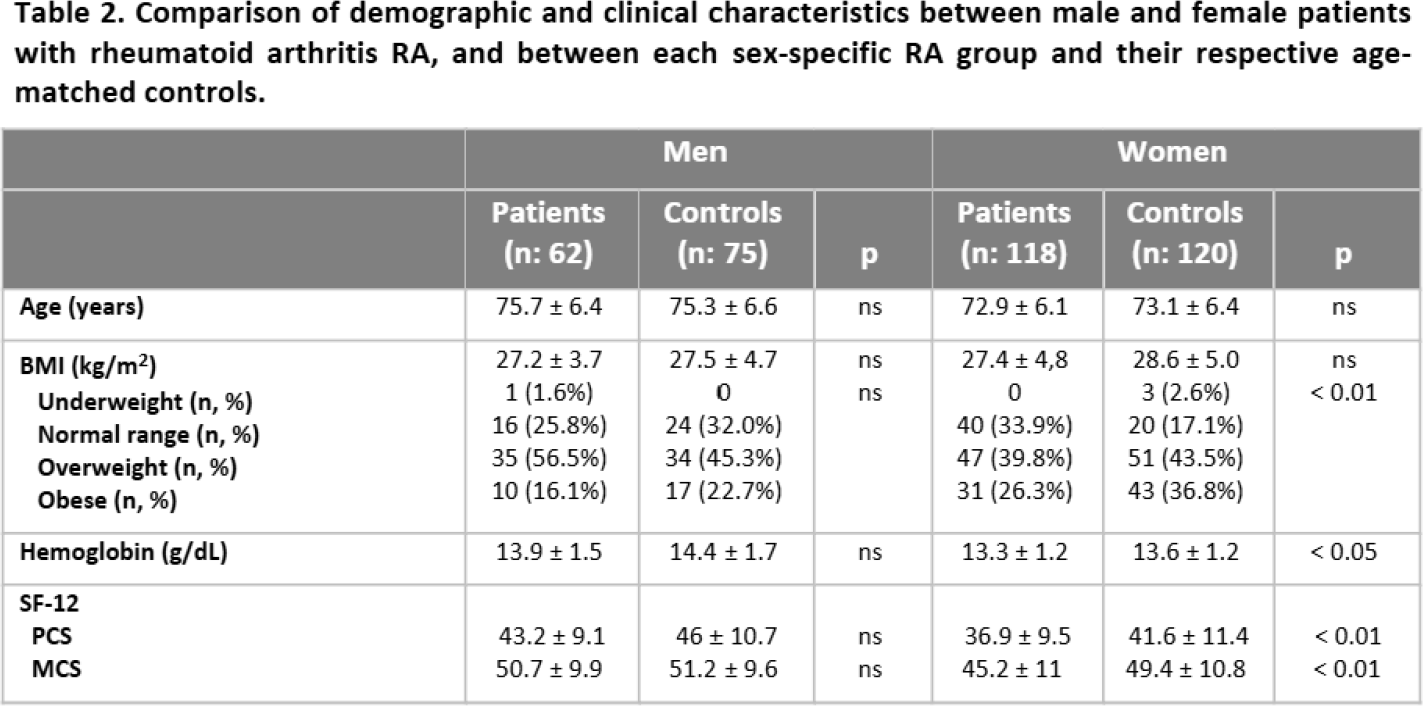
Results: Baseline characteristics and sex-stratified comparisons are presented in Tables 1 and 2 . Women with RA exhibited significantly lower PCS and MCS scores than both age-matched female controls and men with RA, indicating a broader impairment across HRQoL domains. In contrast, men with RA showed PCS and MCS values largely comparable to those of matched controls. Within the RA cohort, distinct sex-specific patterns emerged. In multivariable analyses, functional disability (HAQ) was the main independent determinant of PCS in women, whereas disease activity (DAS28) independently influenced MCS. In men, PCS was independently associated with disease activity, whereas MCS was independently associated with functional disability (HAQ), indicating a dissociation between physical and mental HRQoL domains. Effect size analyses demonstrated small-to-moderate impairments in both physical and mental HRQoL domains in women with RA compared with controls, whereas in men the magnitude of impairment was smaller and largely confined to the physical domain.
Conclusions: In older adults with RA, HRQoL impairment is heterogeneous and shows clear sex- and domain-specific patterns. Women experience a more generalized impact affecting both physical and mental health domains, whereas in men the impact appears more limited and domain-specific. Sex-specific differences in the relative contribution of inflammatory disease activity and functional disability underscore the importance of a domain-specific and sex-aware assessment of HRQoL in ageing patients with RA, and suggest that disease activity alone may not fully capture disease burden in later life.
REFERENCES: NIL.
Acknowledgments: NIL.
Disclosure of Interests: None declared.