fetching data ... 
Background: Rheumatoid Arthritis (RA) is a chronic autoimmune disease that often leads to joint pain, stiffness, and functional impairment, increasing the risk of falls in elderly patients. Falls are a major cause of injury, prolonged hospitalization, and reduced quality of life in this population. Although fall risk factors have been studied, patients’ own awareness of fall risk—a key motivator for preventive behavior—remains underexplored in elderly RA patients.
Objectives: This study aimed to assess the level of fall awareness and identify its influencing factors among elderly patients with RA, to inform targeted fall-prevention strategies.
Methods: A total of 338 elderly patients with RA were enrolled as research subjects. Fall awareness was measured using the Fall Awareness Scale, and additional instruments included the STEADI Fall Risk Self-Assessment Scale, Visual Analogue Scale for pain, and the Health Assessment Questionnaire-Disability Index. Univariate analyses (t-tests, ANOVA) and multiple linear regression were performed to identify factors associated with fall awareness.
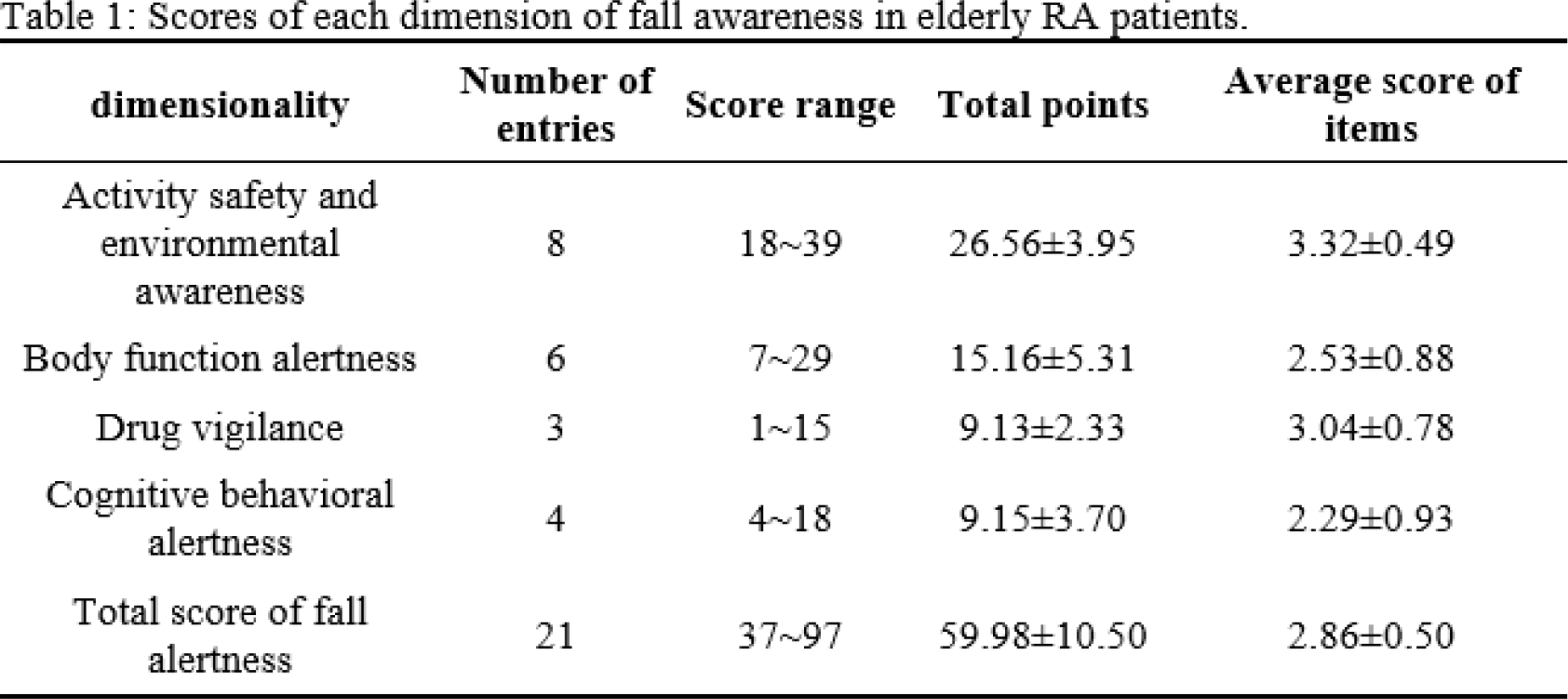
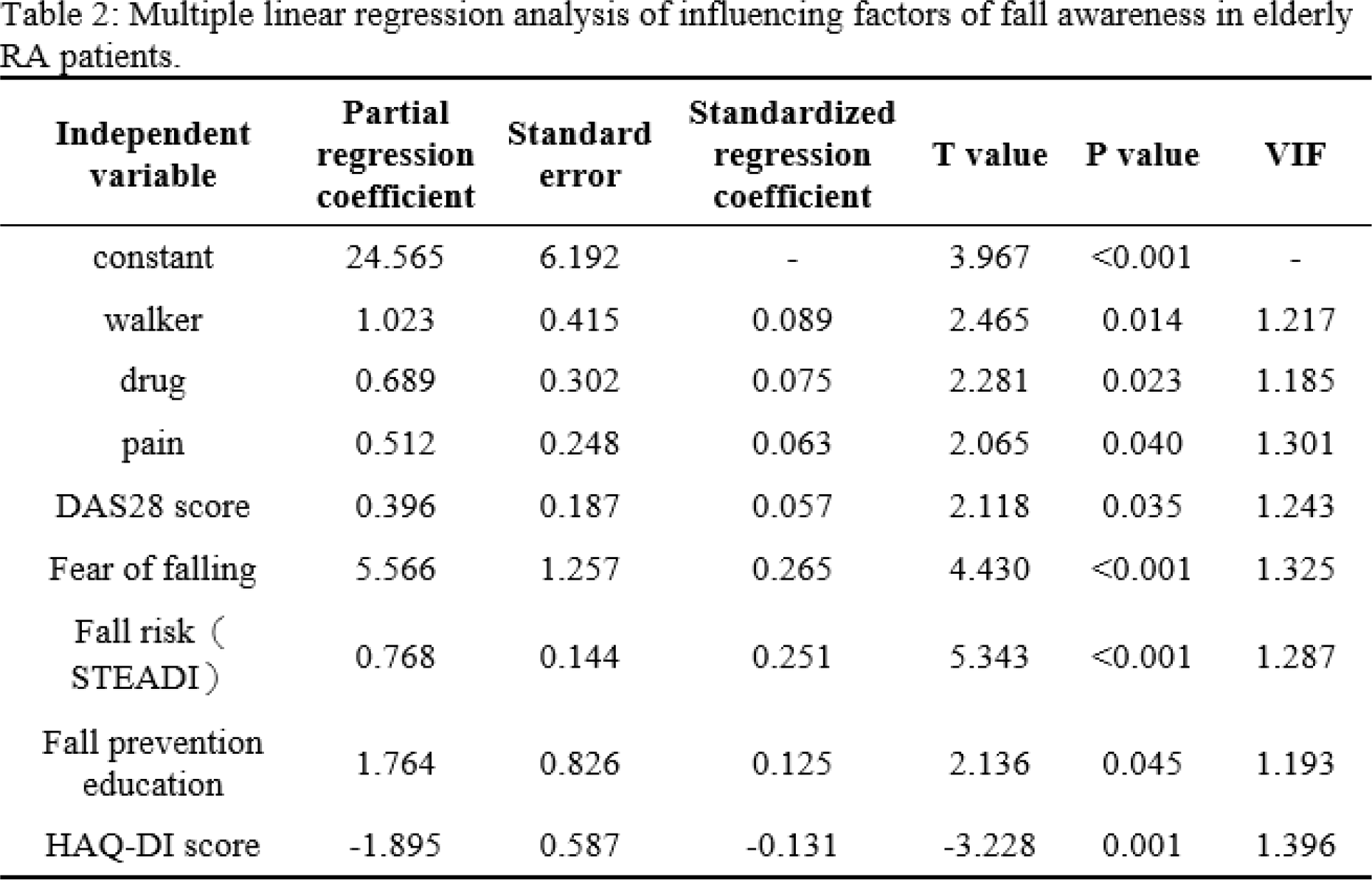
Results: The mean fall awareness score was 59.98 ± 10.50, indicating a moderately high level of awareness. Multiple linear regression identified the following significant determinants (all p<0.05): fear of falling, fall risk (STEADI score), receipt of fall prevention education, HAQ-DI score, use of walking aids, number of medications, pain intensity, and disease activity (DAS28 score).
Conclusions: Elderly RA patients generally exhibit considerable fall awareness, which is influenced by a combination of psychological, functional, clinical, and educational factors. These findings highlight the need for multifaceted, personalized fall-prevention interventions that address modifiable factors such as fear of falling, pain control, functional support, and patient education.
REFERENCES: NIL.
Acknowledgments: NIL.
Disclosure of Interests: None declared.