fetching data ... 
Background: Metabolomic studies have highlighted profound disturbances in amino acid and lipid metabolism in systemic lupus erythematosus (SLE) [1]. Alterations in aromatic amino acids and branched-chain amino acids have been repeatedly reported, with tryptophan depletion emerging as one of the most consistent metabolic signatures [2]. SLE is characterized by immune dysregulation and heightened type I interferon (IFN-I) activity [3]. IFN-I upregulates the enzymes indoleamine 2,3-dioxygenase 1(IDO1) and tryptophan 2,3-dioxygenase (TDO), which catalyze the first and rate-limiting step in the kynurenine pathway of tryptophan degradation [4]. By increasing the expression of these enzymes, IFN-I promotes the conversion of tryptophan into kynurenine and its downstream metabolites. However, the extent to which the IFN-I drives the metabolic alterations remains unclear.
Objectives: To compare the plasma tryptophan metabolite profiles in SLE patients with those of healthy controls and to investigate their association with clinical disease activity, IFN-I signature and inflammatory proteins levels.
Methods: A cohort of 216 patients with SLE from a single center in the United Kingdom was evaluated for clinical characteristics, metabolomic and proteomic profiles (including type I, II, and III interferon proteins), and an IFN-I–stimulated gene score (ISG). Untargeted liquid chromatography–mass spectrometry was performed on plasma samples from 216 SLE patients and 18 healthy controls (HC). Sample matched ISG scores (SLE, N = 209) were used to stratify patients by IFN-I status (High vs Low/Neg). Proteomic profiling of 244 inflammatory mediators was carried out using high-sensitivity nucleic-acid linked immuno-sandwich assay (NULISA) platform (SLE, N = 193). Patients were stratified into active and inactive disease groups. Inactive disease was defined as a clinical SLEDAI-2K score of 0, physician global assessment ≤0.5, prednisolone ≤ 5 mg/day and stable or low dose antimalarials, immunosuppressives, and biologics. Patients who did not fulfill these criteria were classified as active.
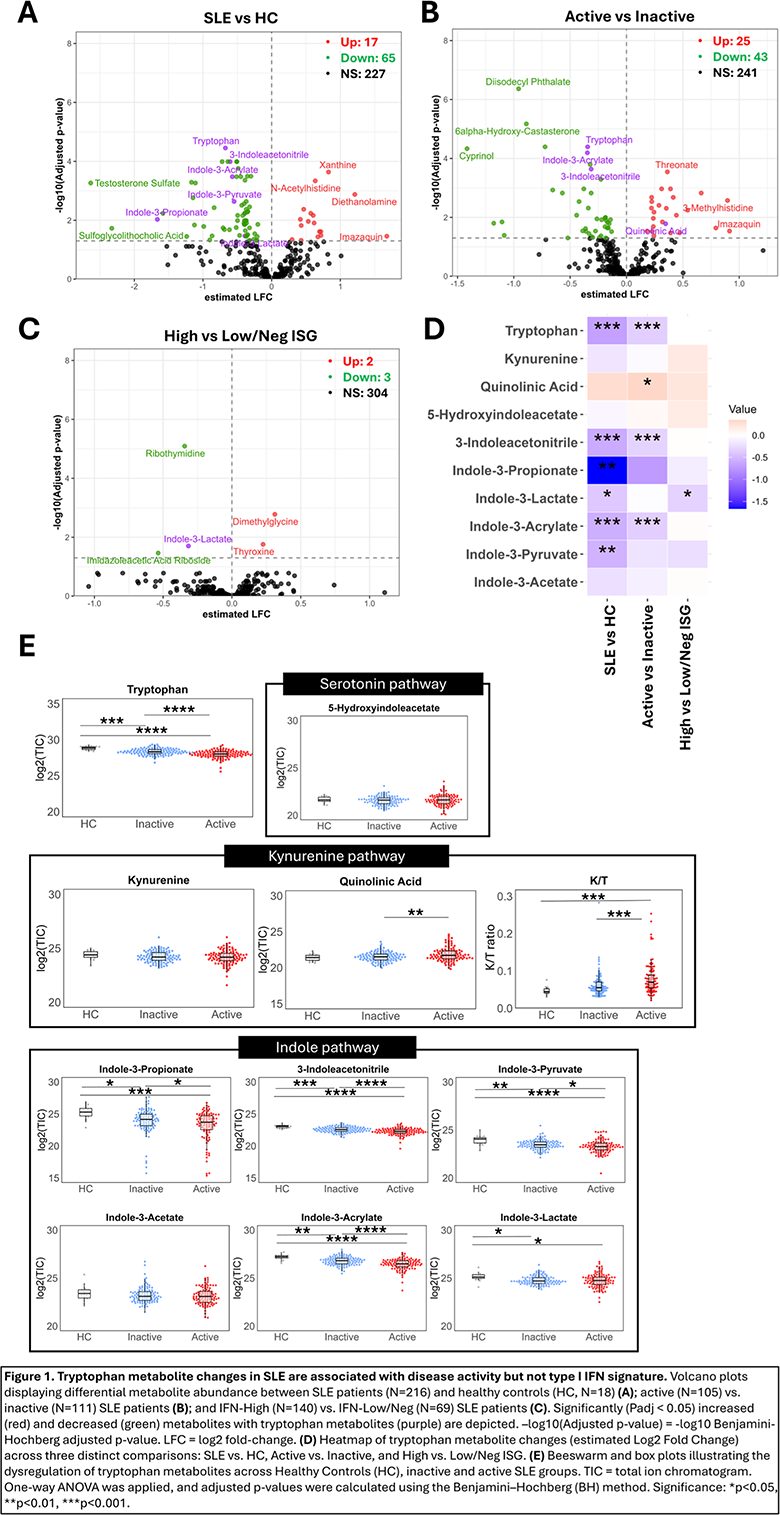
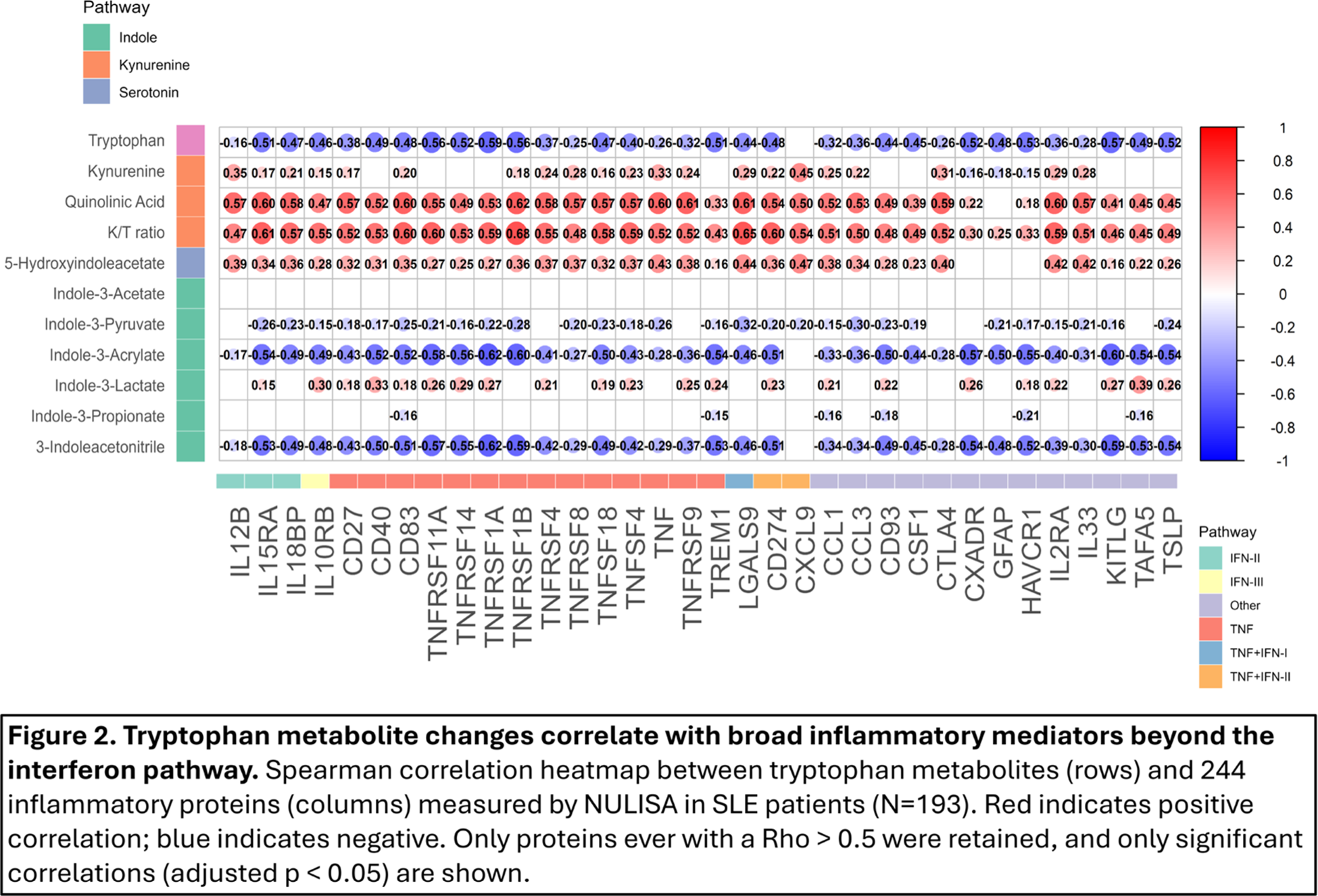
Results: We observed profound tryptophan/indoles depletion and kynurenine pathway activation in SLE patients compared to HCs (Figure 1 ). Despite the established link between IFN-I and tryptophan metabolism, there were no differences in tryptophan or indole metabolite levels when patients were stratified by ISG score. While there was no difference in the serotonin pathway, we observed significant depletion of indoles and tryptophan levels, and upregulation of the kynurenine/tryptophan ratio and quinolinic acid levels in active compared to inactive patients (Figure 1D and 1E). Correlation patterns indicated that tryptophan metabolites were linked to multiple inflammatory mediators, including the TNF superfamily, rather than being restricted to IFN-I–responsive proteins (Figure 2).
Conclusions: Changes in the tryptophan pathway in SLE were associated with active disease, suggesting that tryptophan depletion may reflect the inflammatory burden accompanying broader immune activation beyond the IFN-I pathway.
REFERENCES: [1] Mujalli, A., et al., Metabolite Alterations in Autoimmune Diseases: A Systematic Review of Metabolomics Studies. Metabolites, 2023. 13(9).
[2] Teng, X., et al., Metabolic determinants of lupus pathogenesis. Immunol Rev, 2020. 295(1): p. 167-186.
[3] Caielli, S., Z. Wan, and V. Pascual, Systemic Lupus Erythematosus Pathogenesis: Interferon and Beyond. Annu Rev Immunol, 2023. 41: p. 533-560.
[4] Schrocksnadel, K., et al., Monitoring tryptophan metabolism in chronic immune activation. Clin Chim Acta, 2006. 364(1-2): p. 82-90.
Acknowledgments: NIL.
Disclosure of Interests: None declared.