fetching data ... 
Background: The use of aspirin and statins in the management of patients with Takayasu arteritis (TAK) remains controversial. Major adverse cardiovascular events (MACE) are among the leading causes of mortality in patients with TAK. However, data regarding the impact and prognostic significance of aspirin and statin use on MACE in this population are limited.
Objectives: This study aimed to investigate the effect and prognostic value of aspirin and statin use for primary prevention on MACE in patients with TAK.
Methods: Initially, data from 172 patients followed at five tertiary referral centers were evaluated. After excluding patients with missing data, 89 adult patients with TAK who had no history of MACE at or before diagnosis were included in the study. Patients were categorized according to the use or non-use of aspirin (ASA) and/or statins for primary prevention. Groups were compared in terms of baseline clinical and laboratory characteristics, disease relapse, MACE rates, Vasculitis Damage Index (VDI) score at last follow-up, and mortality. MACE-free survival was assessed using Kaplan–Meier analysis and Cox proportional hazards regression.
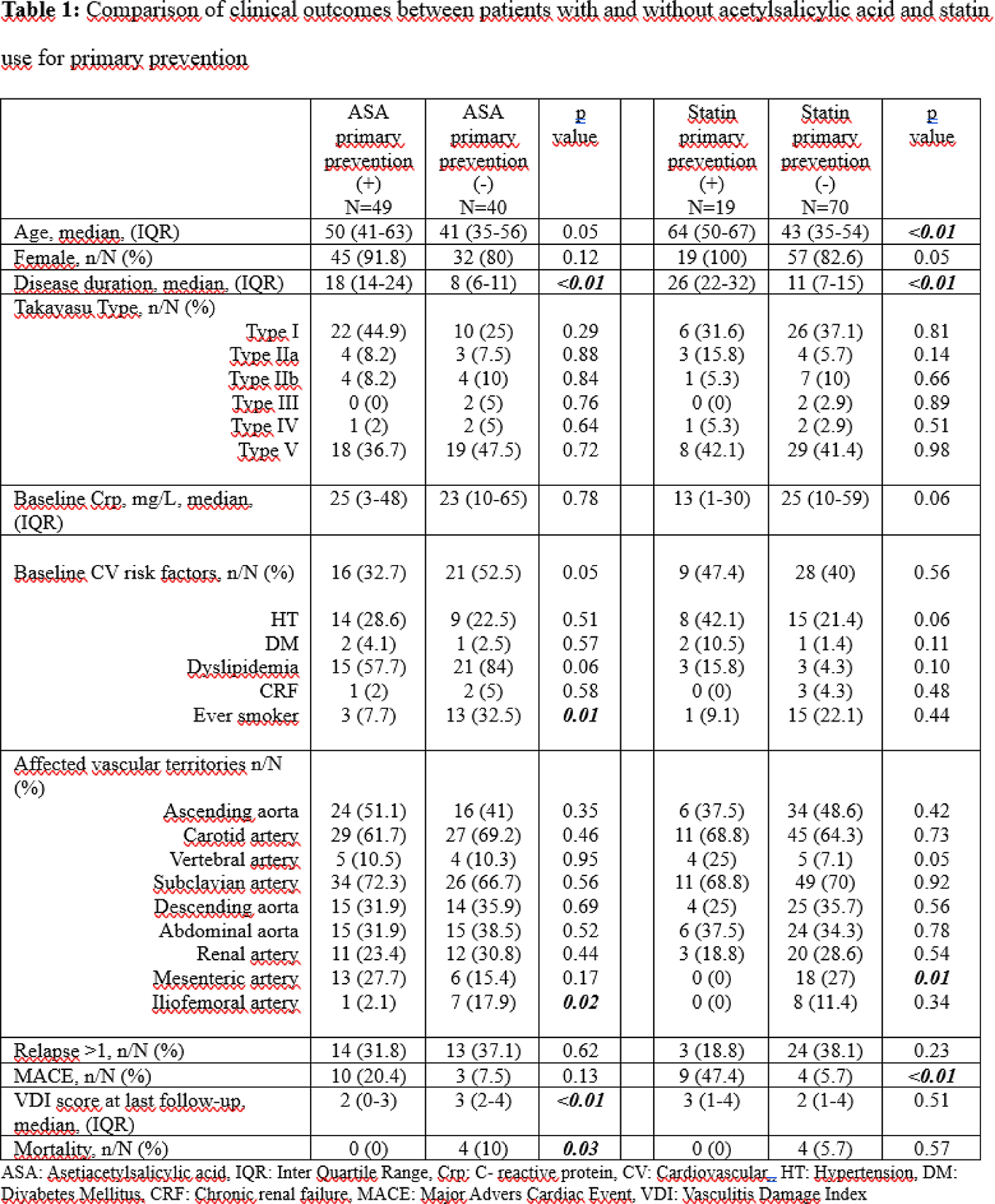
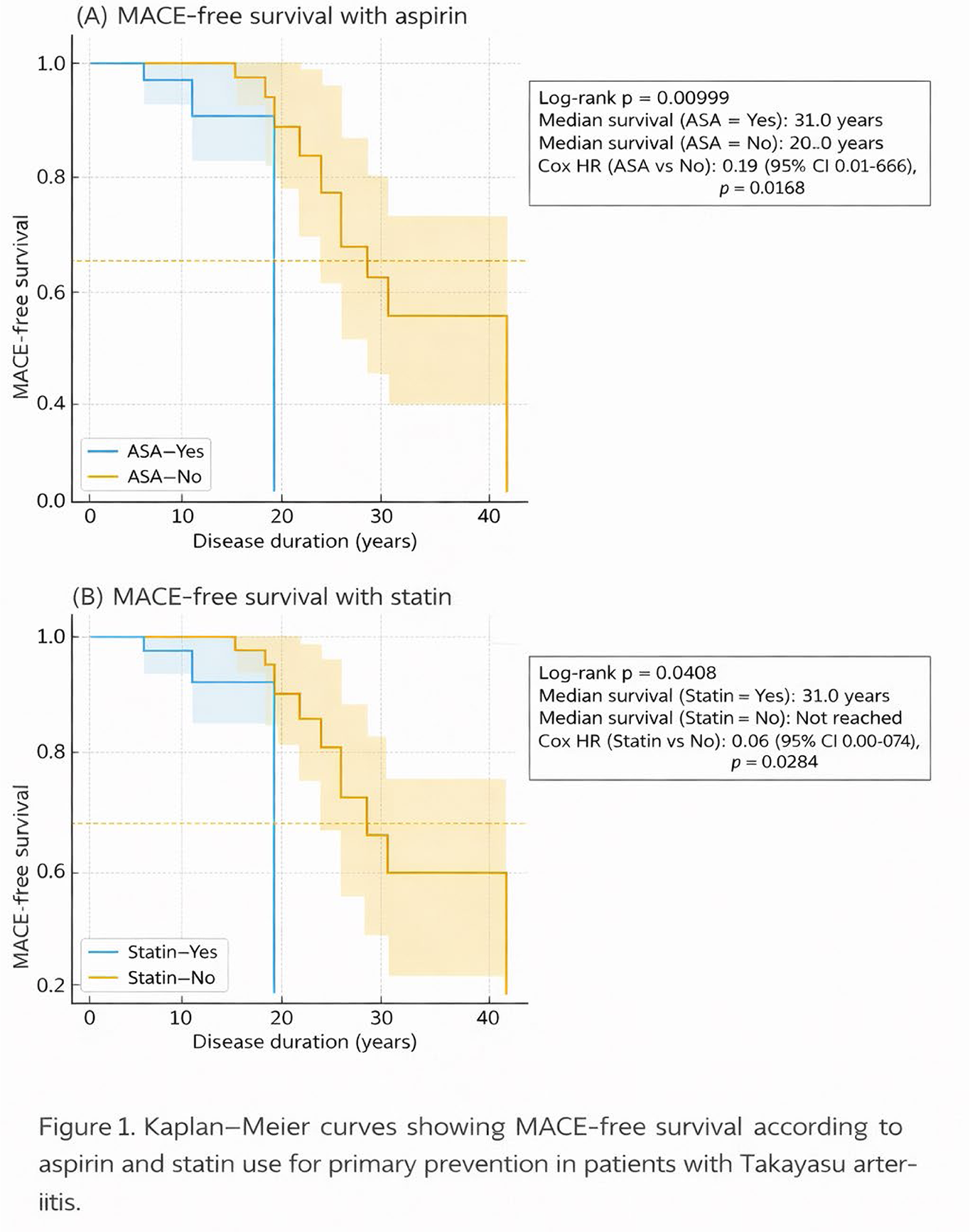
Results: There were no significant differences between patients receiving and not receiving aspirin regarding age, sex, disease type, or baseline cardiovascular risk factors; however, disease duration was significantly longer in the aspirin group (median 18 vs 8 years, p<0.01). Although MACE and relapse rates did not differ significantly between the groups, patients receiving aspirin had significantly lower VDI scores at last follow-up (median 2 vs 3, p<0.01) and lower mortality rates (0% vs 10%, p=0.03). Comparative analyses between aspirin users and non-users are presented in Table 1 . Kaplan–Meier analysis demonstrated significantly longer MACE-free survival in patients receiving aspirin (median 31 vs 20 years, log-rank p<0.009) ( Figure 1 ). Patients receiving statins were significantly older (64 vs 43 years, p<0.01) and had longer disease duration (26 vs 11 years, p<0.01) compared to those not receiving statins, while baseline cardiovascular risk factors were similar between groups. The rate of MACE was significantly higher in the statin group (47.4% vs 5.7%, p<0.01), whereas VDI scores and mortality rates did not differ significantly (Table 1). Kaplan–Meier analysis showed significantly longer MACE-free survival among statin users (median 31 years, log-rank p<0.04) ( Figure 1 ).
Conclusions: The higher MACE rates observed in aspirin- and statin-treated groups may be related to an increased cumulative number of events driven by longer disease duration, given the absence of significant differences in baseline cardiovascular risk factors. Survival analyses demonstrated longer MACE-free survival in both aspirin and statin users. Further prospective studies are clearly warranted to clarify the role of aspirin and statin use in the prognosis of Takayasu arteritis.
REFERENCES: [1] Laurent C, Prieto-González S, Belnou P, et al. Prevalence of cardiovascular risk factors, the use of statins and of aspirin in Takayasu arteritis . Scientific Reports. 2021;11(1):14404. doi:10.1038/s41598-021-93416-0.
[2] de Souza AW, Machado NP, Pereira VM, et al. Antiplatelet therapy for the prevention of arterial ischemic events in Takayasu arteritis. Arthritis Rheum. 2010;62(9):2626-2633. doi:10.1002/art.27520.
Acknowledgments: NIL.
Disclosure of Interests: None declared.