fetching data ... 
Background: Knee osteoarthritis is a prevalent, chronic, and degenerative joint disease characterized by pain, functional limitations, and reduced quality of life. Apart from advanced stage cases requiring total knee arthroplasty, patients are typically managed with a range of conservative approaches. However, no treatment to date has been shown to cure the disease. Consequently, effective management depends on strategies aimed at symptom control and the adoption of sustainable coping mechanisms throughout the patient’s lifetime.
Objectives: This study compared the effectiveness of a video-assisted home exercise program and topical agents in management of early knee osteoarthritis. Thus, the trial aims to answer the clinically pertinent and practical question regarding the optimal elements of a home-based treatment package for individuals with knee osteoarthritis.
Methods: This prospective, single-blind, randomized controlled trial included 90 adults diagnosed with knee osteoarthritis according to the American College of Rheumatology (ACR) criteria and classified as Kellgren–Lawrence grade I–II. Participants were randomly assigned to either a home exercise group (patient education + video-based exercises) or a topical agent group (patient education + 1.5% diclofenac sodium gel). Over a six-week intervention, the exercise group performed the prescribed program five days per week, while the topical agent group applied the gel twice daily, five days per week. Treatment adherence was monitored via patient logs and reinforced through a follow-up telephone call at week 3 for both groups. The primary outcome was knee pain, measured by the Numeric Pain Rating Scale (NPRS). Secondary outcomes included the Western Ontario and McMaster Universities Osteoarthritis Index (WOMAC) and health-related quality of life (SF-12).
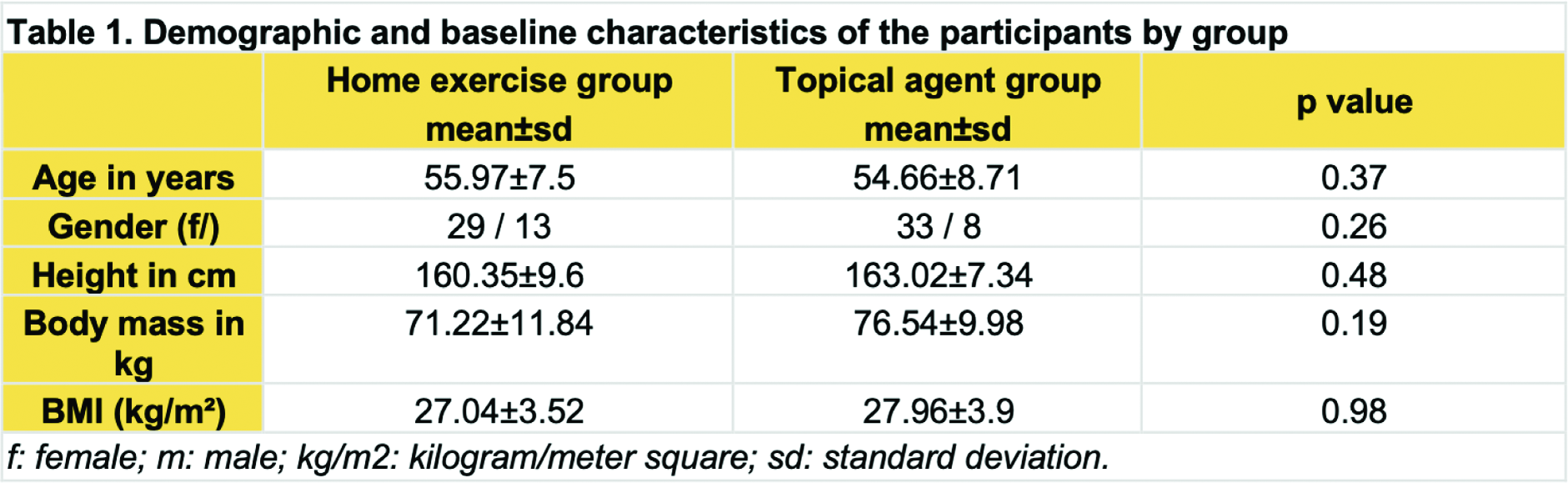
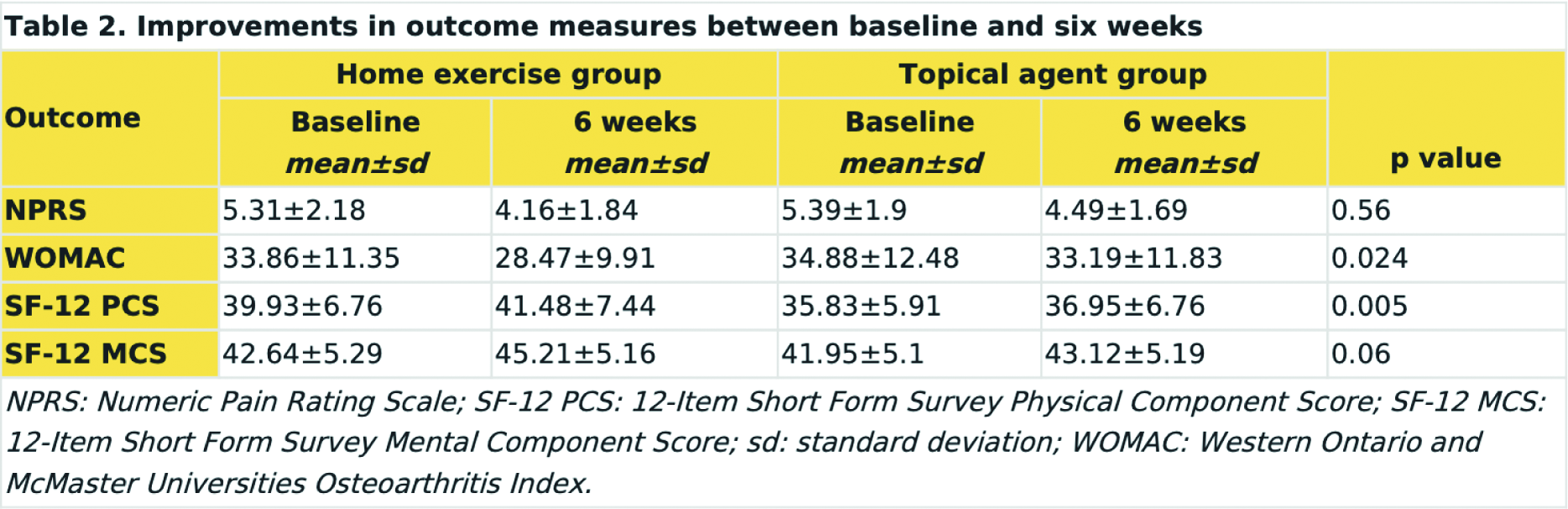
Results: A total of 83 patients (62 women; mean age 54.66 ± 8.78 years) completed the study, with no significant baseline differences between groups. Both groups showed significant improvements across all measures over the 6-week period (p < 0.05). Between-group analysis revealed no significant difference in NPRS pain reduction (p = 0.56); mean changes from baseline were Δ–1.15 (95% CI: –1.96 to –0.54) in the home exercise group and Δ–0.90 (95% CI: –1.28 to –0.25) in the topical agent group. However, significant group × time interactions were observed for the WOMAC total score and the SF-12 physical component (p < 0.05), indicating superior improvements in functional status and health-related quality of life in the home exercise group. No adverse events were reported in either group during the study period.
Conclusions: Although both home-based exercise and topical diclofenac are commonly recommended strategies for early-stage knee osteoarthritis, our findings demonstrate that home-based exercise offers superior benefits in improving functional outcomes and physical health-related quality of life, despite similar efficacy in short-term pain relief. Therefore, structured video-based exercise programs should be prioritized in clinical practice as a primary non-pharmacological intervention to enhance functional recovery beyond symptomatic pain management.
REFERENCES: [1] Bannuru RR, Osani MC, Vaysbrot EE, et al. OARSI guidelines for the non-surgical management of knee, hip, and polyarticular osteoarthritis. Osteoarthritis and cartilage. 2019;27(11):1578-1589.
[2] Kolasinski SL, Neogi T, Hochberg MC, et al. 2019 American College of Rheumatology/Arthritis Foundation Guideline for the Management of Osteoarthritis of the Hand, Hip, and Knee. Arthritis & rheumatology (Hoboken, NJ). 2020;72(2):220-233.
[3] Katz JN, Arant KR, Loeser RF. Diagnosis and Treatment of Hip and Knee Osteoarthritis: A Review. Jama. 2021;325(6):568-78
Acknowledgments: NIL.
Disclosure of Interests: None declared.