fetching data ... 
Background: Lifestyle has a substantial impact on disease outcomes and quality of life in people with rheumatic and musculoskeletal diseases (RMDs). Healthy behaviors, such as balanced nutrition, regular physical activity and sufficient sleep can reduce symptoms and improve overall wellbeing. However, many people with RMDs struggle to maintain these habits in daily life. In 2025, the National Association ReumaZorg Nederland (RZN), the Dutch patient organization for people with RMDs, initiated a consultation among their members on Lifestyle in RMDs. The aim was to better understand the experiences, challenges and needs regarding a healthy lifestyle of people with RMDs.
Objectives: To explore:
Barriers to adopting a healthy lifestyle among people with RMDs.
Perspectives on possible strategies to overcome these barriers.
Opportunities for our patient organization and healthcare professionals to support shared decision-making on lifestyle within rheumatology care.
Methods: A mixed-method approach was used to capture comprehensive patient insights:
Literature review: International and national lifestyle guidelines (e.g. EULAR, ACR, WHO, Dutch Society for Rheumatology (NVR) were reviewed across six lifestyle domains: nutrition, physical activity, relaxation, sleep, social connection and substance use. This review summarized existing recommendations per domain, general as well as specifically relevant to RMDs, to establish formal definitions and guidance for healthy living.
Focus group: An online focus group was conducted with 11 people living with various RMDs (rheumatoid arthritis, psoriatic arthritis, systemic lupus erythematosus, fibromyalgia and spondyloarthritis). Discussions explored perceived barriers, potential solutions and the anticipated roles of patients, healthcare professionals and our patient organization.
Online survey: A national questionnaire, based on the literature review and focus group findings, was distributed via RZN’s channels and completed by 81 respondents (93% female; mean age 54 years). Data were analyzed descriptively and thematically to identify key barriers and facilitators across the six lifestyle domains.
Results: Participants showed high awareness and strong motivation for a healthy lifestyle, but faced multiple practical and emotional barriers to consistently applying lifestyle recommendations:
Nutrition: 99% recognized its importance, but only 16% reported having a healthy diet. Fatigue (33%), unclear information (25%) and food costs (19%) were main barriers. Participants expressed a need for affordable healthy food (56%), professional guidance (32%) and practical, reliable information (30%).
Physical activity: 97% knew the benefits of exercise when having an RMD, but only half met the activity guidelines. Pain (44%), low energy (54%) and physical limitations (26%) were key barriers. Participants emphasized the need for reimbursement of physiotherapy (52%) and support from professionals familiar with RMDs (48%).
Relaxation and sleep: Although almost all participants knew about their relevance, only 57% relaxed regularly and 37% slept more than 7 hours per night. Stress, pain and guilt about resting were major obstacles. Apps, mindfulness and planning rest moments were seen as helpful.
Social connection: 85% valued social contact, yet 36% felt insufficiently supported. Fatigue (44%), fear of burdening others (41%) and feeling misunderstood (33%) contributed to loneliness, especially among younger adults. They especially missed age-appropriate peer connections.
Substance use: Rates were low (5% smoking, 44% alcohol). Some used alcohol to cope with pain or stress. 95% used medication and 88% adhered well, although 10% experienced side effects or forgetfulness.
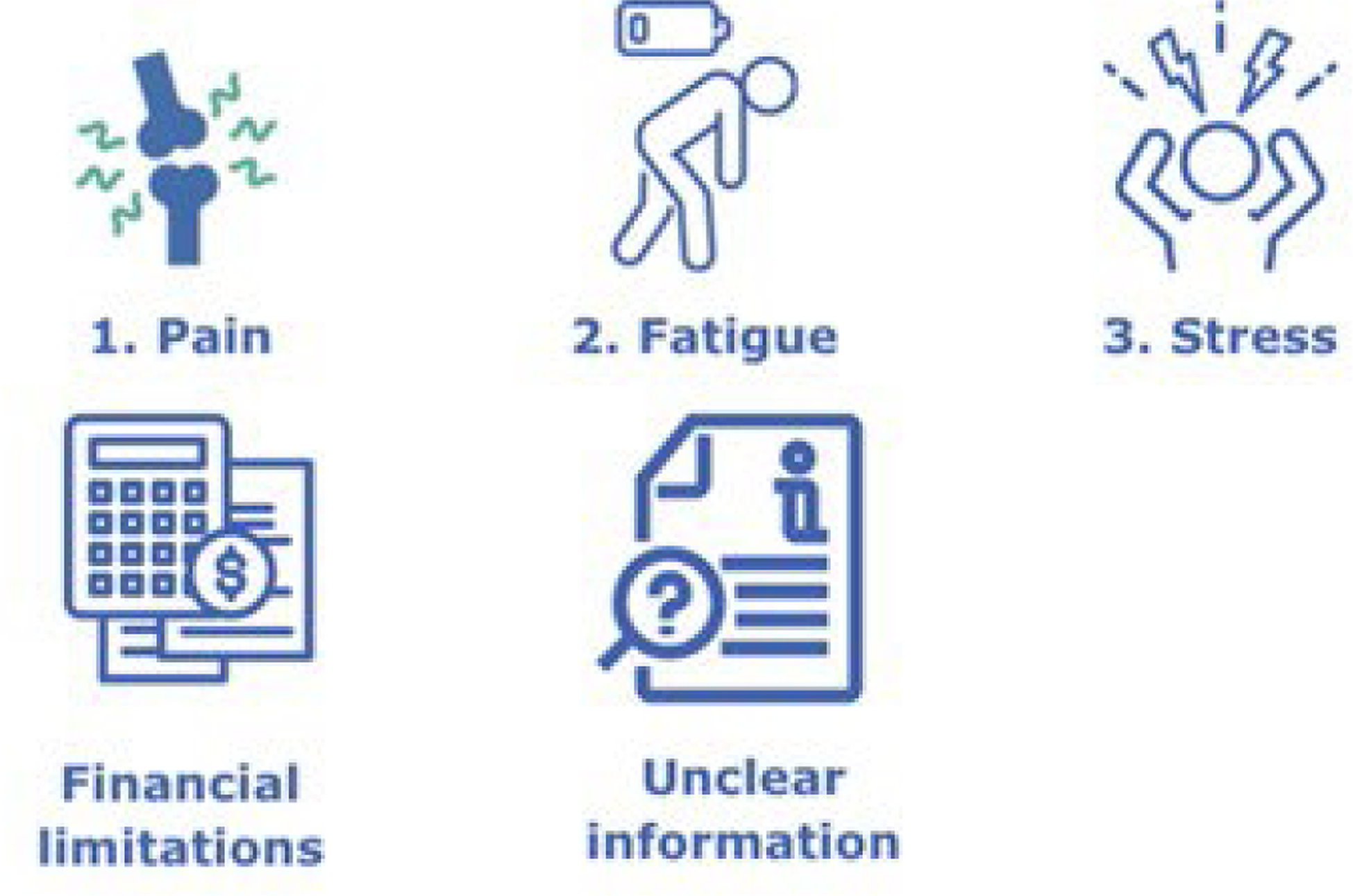
Top barriers overall : pain, fatigue, stress, financial limitations and unclear information (see figure 1)
Across domains: Participants highlighted the importance of personalized and practical guidance from professionals familiar with RMDs, access to reliable information, adequate reimbursement for lifestyle-related support and opportunities for peer connection. They identified a key role for our patient organization in improving access to reliable information, enhancing professional knowledge, advocating for reimbursement and facilitating peer support through online and local initiatives.
Conclusions: People with RMDs are highly motivated to adopt a healthy lifestyle but face substantial practical, emotional and financial barriers across all lifestyle domains. Personalized, disease-specific guidance, accessible and reliable information and adequate financial support for lifestyle-related care were identified as key needs.
Our patient organization can play an important complementary role by:
Improving access to trustworthy lifestyle information.
Supporting healthcare professionals.
Advocating for appropriate reimbursement.
Facilitating peer networks.
Strengthening collaboration between patients, healthcare professionals and patient organization may enhance shared decision-making on lifestyle in rheumatology care, help people with RMDs integrate healthy behaviors into daily life, empower self-management and ultimately improve quality of life.
Top 5 barriers to adopting a healthy lifestyle among people with RMDs
REFERENCES: NIL.
Acknowledgments: NIL.
Disclosure of Interests: None declared.