fetching data ... 
Background: Patient and Public Involvement (PPI) has shifted from optional to essential in health and care research. The UK Standards for Public Involvement (NIHR, 2019) define six domains: Inclusive Opportunities, Working Together, Support & Learning, Communications, Impact, and Governance, to promote consistency and accountability. In rheumatology, the 2023 EULAR recommendations update earlier guidance, emphasising clear roles, training, coordination, and evaluation. PPI offers clear benefits to research and researchers, including improved relevance, enhanced recruitment, and stronger trust between stakeholders (Hannigan, 2018; Lammons et al., 2025). However, PPI is often concentrated in early research stages, with limited involvement in later phases such as analysis and dissemination (Vanneste et al., 2025). Arthritis UK has progressively embedded PPI throughout its funding cycle since 2008, requiring and assessing involvement in funded projects, and more recently setting clear guidelines and providing support to enable this. Measuring the impact of PPI in health research is complex. Although tools like surveys, checklists, and frameworks exist, none are widely accepted or implemented. Qualitative approaches focus on relevance and relationships, while quantitative methods track metrics like number involved and outputs, yet both face methodological challenges (Lammons et al., 2025; Pyne et al., 2024; Hannigan, 2018).
Objectives: To evaluate the presence and impact of PPI within Arthritis UK’s funded research portfolio, identify gaps, and generate an evidence base to improve transparency, consistency, and best practice adoption.
Methods: An indicative literature review was undertaken to narrow the scope and potential themes. This informed four workshops with 26 researchers from varied disciplines. Participants were either Arthritis UK committee members or self-selected via a newsletter advert. A Research Partner (RP), a person living with arthritis, co-produced this work, including coding, validation, and workshop delivery. Descriptive statistics summarised the prevalence and characteristics of PPI activities and RP scoring on applications submitted in selected 2024 funding rounds. A mixed-methods analysis of the Arthritis UK funding portfolio, combined quantitative and qualitative data from applications, reports, and outputs (publications, policy documents). Narrative data underwent thematic analysis to identify patterns in impact, challenges, and best practices. Elsevier’s Research Collaboration Unit explored policy implications of PPI, integrating five datasets using Power Query, incorporating Researchfish (owned by Elsevier) and SciVal data. Awards with and without PPI were compared, using policy citations as a proxy for impact, controlling for publication age, citation score, and research stage.
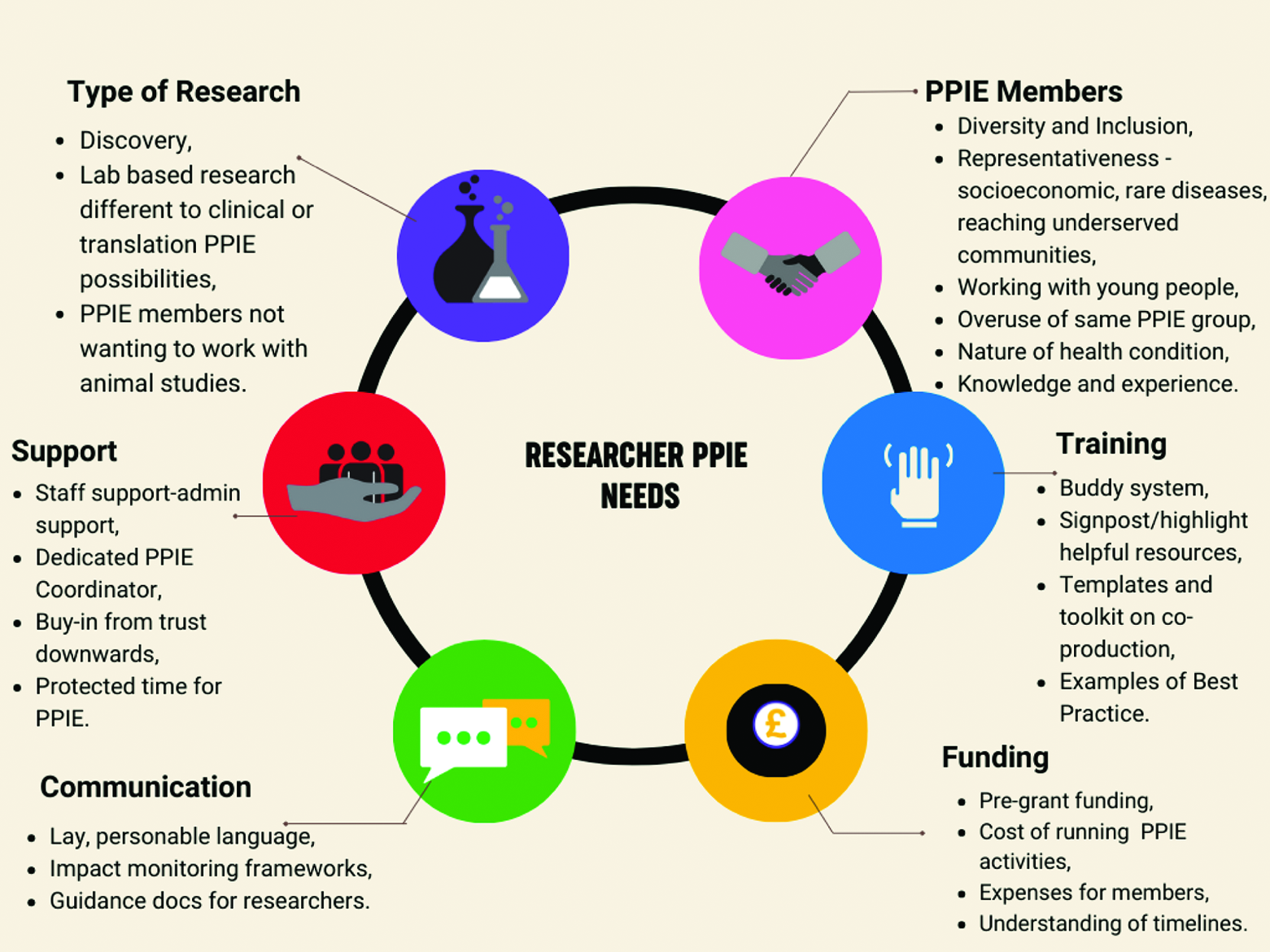
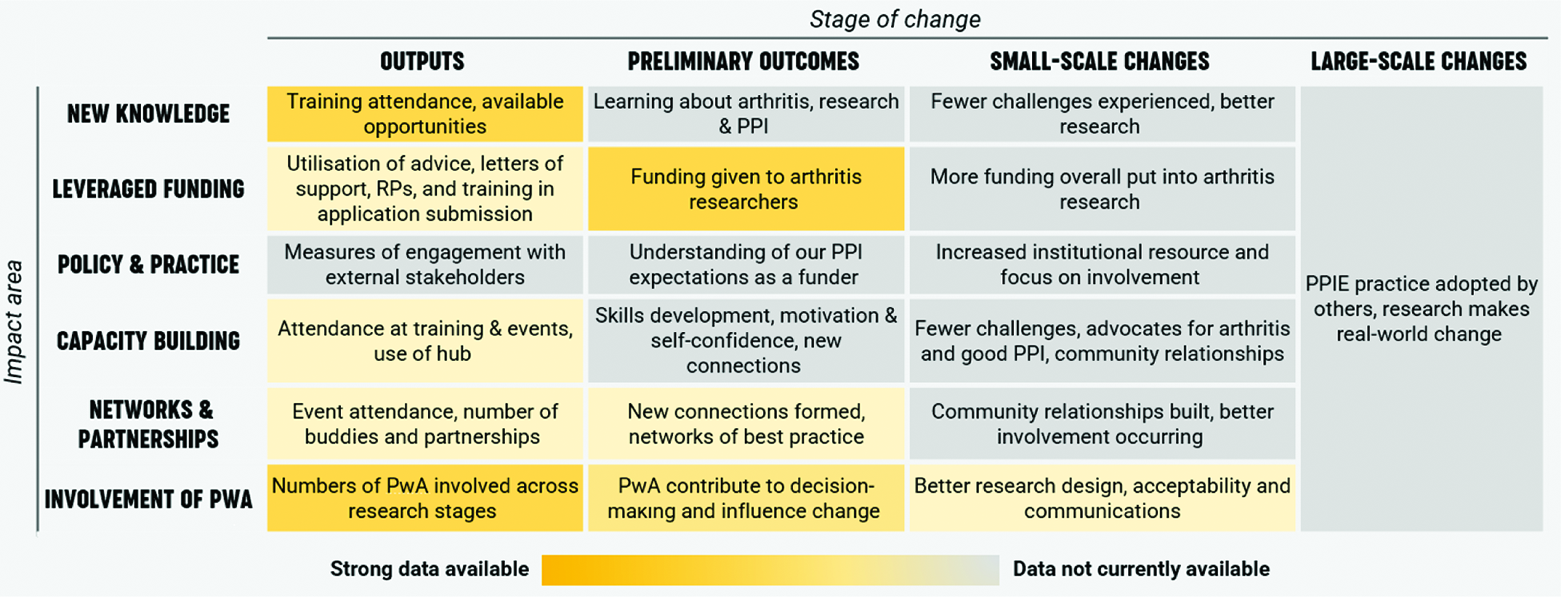
Results: The literature review and workshops highlighted recurring challenges (figure 1), and six themes emerged, including support in communication, funding, training, and diversity. PPI was seen as particularly challenging in laboratory-based research. Annual reporting analysis showed 70% of researchers who responded involved patients, most commonly in prioritising research questions, dissemination, design, and funding applications. Challenges selected most commonly included maintaining relationships, representativeness, resource limitations, and recruitment difficulties. Whereas common success factors included enthusiasm, continuous involvement, trust-building, collaboration, training, and resource availability. Analysis of qualitative data built on these findings. Most commonly, researchers described how including PPI in the prioritisation and planning stages benefited their project. They also shared that early involvement improved project relevance, recruitment, and responsiveness, and deepened researchers’ understanding of conditions. Despite the numerous challenges outlined, funding applications averaged scores of 4.4 for PPI in application development and 4.3 for PPI plans (on a 1–6 scale, with 6 indicating high quality). Policy citation analysis indicated awards with PPI achieved faster policy citations and were more likely to be referenced in policy documents than those that didn’t have PPI, suggesting enhanced research relevance and uptake. There were some challenges in controlling for other factors and in categorising the portfolio, but this initial analysis shows promise for future exploration. A lack of data and comparison over time remains a challenge. Arthritis UK has developed a PPI impact measurement framework (figure 2) and associated measures. This is based upon existing impact measurement literature and workshops with PPI members to explore the impact they feel they made. This insight has led to a project which updated cross-funder PPI reporting questions to better reflect these impact areas. A companion project is now working toward harmonised application questions to promote greater alignment, reduce the reporting burden, and enable sector-wide analysis and action.
Conclusions: Funder requirements and PPI standards have significantly expanded PPI within Arthritis UK’s research portfolio. To move beyond compliance and achieve genuine, meaningful partnerships, continued efforts are needed to inspire and equip researchers, and to bring researchers and people with arthritis together to foster dialogue, mutual understanding, and shared decision-making throughout projects. Funders have an enabling role beyond setting funding requirements, in working across the sector on harmonising reporting, implementing support, and reviewing and reporting on impact data. Together, this will further strengthen the quality and embed involvement throughout the research lifecycle.
Core enablers and barriers identified from PPI analysis
Arthritis UK’s PPI impact framework summary
REFERENCES: NIL.
Acknowledgments: NIL.
Disclosure of Interests: None declared.