fetching data ... 
Background: Youth with rheumatic diseases (RMD) face many unique challenges which are not well addressed and supported, such as significant medical and psychological burdens regarding their conditions both within school, the workforce, and in social contexts. There is a demand to better understand the lived experiences and perceived needs among this community in order to better inform initiatives and programs, resulting in more effective and efficient support. Take a Pain Check Foundation (TAPC) and the Canadian Arthritis Patient Alliance (CAPA), two grassroots, patient-driven organizations, joined efforts in launching the Make Rheum for Youth Project, which aims to increase insights into the challenges faced by youth and young adults living with RMD in order to better support them throughout their diagnoses.
Objectives: To identify the needs of the broader patient community through a survey examining the impact of rheumatic and musculoskeletal diseases (RMDs) on multiple dimensions of daily life. The survey centered on integrative peer feedback to capture shared lived experiences and deepen understanding of the challenges faced by youth and young adults living with RMDs. By synthesizing participant responses, grassroots organizations such as Take a Pain Check (TAPC) and the Canadian Arthritis Patient Alliance (CAPA) can better understand the physical and psychological burdens of these conditions and design programs that are responsive to the collective experiences and needs of this population.
Methods: The Make Rheum for Youth survey was developed with input from people with lived experience of rheumatic conditions. The survey was distributed electronically through SurveyMonkey and included several questions related to medication access and costs, mental health, work and school life, healthcare, and social support topics. Responses were collected using a five-point Likert scale (strongly agree, agree, neither agree nor disagree, disagree, strongly disagree) and an option to “prefer not to answer”. These responses were converted to a five-point numeric scale, and weighted averages for each topic were calculated to identify areas of greatest concern. An open-ended question was included to capture any qualitative insights from survey participants and better understand what respondents would most like to change about their experience living with RMD. Open-ended responses were summarized and categorized to identify common themes. Respondents’ demographic data, including location, age, gender, population, and type of rheumatic disease, were also collected. A Youth Development Coordinator with lived experience of a rheumatic condition conducted the analysis.
Results: A total of 56 participants most commonly from Canada (50%) and the United States (30%) completed the survey, of whom the majority were female (87%) and the remaining being male and non-binary. Respondents reflected a range of ages:
the ages of 18 and 24 (47%),
29% between the ages of 25 - 29 and
22% between the ages of 13 and 16.
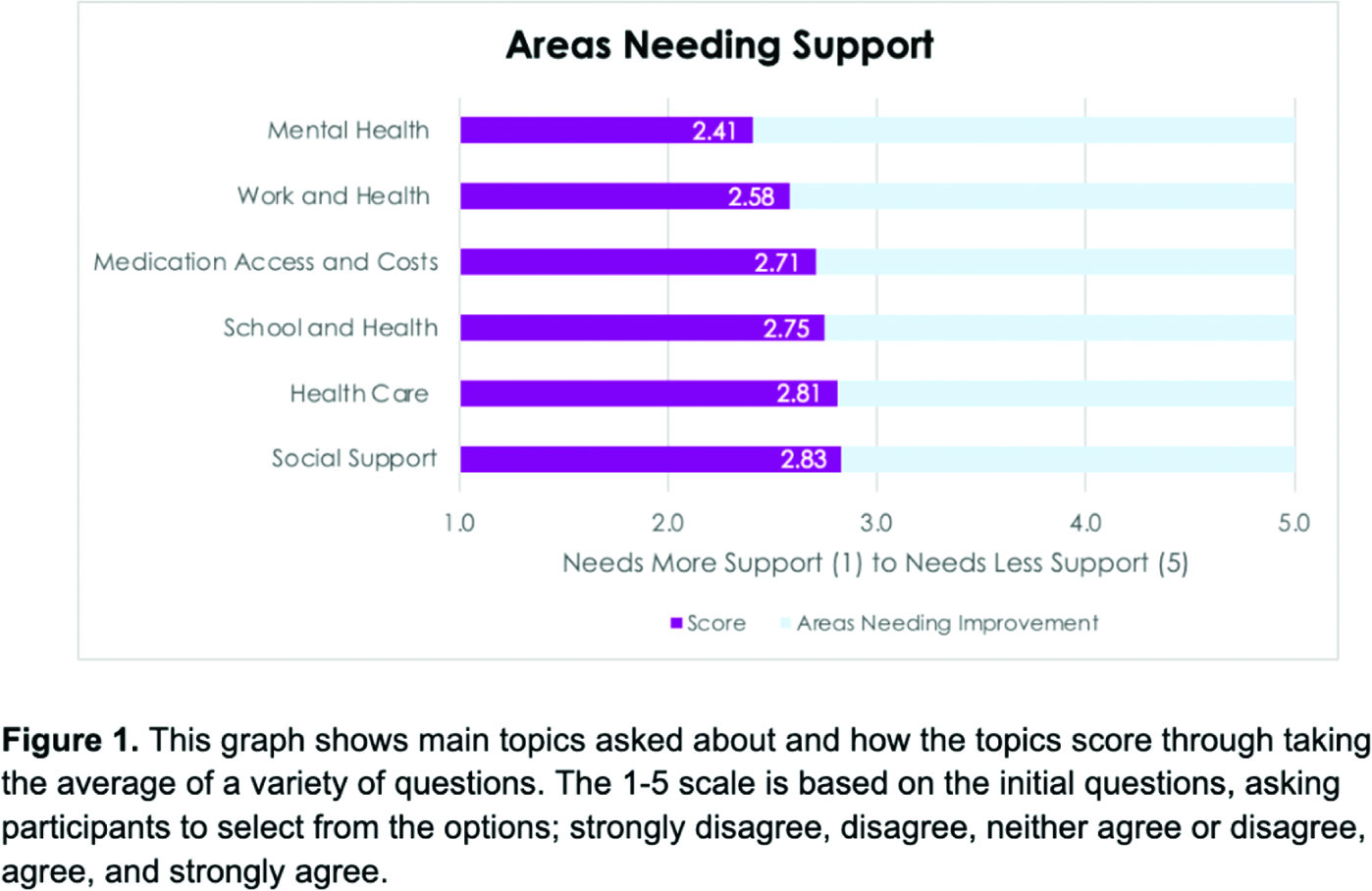
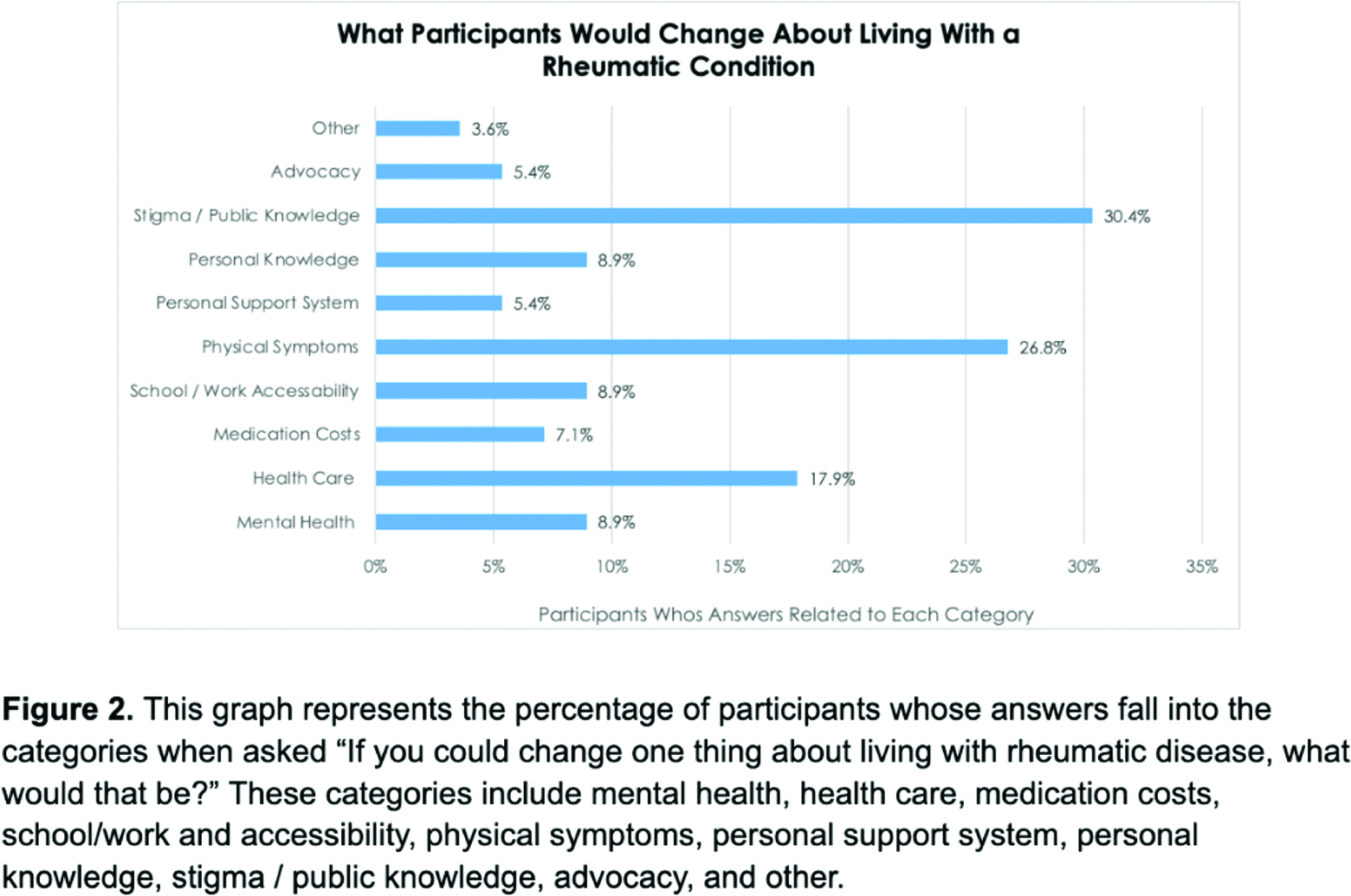
The most frequently reported diagnoses of RMD were juvenile idiopathic arthritis (51%) and rheumatoid arthritis (25%), with additional conditions including Ehlers-Danlos syndrome, antiphospholipid antibody syndrome, MAS (Macrophage activation syndrome), and POTS (Postural Orthostatic Tachycardia Syndrome). Weighted Mean Scores from each topic were summarized (Figure 1) and indicated a need for more support in all survey areas, with more social support being at the top of participants’ priorities. When asked about personal medical affordability, over half of the respondents (55%) expressed concern regarding future drug reimbursement after completing their education. Close to half of participants are unsure how they will finance medications long-term. Over 40% of participants indicated currently being reimbursed through their parents’ employer-provided plan, while a large number (37%) indicated paying for the medications out of pocket. The open-ended section of the survey, which questioned what participants would change about living with rheumatic diseases, resulted in a variety of responses that were analyzed and compiled into common themes. Most frequently identified themes include: reducing stigma and public misunderstanding (30%), improving physical symptoms (27%), enhancing health care experiences (18%), increasing accessibility in school or work (9%), and improving mental health (9%).
Conclusions: The Make Rheum for Youth survey emphasizes the unique needs and current challenges among youth and young adults living with rheumatic diseases. These findings indicate the need for integrated care models that address both physical and psychosocial aspects of disease management. To reduce this burden, enhanced access to proper financial resources and education on insurance navigation are critical and tailored support in pediatric to adult transition clinics. Likewise, the results underline the importance of mental health support and targeted intervention to tackle the stigma of chronic illness. The participants expressed a desire for greater education about disease management, treatment options, and self-advocacy. Developing youth-led and tailored educational resources and programs is a viable strategy to support individuals to take active roles in their care.
REFERENCES: NIL.
Acknowledgments: NIL.
Disclosure of Interests: Natasha Trehan AbbVie, AbbVie, Johnson & Johnson, Take a Pain Check Foundation has received grants from Pfizer, Organon, AstraZeneca, AbbVie, Johnson and Johnson, Accord, UCB, Amgen, Augurex, and Takeda., Angadh Bhattal: None declared, Sophie Wagner: None declared, This project was funded through a mix of funding from the Government of Canada, Innovative Medicines Canada, and the Ontario Brain Institute. Laurie Proulx works part-time for the Canadian Arthritis Patient Alliance (CAPA) as Managing Director and receives consulting fees. CAPA receives a mix of funding from various sources including government, pharmaceutical companies, and research institutes.