fetching data ... 
Background: Chimeric antigen receptor T-cell (CAR-T) therapies targeting CD19 have shown unprecedented effects in treatment-resistant autoimmune diseases such as systemic lupus erythematosus (SLE), rheumatoid arthritis (RA), and others. However, the limitations in patient selection for CAR-T arise from significant safety concerns, complex logistical hurdles, cost and unsuccessful retreatment if flare occurs. Recently, bispecific antibodies (e.g. Blinatumomab), which may offer an alternative approach to CART with similarly effective B cell depletion but off-the-shelf convenience, have been approved in B cell malignancies and showed impressive efficacy in patients with autoimmune indications in case reports. However, the safety profile and treatment options are not optimized. Therefore, an effective, safe and convenient treatment option targeting CD19 and CD3 is still lacking for B cell-mediated autoimmune diseases.
Objectives: The aim is to develop a novel bispecific antibody targeting CD19/CD3 that can achieve a rapid and deep B cell depletion with an optimized safety profile through subcutaneous injection for the beneficial of patients with autoimmune disorders across multiple therapeutic areas.
Methods: KT502 was selected on an innovative molecular design that maximizes B cell cytotoxicity while minimizes cytokine release through a unique CD3 masking technology. KT502 also has cross-activity with non-human primate (NHP), facilitating preclinical safety and efficacy evaluation. Peripheral blood mononuclear cells (PBMC) from healthy donors were cultured in the presence of KT502 or blinatumomab for 48 hours. In a dose-range-finding (DRF) toxicology study in Cynomolgus monkeys, KT502 was given 4 weekly dosing at 0.01 to 10 mg/kg and a single dose at 20 mg/kg by subcutaneously (SC). Repeat-dose GLP study in NHP at the time of abstract submission is ongoing.
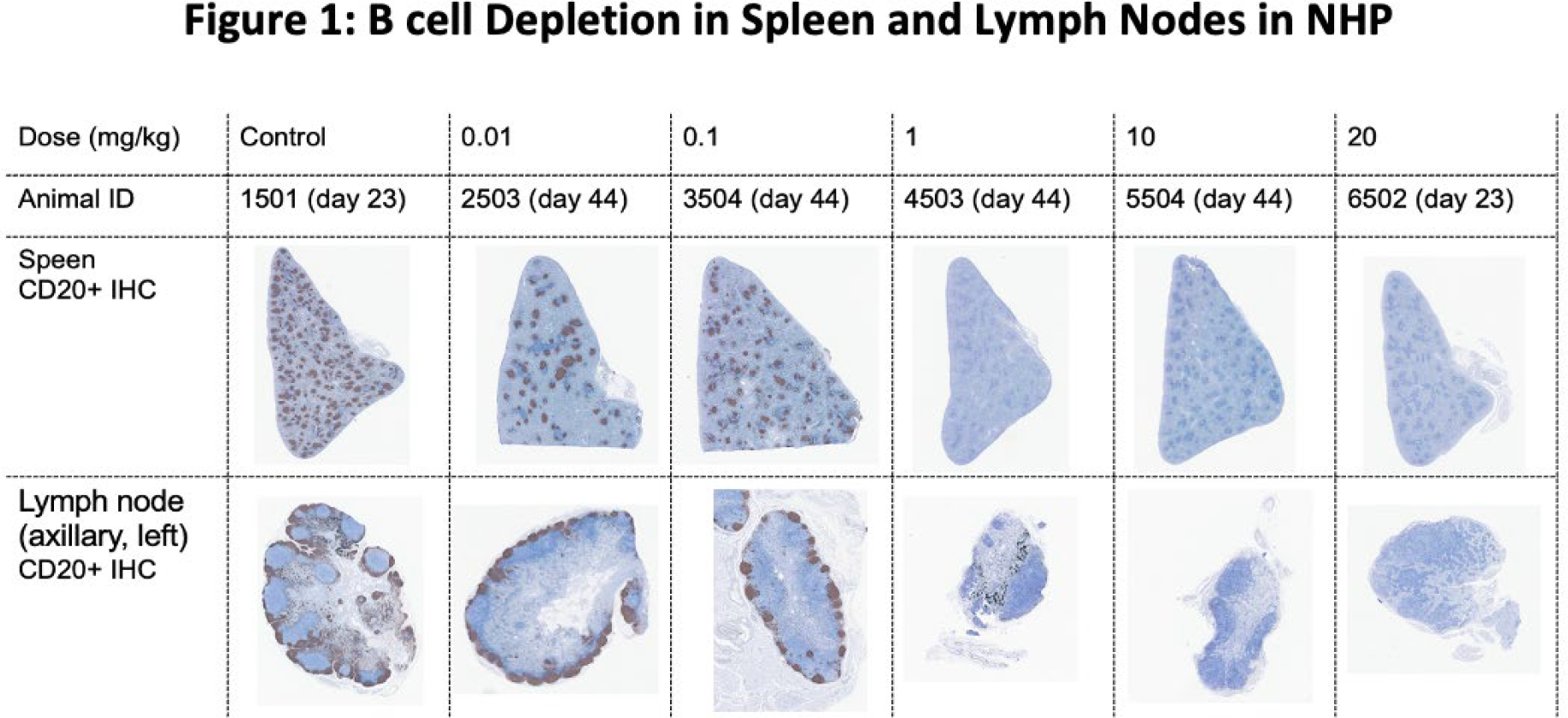
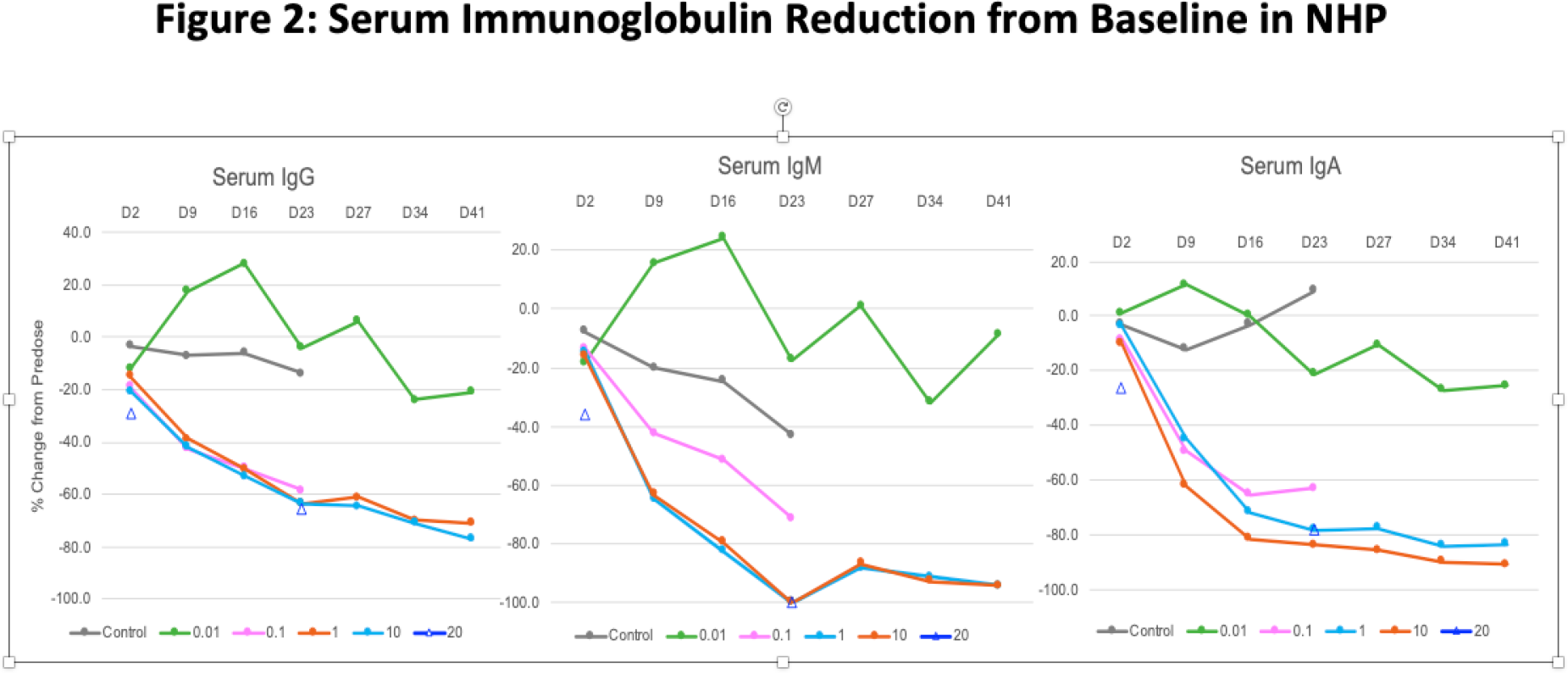
Results: In vitro, KT502 exhibits superior potency in B cell killing but lower cytokine release compared with Blinatumomab. In the DRF toxicology study in NHP, all monkeys were well tolerated with no obvious clinical signs/symptoms observed. Cytokines (e.g IL-2, IL-6, TNFa, IFNg) were overall low, transient and all went back to baseline levels within 24 hours after the first dosing and no elevation of cytokines were detected following subsequent dosing. Robust B cell depletion in spleen and lymph nodes was achieved by day 23 or 44 (Figure 1). Furthermore, rapid and substantial reductions from baseline for serum IgM, IgA and IgG levels were observed by day 23 (Figure 2).
Conclusions: KT502, a novel CD19/CD3 TCE developed through a unique CD3 masking technology, demonstrated a rapid and deep B depletion in vitro and in vivo with a favorable and differentiated safety profile. These early findings strongly support the clinical development of KT502 as a potential effective treatment with an optimized safety profile that may also provide patient-friendly treatment option for a broad range of autoimmune diseases. A Phase I first-in-human clinical trial is anticipated to begin in 2026.
B cell Depletion in Spleen and Lymph Nodes in NHP
Serum Immunoglobulin Reduction from Baseline in NHP
REFERENCES: NIL.
Acknowledgments: NIL.
Disclosure of Interests: Min Bao I have stocks from Roche/Genentech, my previous employer, Roche/Genentech, Annexon Bio, Alpine Immune Sciences/Vertex, Anaptysbio, John Wang Amgen, Jay Zhao pfizer, Weihao Xu Harbour BioMed.