fetching data ... 
Background: Mucosa-associated lymphoid tissue lymphoma translocation protein 1 (MALT1) is a key player in the activation of immune and non-immune cells by functioning both as a scaffold protein as well as a paracaspase. This is reflected by MALT1’s fundamental role in the pathogenesis of auto-immune mouse models for rheumatoid arthritis and multiple sclerosis. In contrast, TNF signaling is widely considered to operate independently of MALT1, leaving the contribution of MALT1 to cytokine-driven inflammatory disease unresolved.
Objectives: Here, we aimed to examine the role of MALT1 in TNF-driven patholgy using the Tnf ΔARE mouse model, which recapitulates key features of human spondyloarthritis, including chronic arthritis and ileitis.
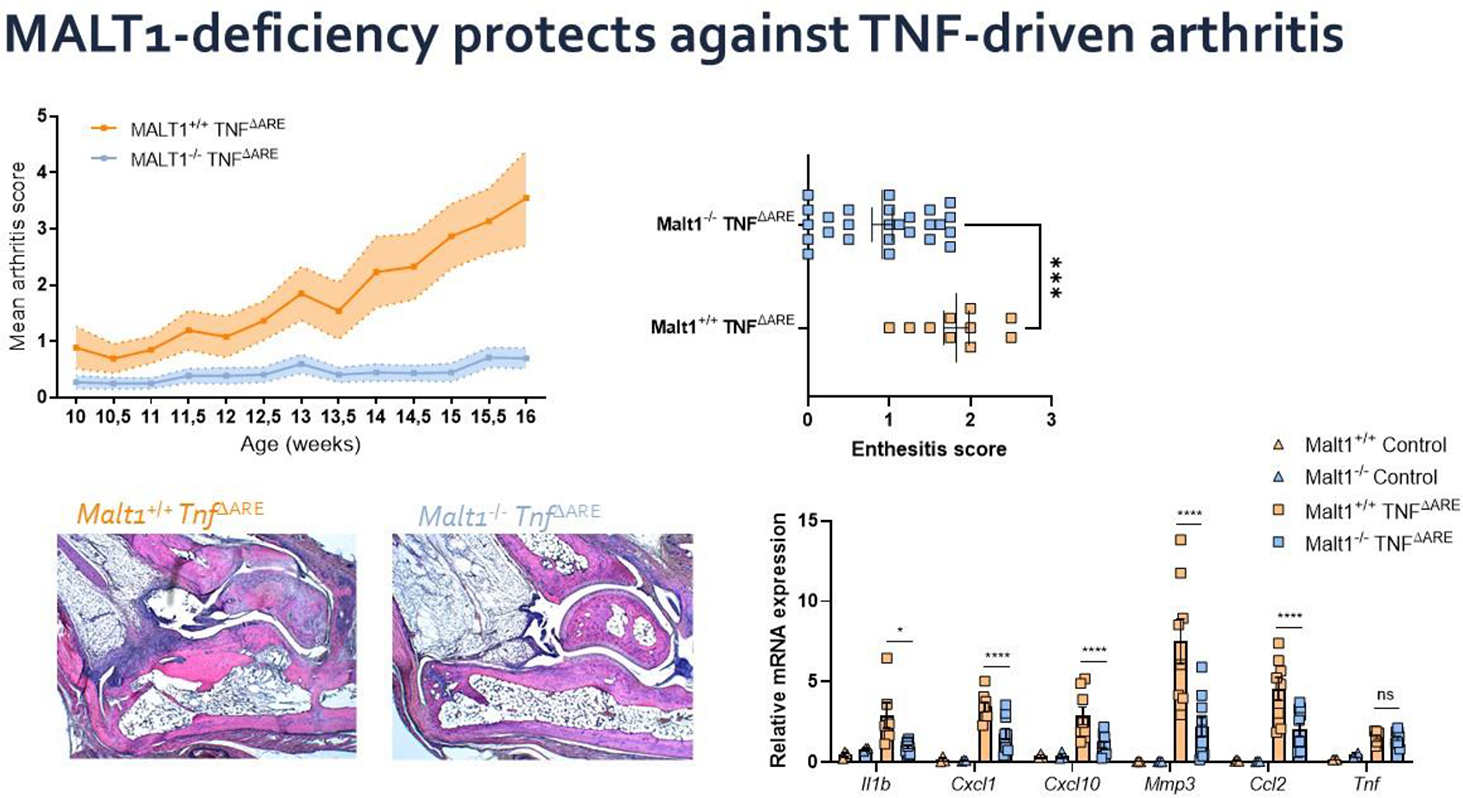
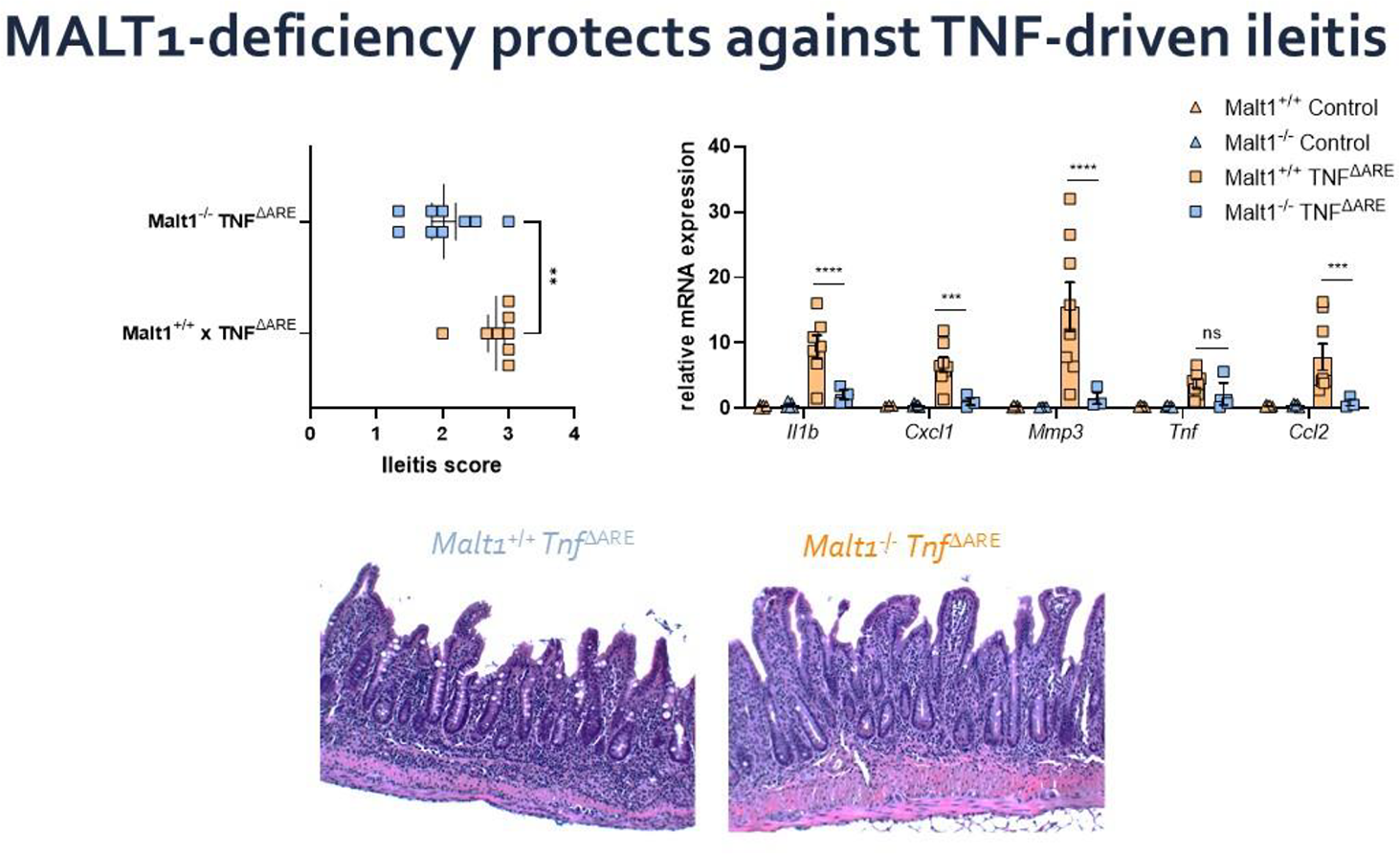
Methods: Malt1 was genetically deleted in Tnf ΔARE mice. Disease severity was assessed by clinical scoring and histopathological analysis of joint and intestinal tissues. Expression of inflammatory mediators was quantified at sites of inflammation, and systemic TNF signaling was evaluated by measuring serum TNF and soluble TNF receptor (sTNFR) levels. To determine the cellular basis of disease protection, complete bone marrow transfer experiments were performed. Additionally, myeloid-specific deletion of Malt1 was achieved using LysM -Cre, and synovial fibroblasts lacking MALT1 were assessed for intrinsic inflammatory responsiveness ex vivo .
Results: Genetic deletion of Malt1 in Tnf ΔARE mice resulted in robust protection from both arthritis and ileitis. This was accompanied by markedly reduced expression of inflammatory mediators in affected tissues, despite preserved Tnf expression. Strikingly, serum TNF and sTNFR levels remained equally elevated in MALT1-deficient and control Tnf ΔARE mice, indicating disease attenuation occurred despite sustained systemic TNF signaling. Bone marrow transfer experiments revealed that MALT1-deficiency in the hematopoietic compartment was sufficient to confer robust protection against ileitis. In contrast, protection from arthritis was less clear-cut, suggesting contributions from both hematopoietic and non-hematopoietic compartments. Consistently, myeloid-restricted deletion of MALT1 did not reproduce the protective phenotype, and MALT1-deficient synovial fibroblasts displayed unaltered intrinsic inflammatory responsiveness ex vivo .
Conclusions: MALT1 is a previously unrecognized, context-dependent modulator of TNF-driven inflammatory disease. While TNF-driven ileitis is primarily dependent on MALT1 expression in the hematopoietic compartment, arthritis arises from cooperative MALT1-dependent interactions between hematopoietic and stromal cells. These findings challenge the prevailing view that TNF signaling operates independently of MALT1 and highlight tissue- and cell type–specific pathways that may be therapeutically exploitable in spondyloarthritis.
REFERENCES: NIL.
Acknowledgments: NIL.
Disclosure of Interests: None declared.