fetching data ... 
Background: Osteoarthritis (OA) is the most prevalent degenerative joint disease, affecting approximately 600 million people worldwide, yet effective disease-modifying therapies remain unavailable. Enhanced glycolysis plays a crucial role in OA pathogenesis, but whether modulating this metabolic dysfunction provides therapeutic benefits is unknown. Sodium–glucose cotransporter 2 (SGLT2) is a regulator of cellular glucose uptake, and its inhibition suppresses cellular glycolysis and confers cardioprotective and renoprotective benefits. However, whether targeting SGLT2 can be exploited as a therapeutic approach for treating OA remains unclear.
Objectives: To investigate the therapeutic effects of SGLT2 inhibition in OA and the potential repurposing of SGLT2 inhibitors for OA treatment.
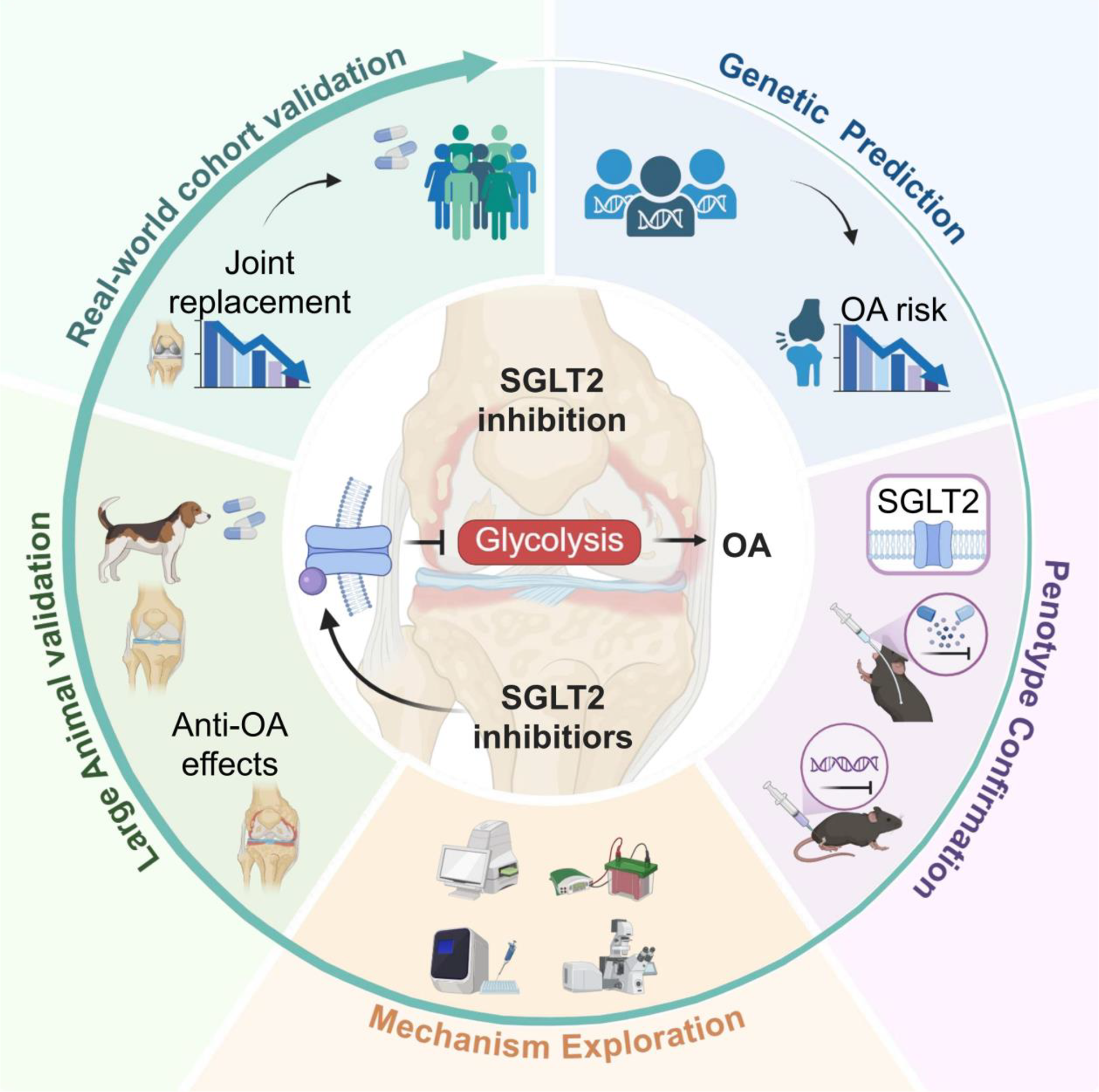
Methods: We first used Mendelian randomization analyses to establish a causal relationship between genetically predicted SGLT2 inhibition and OA risk in humans. We then confirmed SGLT2 expression in chondrocytes. The protective effects of genetic or pharmacological SGLT2 inhibition in OA progression was then validated in OA mouse model. Mechanistic studies were performed to examine glycolysis, AMP-activated protein kinase (AMPK) signaling, and autophagy in chondrocytes. Therapeutic efficacy was further evaluated using an established canine large-animal model of OA. Finally, a cohort study including 35,617 adults was analyzed to evaluate the association between SGLT2 inhibitor treatment and OA-related joint replacement.
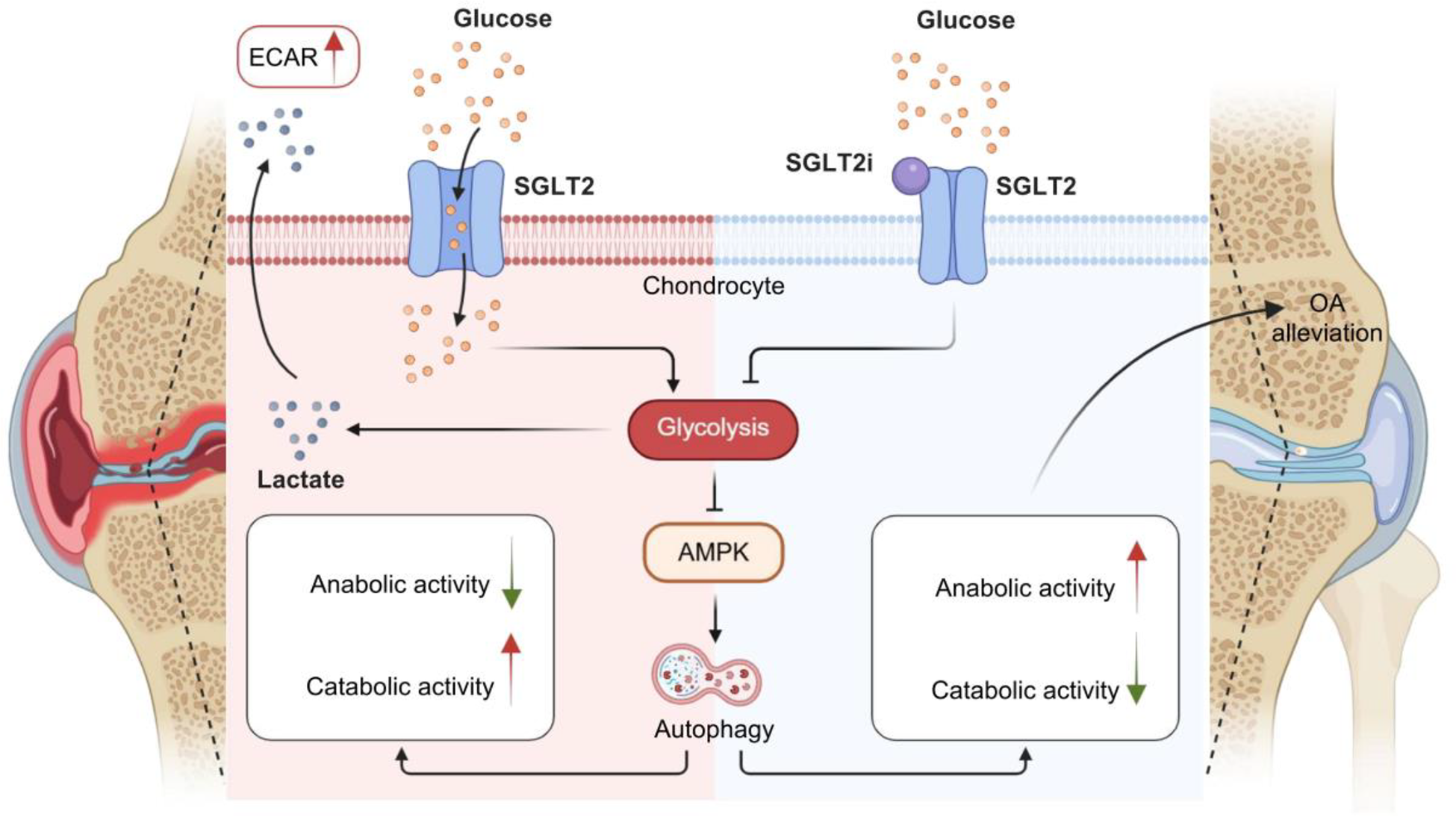
Results: Mendelian randomization analysis indicated a potential causal relationship between genetically predicted SGLT2 inhibition and a lower risk of OA in humans. SGLT2 expression was confirmed in both mouse and human chondrocytes. Using local SGLT2 knockdown or oral administration of SGLT2i, SGLT2 inhibition was shown to attenuate cartilage degeneration and slow OA progression in a mouse model. Mechanistically, SGLT2 inhibition ameliorated cartilage degeneration by suppressing enhanced glycolysis, activating AMPK, and restoring autophagy flux in chondrocytes. The therapeutic effects of SGLT2 inhibition were further supported in a canine OA model, in which SGLT2 inhibition alleviated cartilage lesions. Finally, in a cohort study of 35,617 participants, SGLT2i treatment was associated with a reduced risk of OA-related joint replacement, a clinically relevant endpoint of OA.
Conclusions: Collectively, these convergent lines of evidence suggest that SGLT2 inhibition represents a potential therapeutic strategy for OA and support the clinical repurposing of approved SGLT2 inhibitors for OA treatment (Figure 2).
REFERENCES: NIL.
Acknowledgments: NIL.
Disclosure of Interests: None declared.