fetching data ... 
Background: Mechanoflammation is the process by which inflammatory signalling pathways are activated and inflammatory genes induced in articular cartilage in response to acute and chronic mechanical injury. We have previously shown that this drives regulation of matrix degrading proteases and induction of nerve growth factor (NGF), a primary driver of pain in OA. To identify targetable pathways that modulate mechanoflammation we screened mice in which a number of inflammatory signalling pathways had been deleted. Previously we reported that Myeloid Differentiation Factor 88 (MyD88) knockout mice were protected from OA. Screening up-stream activators of this adaptor protein, including TLRs and IL1 family proteins, showed that the only knockout mouse that recapitulated the protection of MyD88 deletion was interleukin-18 (IL18). Despite best efforts, no direct cytokine effects of IL18 were demonstrated when studying tissues of the joint.
Objectives: In this project we uncover an extra-articular mechanism for protection involving the gut microbiota, and in doing so reveal a novel accessible putative treatment for OA.
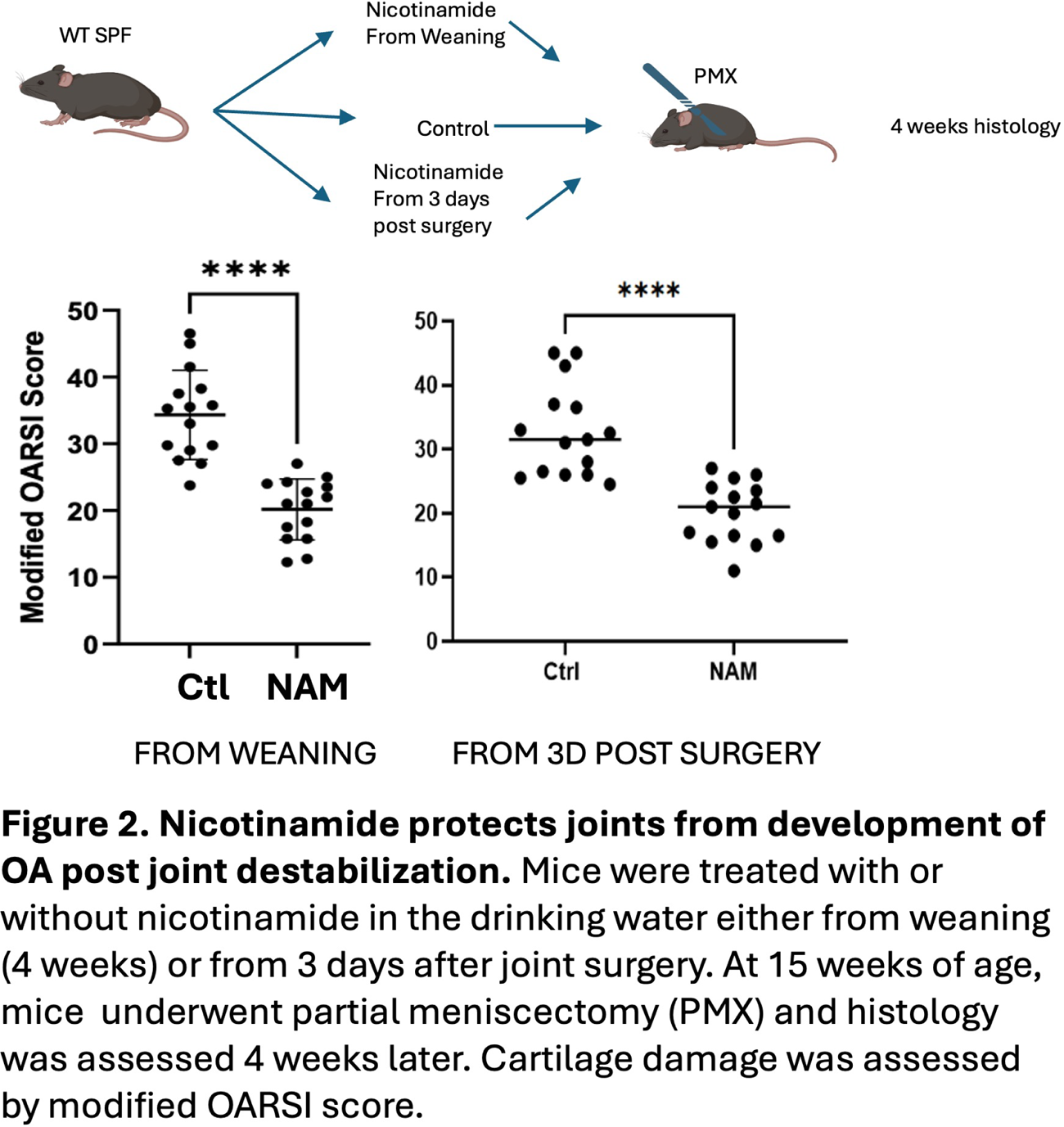
Methods: IL18 -/- or wild type (WT) mice were bred in germ-free or specific pathogen free (SPF) facilities. For co-housing experiments IL18 -/- and WT mice were co-housed from 4 weeks of age. OA was induced by destabilisation of the joint (DMM or partial meniscectomy, PMX, at 10 or 15 weeks of age). Plasma metabolites were measured by liquid chromatography mass spectrometry (LC-MS) and nuclear magnetic resonance (NMR) spectroscopy. Gut microbial composition was analysed by a combination of 16S and shotgun sequencing. Nicotinamide or vehicle was injected into porcine metacarpophalyngeal (MCP) joints prior to ex vivo cartilage injury assays. Cartilage, mechanoflammation was assessed by phospho-western blots or by qPCR for mechano-inflammatory genes. Nicotinamide was supplemented into the drinking water of 15 week old mice before or 3 days after induction of OA. Histological evaluation of joints was at 28 days post-surgery.
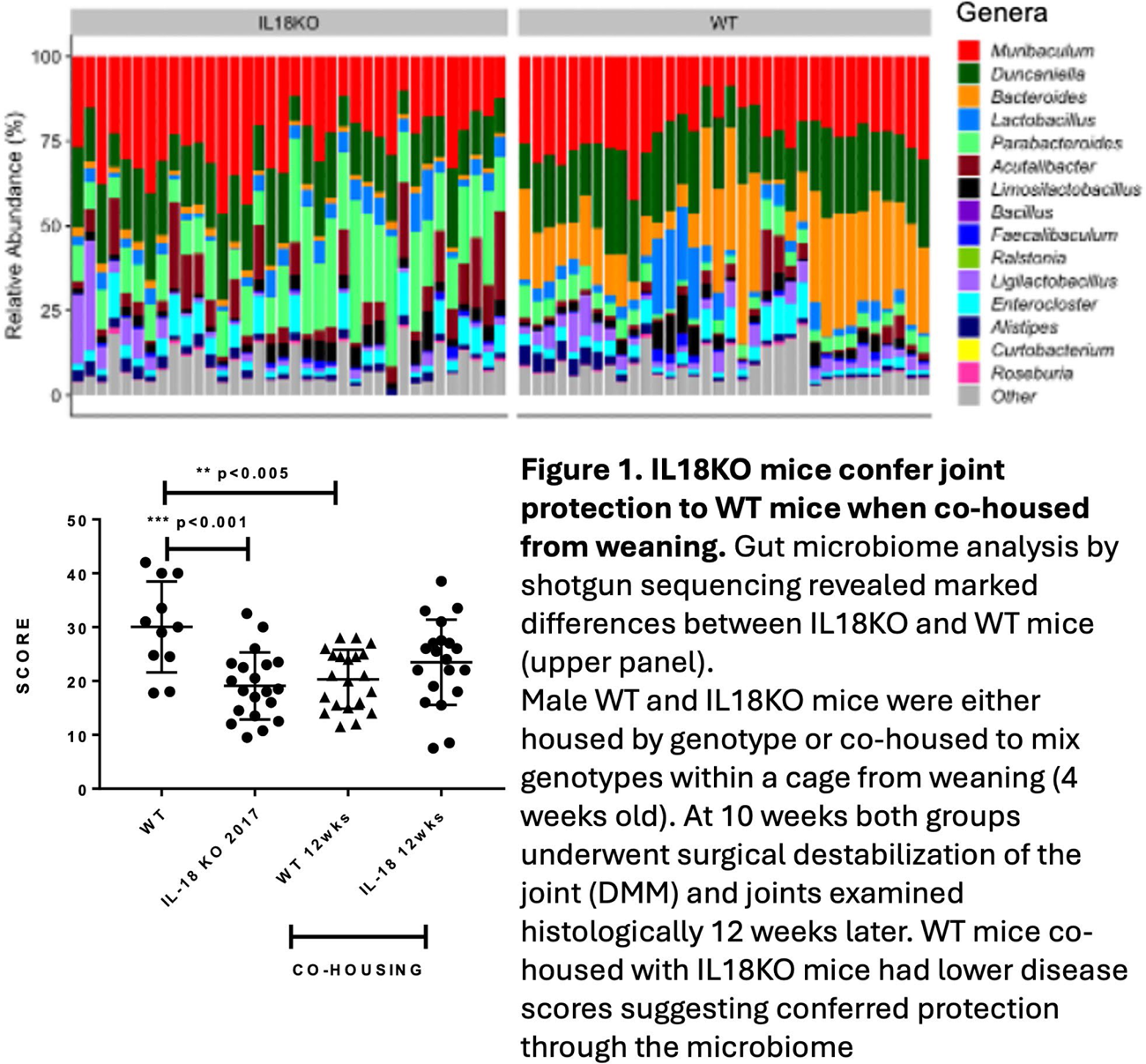
Results: IL18 -/- SPF mice showed significantly reduced disease after joint destabilisation compared with WT SPF mice. WT mice co-housed with IL18 -/- mice showed equivalent joint protection suggesting transfer of protection through the microbiome. Microbial analysis of faecal material in each genotype showed clear separation by principal component analysis, mainly driven by a switch from Bacteroides to Parabacteroides genus. This separation was no longer apparent after co-housing. Faecal transfer from IL18 -/- SPF mice to germ free IL18 -/- reduced disease severity after joint destabilisation. Systemic metabolite analysis identified nicotinamide amongst a small number of metabolites that were higher in IL18 -/- SPF mice compared to WT mice and low in germ free mice. Pre-injection of nicotinamide into porcine MCP joints strongly suppressed mechano-inflammatory genes including IL6, MMP3, NGF. Delivering nicotinamide in the drinking water strongly suppressed histological disease severity in WT mice following joint destabilisation when delivered before or 3 days after surgery.
Conclusions: This study identifies a strong link between the gut microbiome, systemic metabolites and its influence on a sterile tissue injury response (joint destabilisation). It identifies nicotinamide as a putative, accessible, treatment for OA by suppressing mechanoflammation.
REFERENCES: NIL.
Acknowledgments: NIL.
Disclosure of Interests: Nicolas Merrild: None declared, Linyi Zhu: None declared, Jadwiga Miotla-Zarebska: None declared, Anastasios Chanalaris: None declared, Yousra Hamdan: None declared, Antia Acuna-Gonzalez: None declared, Raymond Kiu: None declared, Emily Armitage: None declared, Lindsay Hall: None declared, Jonathan Swan: None declared, Tonia Vincent Zoetis 3 year contract advisory board, Research grants for STEpUP OA from Fidia, GSK, Pfizer, Galapagos, Biosplice, UCB, Novartis.