fetching data ... 
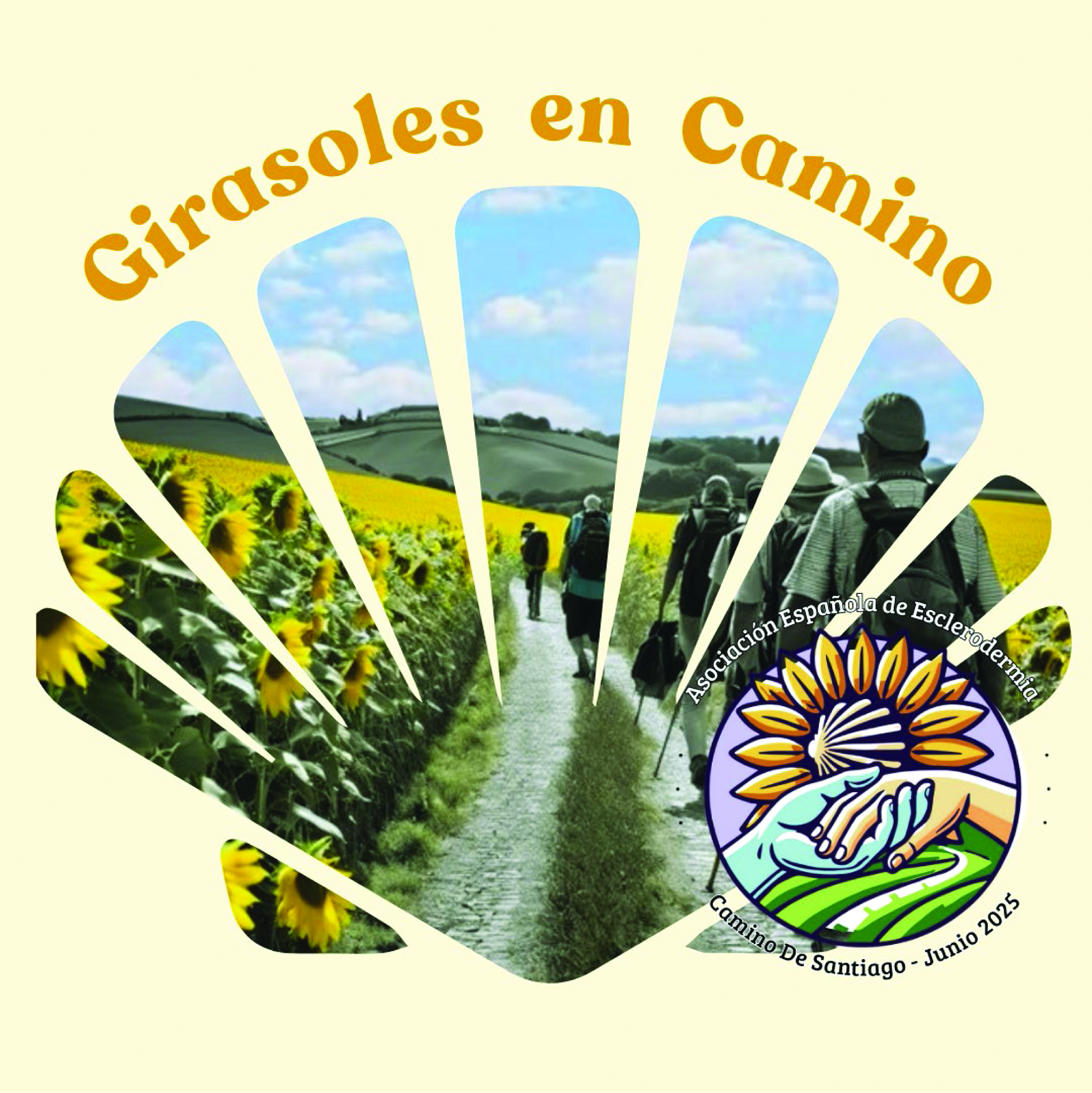
Background: The Camino de Santiago is a famous Spanish pilgrimage route that attracts thousands of travellers to Santiago de Compostela every year. People from all walks of life and all over the world take on this challenge, some for the sport, others to reflect and grow personally, but all to complete it. For many scleroderma patients , this does not seem like an achievable challenge. However, the Asociación Española de Esclerodermia (hereinafter referred to as AEE) is committed to trying and has prepared a project tailored to the needs of our members.
Objectives: The objectives of this project are: Promote physical exercise and contact with nature as part of the daily life of the patient with scleroderma
Facilitate participation , regardless of degree of impairment or initial physical condition.
Promote social relationships and contact with other individuals affected by the same issue as a coping strategy. Increase visibility for scleroderma.
Methods: The pilgrimage has been designed to allow people with scleroderma to participate safely and at a level that suits their abilities. The route covers a total distance of 113 kilometres from Sarria to Santiago de Compostela. Participants include people in wheelchairs and those who require supplemental oxygen. Physiotherapists, volunteers, and support vehicles will be available to assist in the pilgrimage. The most important factors considered when designing the project are:
Definition of three groups of participants according to their physical condition and limitations, with the route adapted according to the accessibility of the terrain and its orography for each group.
An OnLine Physical Preparation Programme, coordinated by a physiotherapist. This programme is adapted to each group of participants and consists of webinars, training guidelines for 10 weeks, a strength exercise battery, an alimentation guide, and best practices for the journey
Preparation and distribution of a tour guide containing maps of the daily route, and relevant information on sites and meeting points.
Accommodation selected to ensure adequate rest, with coverage for oxygen-dependent patients.
Vehicles to transport the group to the start and end points of each stage, and collect participants during the day. And additional support vehicles for emergency transfers and carry spare parts for portable oxygen concentrators.
Activities to promote awareness and engagement, including receptions at Town Halls along the route and dissemination on the association’s own social networks.
Collaboration with medical societies.
Coordination with the pilgrim’s Office for the collection of the Compostela, attendance at the Pilgrim’s Mass, and invocation of the group to the Apostle Santiago.
The creation and signing of a manifesto, the Declaration of Santiago, which includes the demands of patients with scleroderma in Spain related to the diagnosis and treatment of the disease.
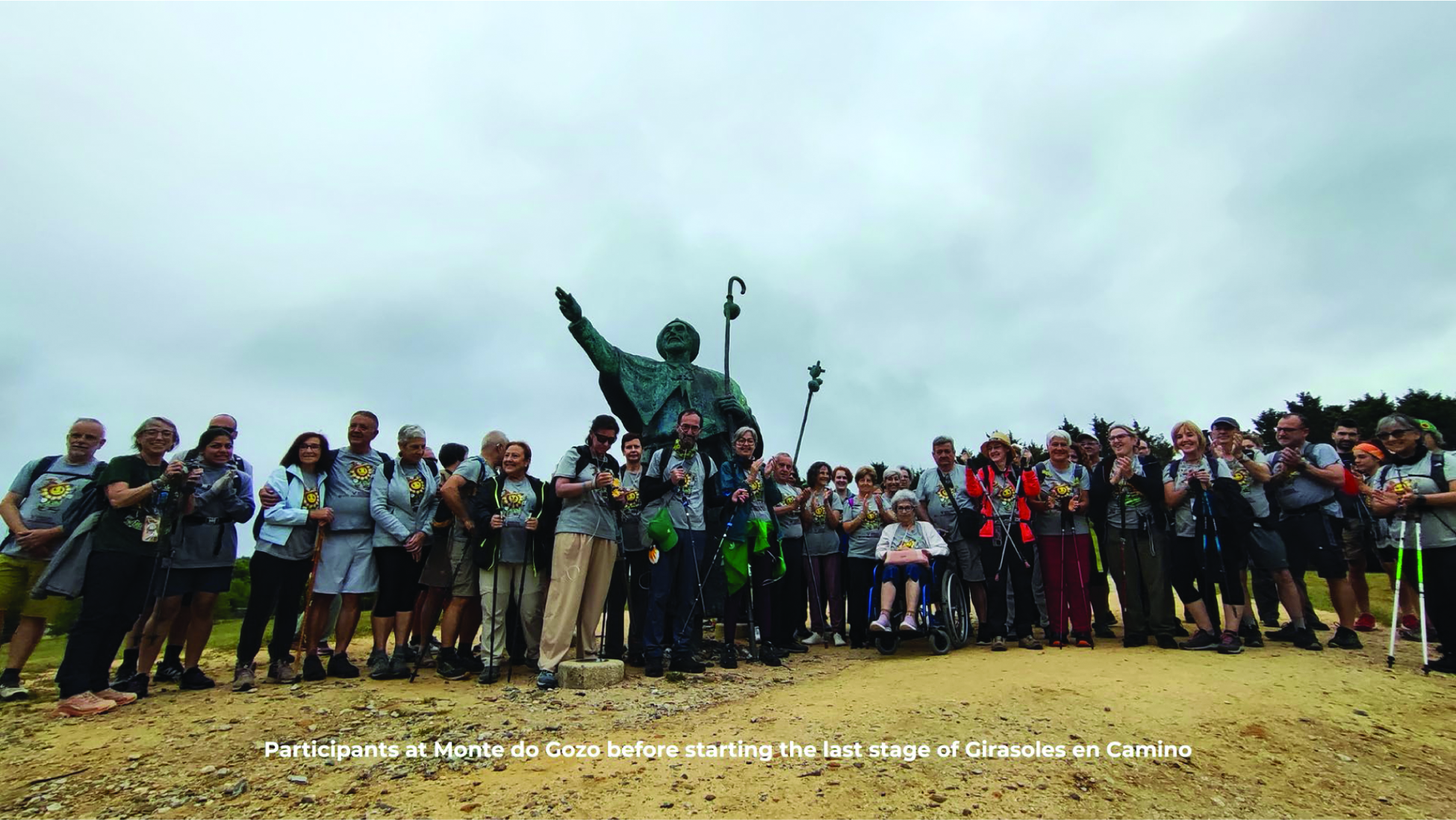
EXECUTION: The pilgrimage took place from June 20th to June 26th. It covered the final stages of the Camino de Santiago, from Sarria to Santiago de Compostela.
PARTICIPATION: The project brought together 64 people: 38 scleroderma patients (4 men and 34 women), 23 family members or friends, one community manager, and two physiotherapists.
Each stage was dedicated to a symptom of scleroderma: morphea and skin involvement, Raynaud’s phenomenon, pain and fatigue, hepatic and renal involvement, pulmonary hypertension, gastrointestinal involvement, and diffuse interstitial lung disease (ILD).
VISIBILITY: Official receptions in several councils. Presence on Galicia public television (TVE and TVG), as well as in the newspaper El Progreso de Lugo.
The AEE’s social networks grew during this period. On Facebook, the number of new followers and interactions has quadrupled compared to the same period last year. The new followers have doubled, and the interactions have quadrupled compared the 10 previous days. On Instagram, the number of new followers has increased by 120% compared to the previous 10 days.
Also, the number of new AEE members has increased by 30% this year. This increase is significantly higher than last year’s, which coincided with this activity, and the difference is particularly marked. However, we cannot claim that this increase is a direct result of the activity.
53.23% of participants answered the survey (two out of three were affected).
50% of those surveyed had participated in an association meeting for the first time.
The aspects most highly rated were the physical training programme (4.95 out of 5) and the promotion of participation (44.94 out of 5). The lowest ratings were given to visits and receptions (4.54 out of 5) and snacks and dinners (4.28 out of 5).
There is a 91% probability that respondents would participate in another event, and a 99% probability that they would recommend the AEE to other affected individuals or family members.
PROMOTING THE PHYSICAL ACTIVITY: The team of physiotherapists who supported the participants throughout the process will evaluate this objective. As of the date of presentation of this abstract, no data is available.
Conclusions: The AEE embarked on this journey with enthusiasm and caution, convinced that every step forward would contribute to the community and dignity of people living with this disease. This challenge sets a precedent for empowerment and advocacy. We are raising awareness of the symptoms and daily challenges of living with scleroderma, and raising the profile of the association through our T-shirts and sunflowers.
These public awareness campaigns aim to improve knowledge of the disease, enabling earlier detection and facilitating an earlier prognosis. They also inform patients of possible complications and help monitor and prevent them, offering pharmacological treatment as well as biopsychosocial interventions, including physical and mental health support.
REFERENCES: NIL.
Acknowledgments: NIL.
Disclosure of Interests: None declared.