fetching data ... 
Background: In the UK, rheumatology healthcare professionals (HCPs) write letters to summarise outpatient clinic consultations with patients. Historically, these letters have been written to the patients’ general practitioner (GP) in primary care. In 2000, guidance (1) advised the letters be copied to patients. In 2018 (2), recommendations suggested the letters be written directly to patients and copied to the GP. This is now national policy (3). Current practice in rheumatology had been neither explored nor quantified, and patient and HCP experience and perspectives were not well established.
Objectives: This study was designed to understand current healthcare professional practice, patient experience, and perspectives on outpatient clinic letters. Findings were used to develop resources to support rheumatology HCPs to change and improve their practice in writing directly to patients, and to support patients to better engage with their letters and healthcare.
Methods: A mixed-methods study with an exploratory sequential design including surveys, qualitative interviews and co-design workshops. NHS ethical approval was gained. Adult rheumatology patients and HCPs were recruited through eight UK healthcare sites, networks and social media in 2024-2025. Descriptive statistics and content analysis were used to summarise survey and interview data. These initial findings were shared and discussed in the workshops to determine the range, type and format of potential supportive resources.
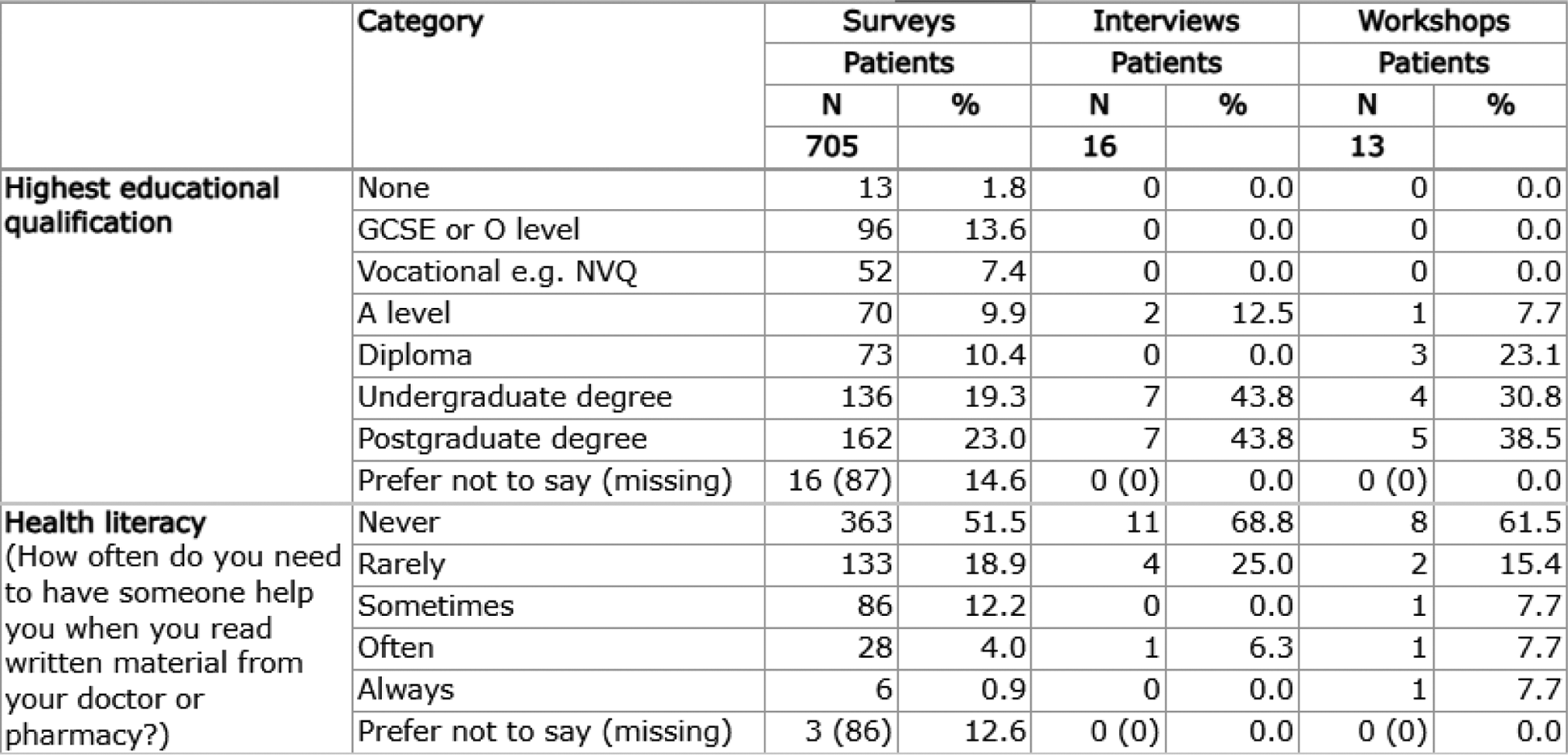
Results: Respondents were from across the UK. 705 patients responded to the survey (88% completed all questions); 16 were interviewed, and 13 joined one or more workshops. 299 HCPs from a range of professions responded to the survey (85% completed all questions); 17 were interviewed, and 13 joined one or more workshops. Demographics of patients and HCPs are in Table 1; patient education and health literacy are in Table 2. Most (79%) HCPs write clinic letters to GPs rather than patients. Of those, 15% do not send a copy letter to the patient. 20% of HCPs write directly to patients, copied to the GP. A small minority (2%), write separate letters to the patient and GP. In contrast, nearly two-thirds (59%) of HCPs write results letters to the patient, copied to the GP. Most patients (64%) would prefer to be written to directly. Only one patient did not wish to receive any letter at all. 81% of patients surveyed would not mind if their letters contained a section written specifically for GPs in medical language. Patients contributing to interviews and workshops wanted medical language to be included in letters and explained in simple terms, either within the text (e.g., in brackets) or through an accompanying glossary or ‘list of terms’. Some words could be upsetting/offensive and would ideally be avoided. Patients value letters that are short and easy to understand, contain clear advice on when and how to seek help, and list actions for themselves, their GP and rheumatology team. HCPs who write directly to patients believe this improves patient understanding of the consultation (95%) as well as communication during the consultation (79%). 61% of those who write to patients believe it does not take longer than writing to the GP, whilst 84% of those writing to GPs believe it would. Healthcare professionals (HCPs) who do not currently write directly to patients expressed apprehension about changing established practices. 32% of HCPs who currently write to GPs are likely to try writing to patients in the next 12 months; an additional 14% indicated they would do so with support. HCPs and patients agreed some patients might need encouragement to read and engage with letters, via a leaflet and/or their clinician. Participants agreed that complementary resources should be designed to address each groups’ respective needs. For example, a HCP phrasebook could be structured alphabetically within categories; whilst a patient glossary or ‘list of terms’ could be entirely alphabetical, with icons to indicate category. Suggested resources for patients included a leaflet explaining clinic letters and a ‘list of terms’. The provision of example paragraphs, a phrasebook with clear explanations of terminology, guidance about letter content and structure, a script for discussing letters with patients and a patient feedback with instructions and a summary form, were suggested to support HCPs in improving their practice in writing directly to patients. Recommended approaches to changing practice for HCPs included adopting changes incrementally, building confidence by extending existing practices (such as writing results letters to patients), and avoiding the use of separate letters for patients and GPs, as this may lead to confusion on inconsistencies.
Conclusions: Study findings show rheumatology patients prefer clinic letters to be written directly to them, although most UK rheumatology HCPs currently write to GPs. HCPs want support to write clinic letters to patients, and patients may need support to engage with these letters. We have collaboratively designed and developed the suggested resources, aiming to meet these needs. The resources will be made publicly available via the British Society for Rheumatology (3). The principles of these resources are applicable to many outpatient specialties and to healthcare systems beyond the UK. Future work will focus on refining, implementing and evaluating these resources at scale, including perspectives from primary care.
Table 1. Demographic characteristics of patients and healthcare professionals participating in the surveys, interviews and workshops.
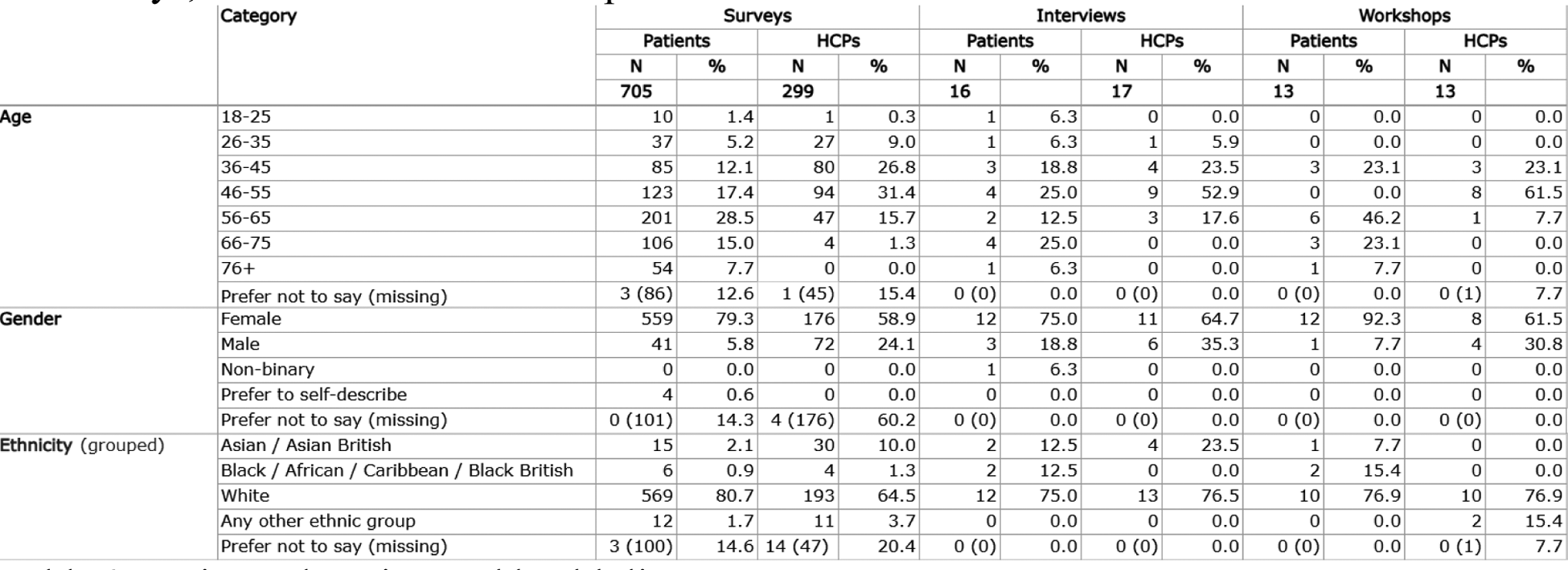
Table 2. Patient education and health literacy
REFERENCES: [1] Department of Health (2000), NHS plan
[2] Academy of Medical Royal Colleges (2018), Please, write to me
[3] British Society for Rheumatology (forthcoming), Writing to patients,
Acknowledgments: NIL.
Disclosure of Interests: Rebecca Goulding: None declared, William Dixon: None declared, Karen Staniland: None declared, Jill Firth: None declared, Elizabeth Macphie: None declared, Brian McMillan: None declared, William Gregory W.J.G has received honoraria for speaking and advisory board participation from Abbvie, Novartis, Pfixer, Sobi and UCB, unrelated to this project, W.J.G has received honoraria for speaking and advisory board participation from Abbvie, Novartis, Pfixer, Sobi and UCB, unrelated to this project, Rizwana Sharmin Rahman: None declared, Charlotte Sharp This work was funded by the British Society for Rheumatology to C.A.S, and the author would like to thank the Society for its help and support. This work was also supported by the Centre for Epidemiology Versus Arthritis, and the authors would like to thank them for their help and support.