fetching data ... 
Background: Patients with rheumatic diseases require continuous clinical visits, medication access, and changes to treatment plans. Missed outpatient appointments represent a significant barrier to continuity of care in rheumatic diseases, where follow-up is crucial for disease control and the prevention of complications. Understanding the socioeconomic, transportation, and clinical factors associated with appointment non-attendance is essential to implement targeted interventions and improve healthcare access.
Objectives: To identify sociodemographic and clinical factors associated with non-attendance at rheumatology outpatient appointments.
Methods: We conducted a cross-sectional observational study including adult patients with rheumatic diseases scheduled for outpatient rheumatology visits. Patients were categorized into two groups: those who did not attend their appointment (non-attenders, n=200) and those who attended (attenders, n=200). Sociodemographic characteristics, income, transportation, distance to the hospital, mental health indicators, medication-taking behaviors, and rheumatic disease diagnoses were compared between groups. Comparisons between groups were performed using the Mann–Whitney U test for non-normally distributed continuous variables. Categorical variables are presented as frequencies and percentages and were compared using the Chi-square test or Fisher’s exact test, as appropriate. P-value <0.05 was considered statistically significant.
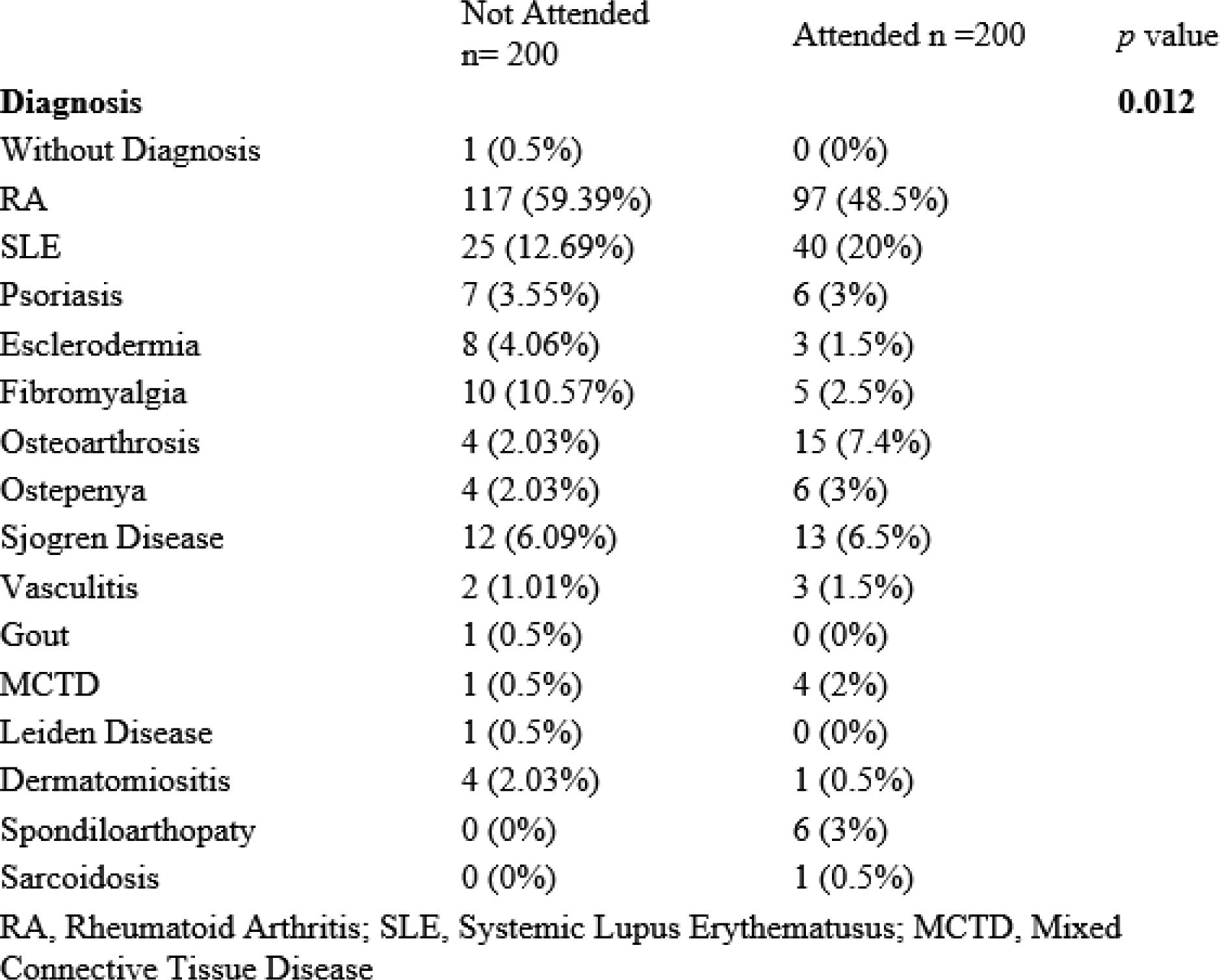
Results: A total of 400 patients were included (200 non-attenders and 200 attenders). Median age did not differ between groups (41.4 [40–61] vs 53 [42–61] years; p=0.452). Non-attenders lived farther from the hospital (18 km [11–30] vs 15 km [8.82–23]; p=0.013), were more likely to walk to appointments (59.7% vs 42.1%; p<0.001) and walked longer distances (1 km [0–1.5] vs 0 km [0–1]; p=0.001). Monthly income was significantly lower among non-attenders (2000 [0–7000] vs 6000 [4000–10,000]; p<0.001), and they reported a greater number of financially dependent individuals (p<0.001) (Table 1). The prevalence of anxiety (24.4% vs 24.5%, p=0.975) and depression (22.8% vs 24.5%, p=0.698) was similar between non-attenders and attenders. Medication-taking behaviors differed between groups: attenders more frequently reported forgetting medication (26.5% vs 6.6%; p<0.001) and discontinuing treatment when feeling better (11.1% vs 1.0%; p<0.001) or worse (12.0% vs 4.6%; p=0.007) (Table 1). Transportation differed significantly between groups (p<0.001), with non-attenders more frequently using buses (57.9% vs 37.6%) and attenders more commonly using private cars (43.7% vs 25.4%)(Table 1). Rheumatoid arthritis was the most frequent diagnosis in both groups but was more prevalent among non-attenders (59.4% vs 48.5%), whereas systemic lupus erythematosus was more common among attenders (20.0% vs 12.7%; p=0.012) (Table 2).
Conclusions: Non-attendance among patients with rheumatic diseases reflects structural barriers to healthcare access rather than individual psychological factors. Lower income, greater financial dependency, longer travel distances, and reliance on public transportation were key determinants of missed visits. Addressing these social determinants through targeted health system strategies is essential to reduce missed visits, improve continuity of care, and mitigate disparities in rheumatologic outcomes.
Table 1. Comparative analysis of sociodemographic and clinical factors between non-attendants and attendants
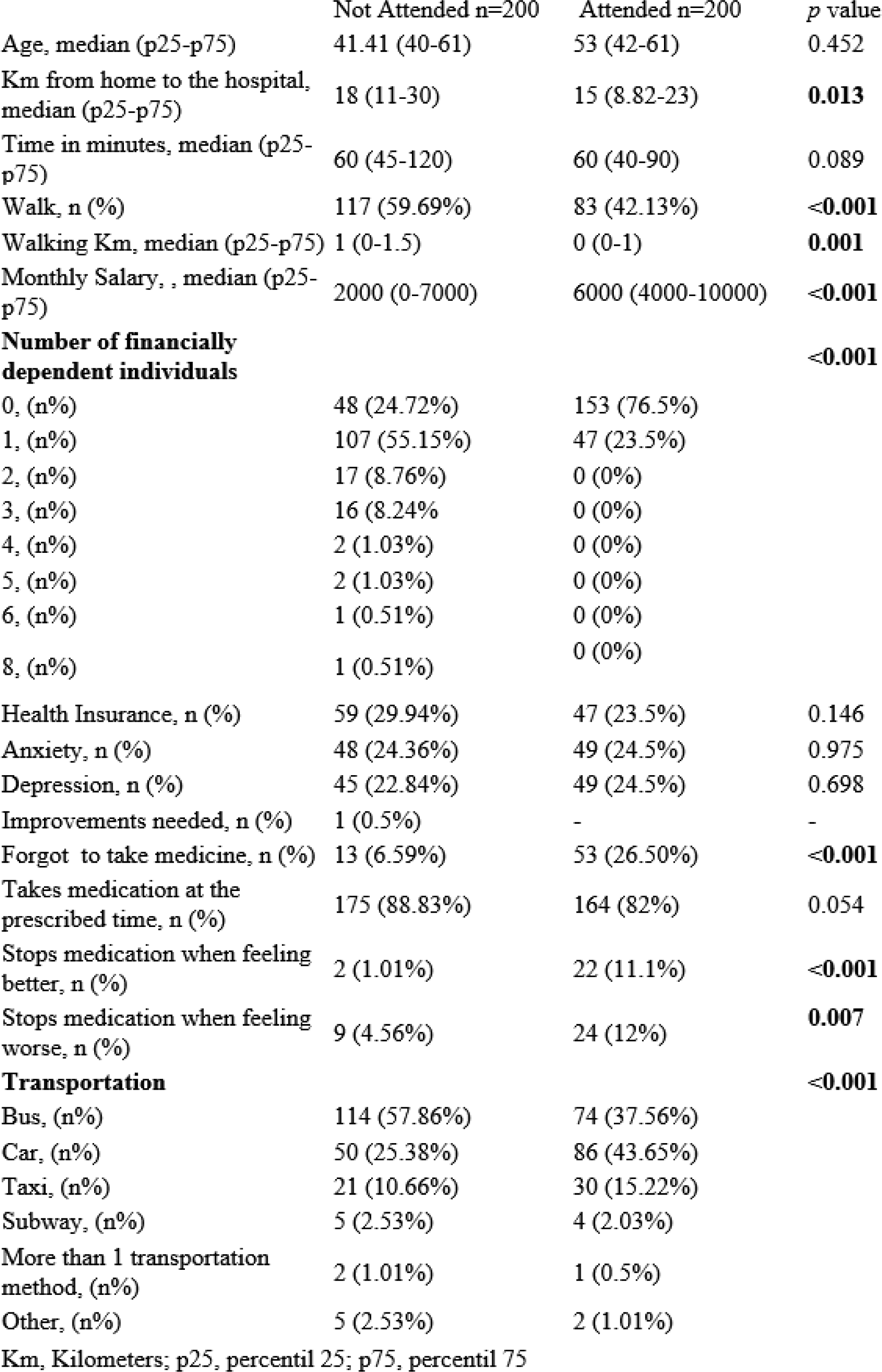
Table 2. Rheumatic diagnosis between non-attendants and attendants
REFERENCES: NIL.
Acknowledgments: NIL.
Disclosure of interest: None declared.