fetching data ... 
Background: Osteoarthritis (OA) is the most common musculoskeletal disease. It is characterized by impairments in body function, such as pain and stiffness, which can lead to activity limitations and participation restrictions. Individuals with knee osteoarthritis (KOA) are also at an increased risk of developing long-lasting musculoskeletal pain and cardiometabolic diseases. The primary treatment involves an individually tailored plan consisting of education and guidance on managing pain and other symptoms, ergonomics, and support for increasing physical activity. Support should also be provided for weight reduction when needed [1]. Early OA classification criteria include symptoms and Kellgren-Lawrence grades 0-I. Grade 0 equals no radiological findings. Grade I shows doubtful joint space narrowing and possible osteophytic lipping. The early stage of osteoarthritis may represent a pivotal phase for initiating treatment strategies [2]. A mapping of current research on early management of KOA highlights strengths and areas for improvement, guiding future research and prioritizing development efforts.
Objectives: To map the early management of KOA in relation to promoting healthy lifestyle habits and to identify gaps concerning current treatment recommendations.
Methods: A scoping review of quantitative and qualitative studies, as well as literature reviews, addressing the research questions was compiled. A systematic search was conducted by an experienced librarian on July 4, 2025, using keywords and MeSH terms such as “Osteoarthritis, Knee”, “early support”, and “initial care” in PubMed, CINAHL Complete, Scopus, and Web of Science to identify relevant studies. Lifestyle habits were defined as physical activity, sedentary behaviour, dietary and weight interventions, smoking, alcohol use, social participation, and sleep. Interventions encompassing education and self-management associated with these factors were also included, along with research on comorbidities, and the barriers and facilitators to participation in the care. The eligibility criteria are presented in Table 1. Two researchers screened studies by titles and abstracts, excluding those that were ineligible. The remaining studies underwent full-text review, and any disagreements were resolved through consensus among the four researchers involved. Data from the selected studies were summarized and presented. The review was conducted in accordance with the PRISMA-ScR guidelines.
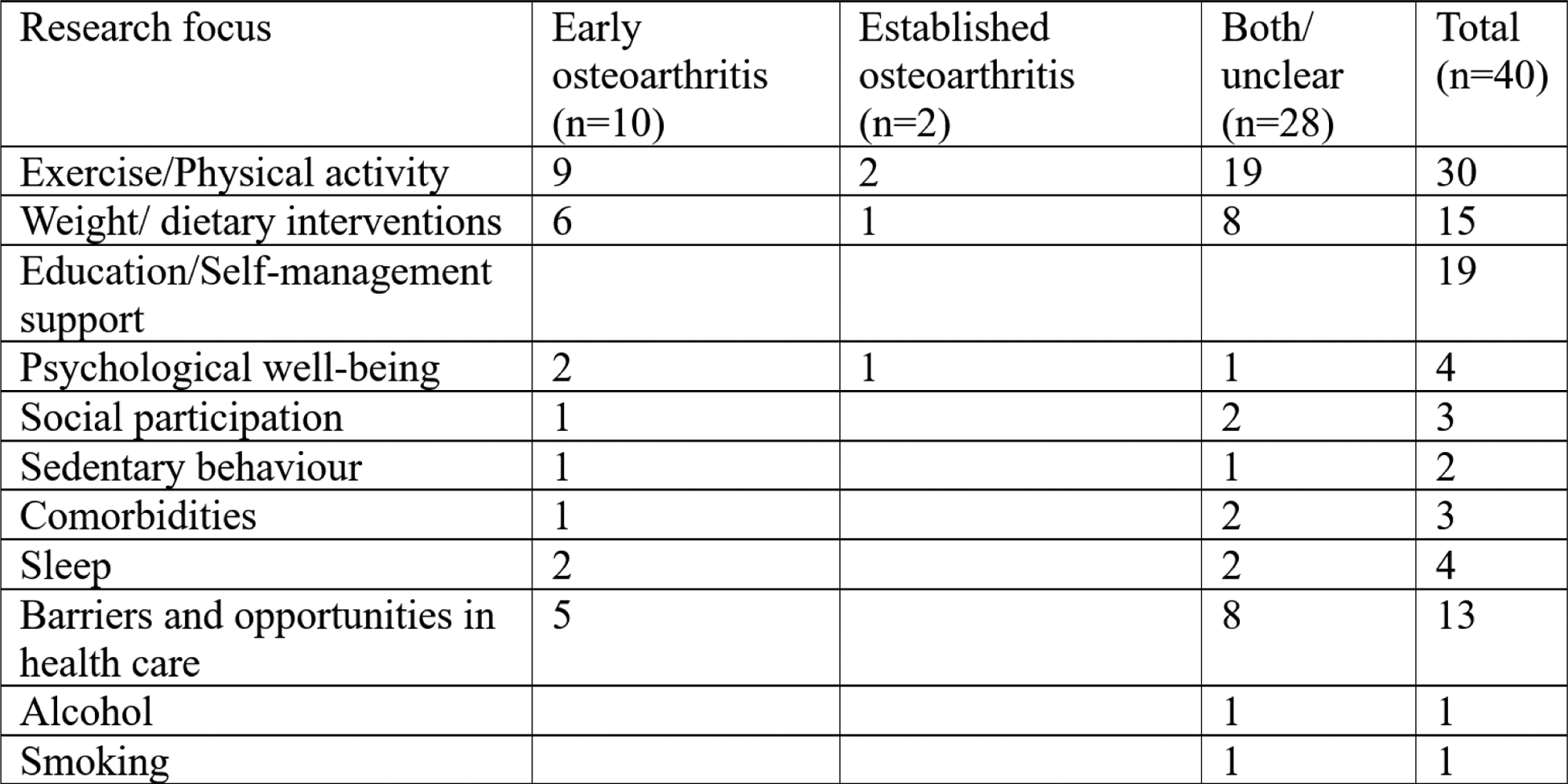
Results: The search yielded 2957 studies after excluding duplicates. Following title and abstract screening, 81 articles were assessed in full text, of which 38 met the study objective and were included in the data synthesis; two additional studies were identified through the reference lists. In total, 25 quantitative, six qualitative, and nine literature reviews, published between 2004 and 2025, were included. Most studies were conducted in industrialized countries, with the largest numbers from the United States (n = 9), Canada (n = 9), and Sweden (n = 5). Other countries represented include Japan (n = 3), Denmark (n = 2), Australia (n = 2), the United Kingdom (n = 2), and one study each from India, Taiwan, Ireland, Germany, Italy, Turkey, and China. Ten studies focused on early OA, two on established OA (Kellgren-Lawrence grade > I), and twenty-eight included both stages or did not specify the disease stage. Table 2 presents the distribution of research focus. The included studies highlight several key areas in the early management of KOA regarding lifestyle habits. Consistently recommended interventions include physical activity, patient education, self-management support, and weight management. No single exercise modality has been shown to be superior. Studies report that despite mild symptoms and preserved function, individuals with KOA engage in prolonged sedentary behaviour. Higher BMI is associated with pain progression, poorer adherence to lifestyle interventions, and reduced self-efficacy for self-management. Social support and healthy relationships play a key role in managing OA symptoms and well-being. In terms of social factors, social support and healthy relationships play a vital role in managing OA symptoms and overall well-being. In contrast, there is also indications that being socially active may decrease adherence to weight reduction programs. Comorbidities negatively impact self-efficacy and participation in exercise. Increased sleep duration has been linked to painreduction. Further, smokers with KOA showed lower adherence to weight-reduction programs, whereas alcohol use did not affect adherence. Finally, the studies indicate that healthcare professionals often favour pharmacological treatments over lifestyle interventions, and younger individuals or those with less disease progression benefit more from lifestyle interventions.
Conclusions: The most studied lifestyle interventions are physical activity, self-management, and weight reduction, which are consistently recommended treatments. Sleep and social support are also factors influencing well-being in individuals with KOA. Nevertheless, non-pharmacological strategies are still underutilized in practice. Outcomes from lifestyle interventions vary depending on age, disease stage, BMI, and comorbidities, highlighting the need for individualized approaches. However, the inconsistent definitions of early OA used in research may impact the interpretation of results and the comparability of studies. More research is needed to determine the effectiveness of lifestyle strategies and to explore new management approaches for early OA, which appears to represent a window to optimize outcomes.
Table 1. Eligibility criteria
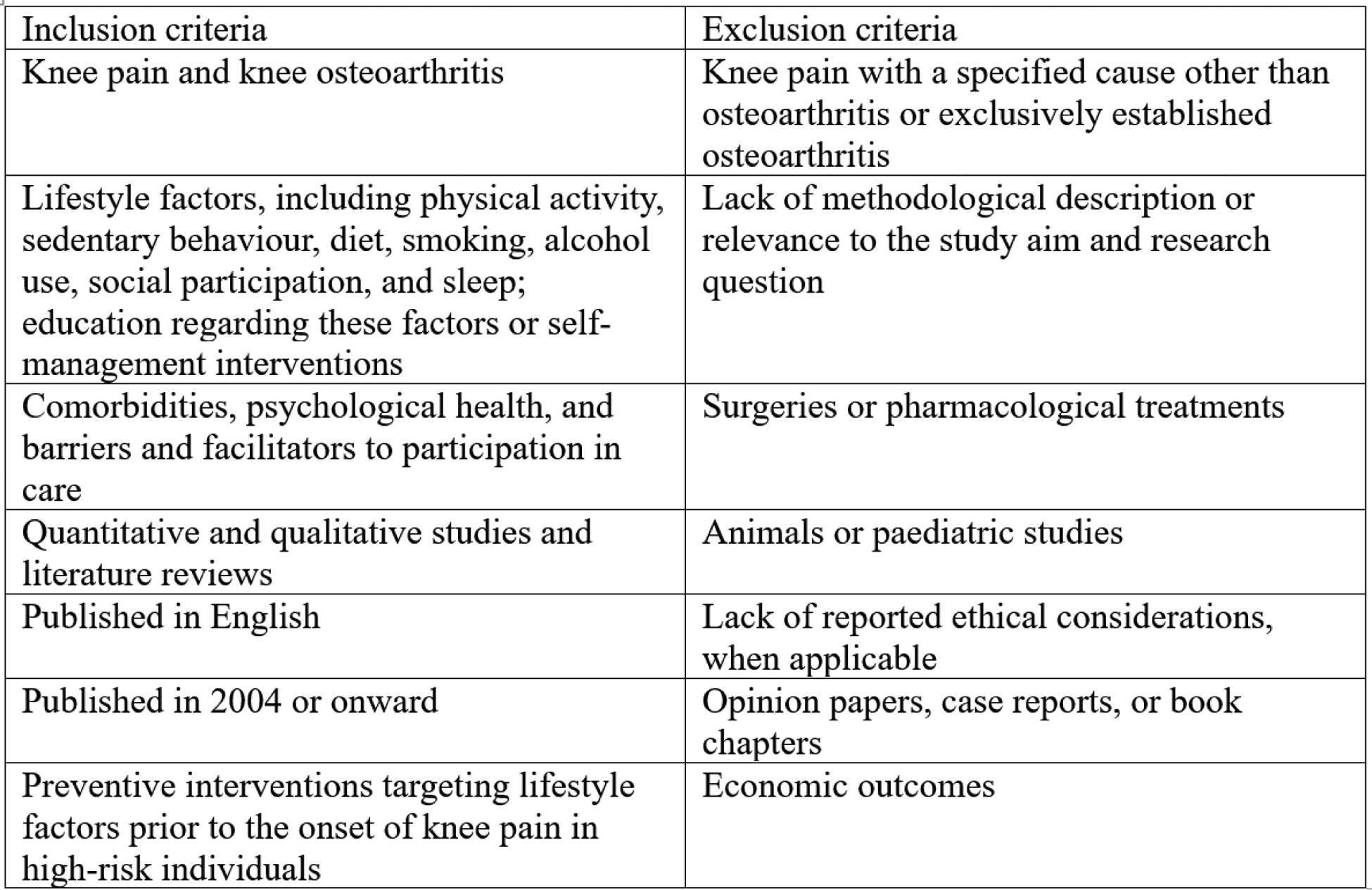
Table 2. Distribution of research focuses
REFERENCES: [1] Moseng et al. EULAR recommendations for the non-pharmacological core management of hip and knee osteoarthritis: 2023 update. Ann Rheum Dis. 2024 May 15;83(6):730-740.
[2] Mahmoudian et al. Early-stage symptomatic osteoarthritis of the knee - time for action. Nat Rev Rheumatol. 2021;17(10):621-32.
Acknowledgments: NIL.
Disclosure of interest: None declared.