fetching data ... 
Background: Pain represents a major symptom in inflammatory arthritis, highly contributing to disability and reduced quality of life. Pain intensity often does not correlate with inflammatory activity, suggesting that additional mechanisms beyond inflammation are involved in its development and persistence. Metabolomic profiling identifies circulating small molecules and can capture pathway-level changes relevant to both inflammatory and non-inflammatory components of pain.
Objectives: We therefore aimed to characterize metabolomic patterns associated with inflammatory and non-inflammatory pain in a rheumatoid arthritis (RA) animal model and to compare these patterns with those observed in difficult-to-treat (D2T) RA patients with persistent inflammatory (PIRRA) versus non-inflammatory pain (NIRRA).
Methods: K/BxN serum transfer arthritis was induced in wild-type mice. Plasma was obtained from two independent cohorts at day 9 (inflammatory pain, n=8) or day 21 (non-inflammatory pain, n=7) after induction. D2T RA patients were stratified into high-inflammation–high-pain (PIRRA, n=11) and low-inflammation–high-pain (NIRRA, n=10) groups, and plasma samples were collected. Targeted metabolite concentrations were quantified using the Biocrates MxP Quant 500 platform, and metabolic profiles were compared using the MetaboAnalyst 6.0 tool.
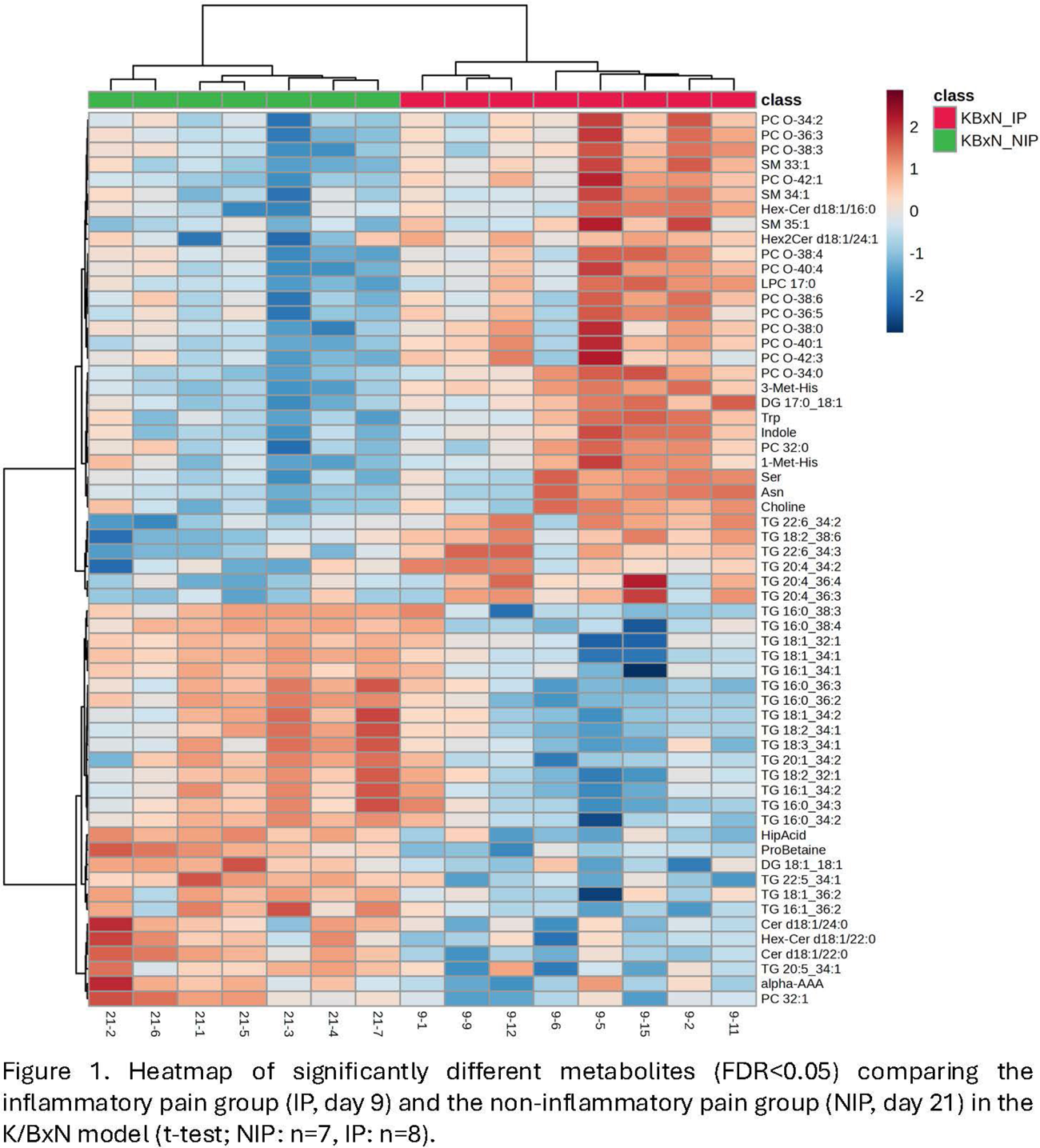
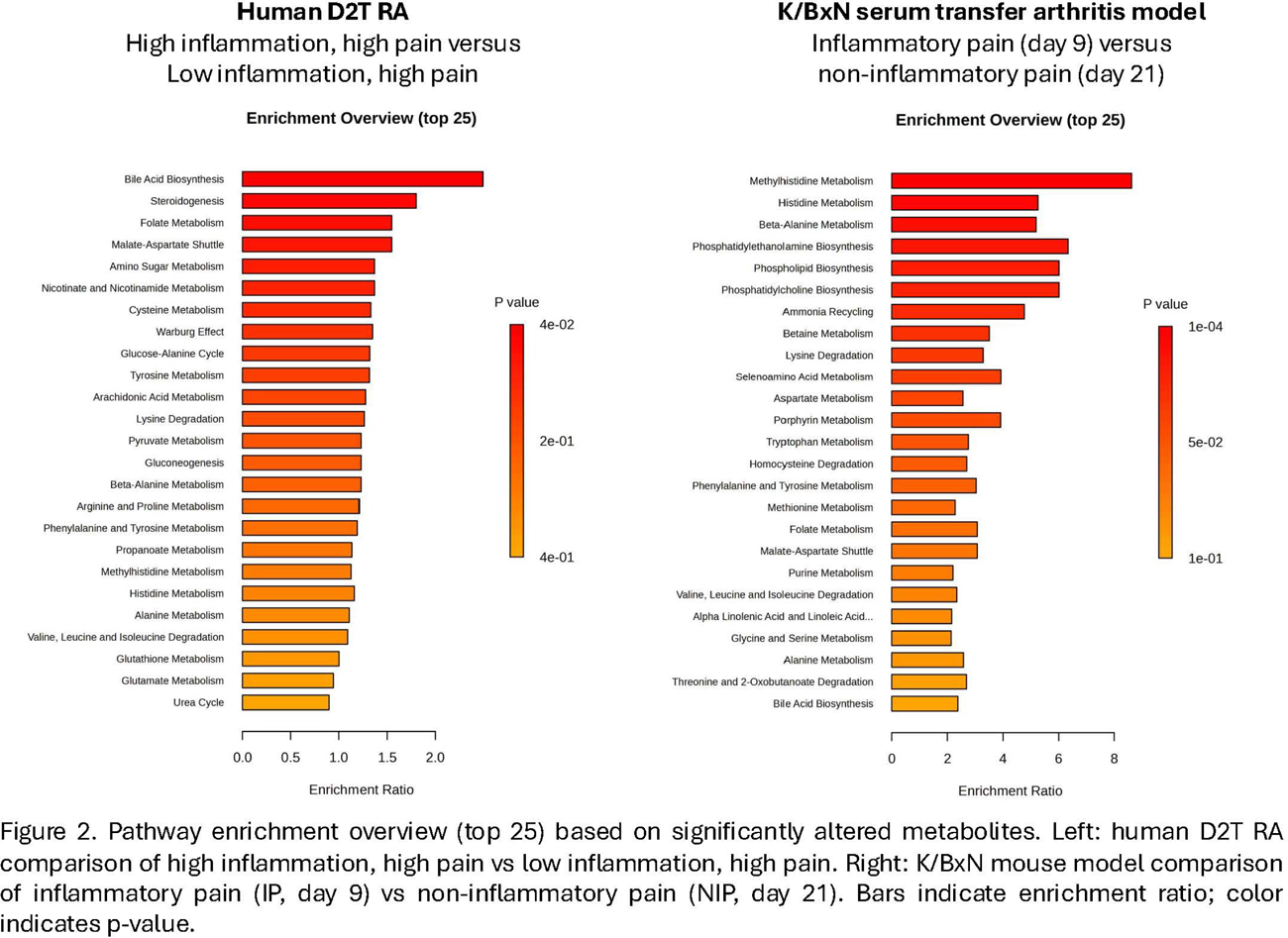
Results: In the K/BxN model, plasma metabolomics revealed 60 metabolites showing significant differences (FDR <0.05 ) between day 9 (inflammatory pain) and day 21 (non-inflammatory pain). Differences were most prominent for 3-methylhistidine, proline betaine, and hippuric acid, and involved several lipid classes (ceramides/hexosylceramides, phosphatidylcholines, triglycerides). (Figure 1) Enrichment analysis identified the alterations of methylhistidine/histidine metabolism, beta-alanine metabolism, betaine metabolism, and phospholipid biosynthesis. In D2T RA (NIRRA vs PIRRA), higher inter-individual heterogeneity was observed. Fold-change analysis was used to rank metabolites, yielding 44 candidates with the largest between-group differences, mainly affecting diacylglycerols, triglycerides, cholesteryl esters, and bile acids, as well as amino acid–related metabolites (e.g., tryptophan betaine, serotonin, trans-4-hydroxyproline, 3-methylhistidine). Cross-species comparison supported shared pathway-level alterations in histidine/methylhistidine and beta-alanine/betaine metabolism, whereas lipid-associated patterns differed, with phospholipid biosynthesis more prominent in mice and bile acid/steroid-related pathways more prominent in humans. (Figure 2)
Conclusions: Targeted plasma metabolomics separated inflammatory from non-inflammatory pain in the K/BxN arthritis model. Human PIRRA and NIRRA samples showed broad overlap, largely within amino acid–related metabolism, with the strongest overlap for 3-methylhistidine and proline betaine, supporting a role of these metabolites in pain-inflammation discordance in inflammatory arthritis. The presence of the same metabolites in both the animal model and patient samples provides an independent line of support for the patient-associated patterns and highlights the translational relevance of the K/BxN model in this context.
Funding: HUN-REN–PTE Chronic Pain Research Group (14017), OTKA K138046 and K131479, TKP2021-EGA-29, National Brain Research Program, Richter Gedeon PhD Scholarship for LGT.
REFERENCES: NIL.
Acknowledgments: NIL.
Disclosure of Interests: None declared.