fetching data ... 
Background: IMP761 is a LAG-3 agonist antibody which enhances the physiological inhibitory function of LAG-3 on T-cell receptor signaling, potentially suppressing pathogenic T cell responses in autoimmune diseases [1-3]. In vitro, IMP761 suppresses activation and proliferation of CD4 + T cells responsive to an autoantigen peptide pool (CitVimentin, CitEnolase, CitFibrinogen β, Collagen II, PAD4 peptide, and Cartilage GP39).
Objectives: To evaluate the safety, pharmacokinetics and immunosuppressive effect of intra-venous IMP761 (IgG4) compared with placebo in healthy subjects challenged with keyhole limpet hemocyanin (KLH) in a delayed-type hypersensitivity (DTH) reaction.
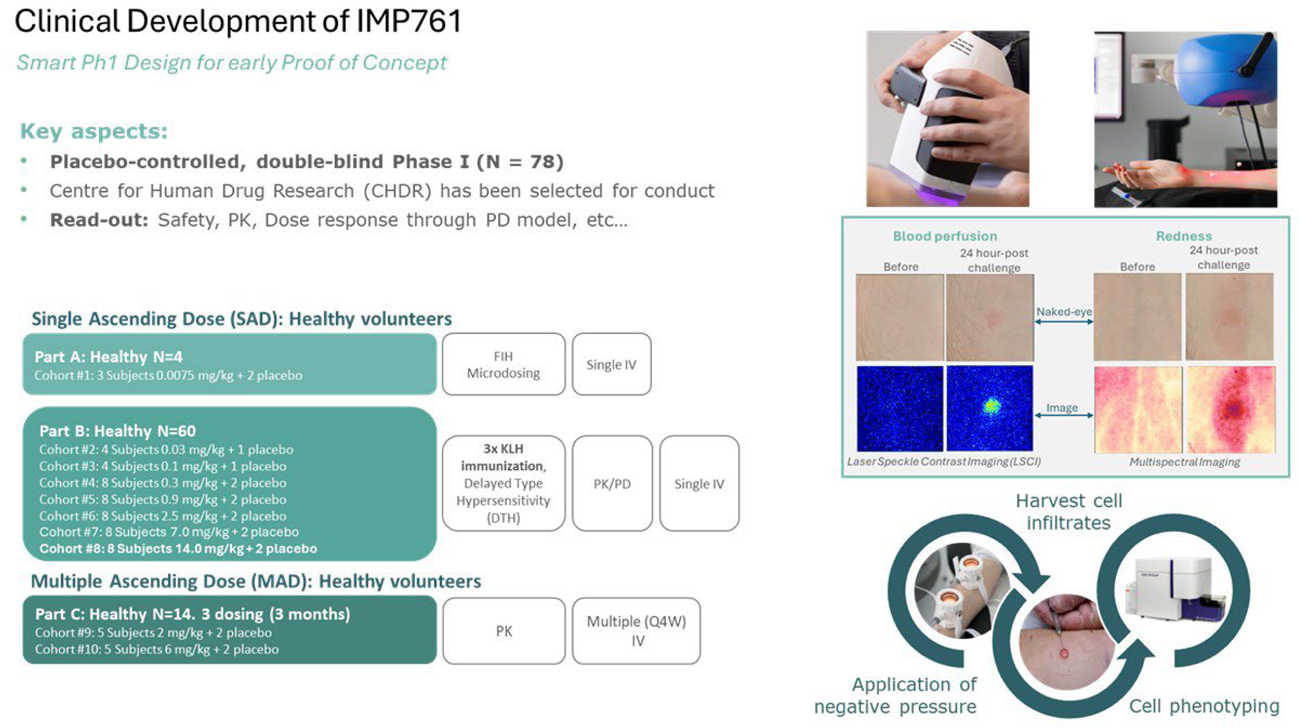
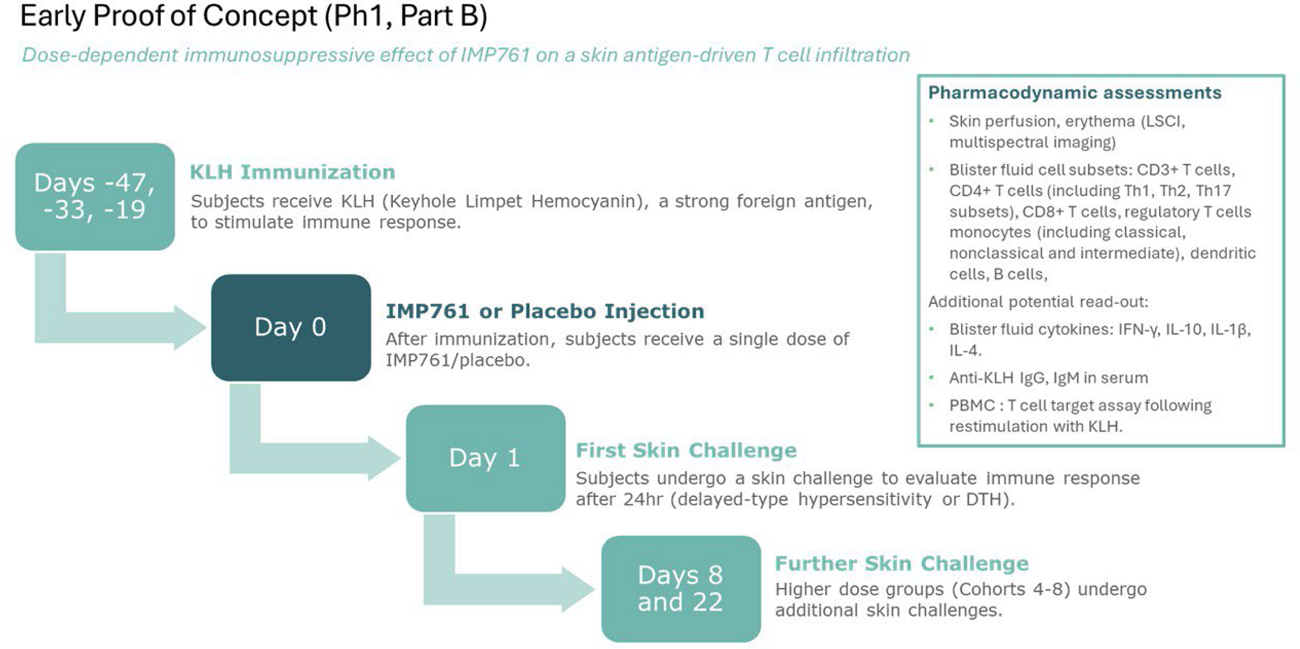
Methods: A placebo-controlled, double-blind phase I study in healthy volunteers (n=78) was started in July 2024 (Figure 1A). In the single ascending dose part, subjects were vaccinated with a strong foreign antigen, KLH, to assess the suppression of the skin blood perfusion and erythema of the DTH reaction site 24h after a dermal rechallenge with KLH at D1, D8 and D22 (Figure 1B). In addition, IMP761 immunosuppressive effect on cell infiltrate was also assessed in the fluid from provoked blisters at the DTH sites by cytometric analysis.
Results: IMP761 was tolerated well with no treatment-related adverse reactions beyond mild intensity. Evidence of dose-dependent immunosuppressive effects of IMP761 was observed at doses 0.9, 2.5 and 7 mg/kg, with a decrease in both skin blood perfusion/erythema assessments and T cell numbers in the blister fluid, compared to placebo. The 14 mg/kg single ascending dose cohort and the multiple ascending dose part of the study are ongoing.
Conclusions: Establishing safety and a valid PK/PD relationship in a large, blinded, randomized phase I trial lays a strong foundation for a future phase II testing IMP761 in autoimmunity.
REFERENCES: [1] Angin M, Brignone C, Triebel F. A LAG-3-Specific Agonist Antibody for the Treatment of T Cell-Induced Autoimmune Diseases. J Immunol. 2020 15;204:810-818.
[2] Sag E, Demir S, Aspari M, Nielsen MA, Skejø C, Hvid M, Turhan E, Bilginer Y, Greisen S, Ozen S, Deleuran B. Juvenile idiopathic arthritis: lymphocyte activation gene-3 is a central immune receptor in children with oligoarticular subtypes. Pediatr Res. 2021;90:744-751.
[3] Aspari, M., Greisen, S., Hvid, M., Ong, V.H., Denton, C.P., Abraham, D. and Deleuran, B. Lymphocyte Activation Gene 3 Regulation of Profibrotic Cytokines and Type I Collagen Production in Patients With Systemic Sclerosis. ACR Open Rheumatology, 2026 8: e70120.
Acknowledgments: NIL.
Disclosure of Interests: Frederic Triebel Immutep, Immutep S.A.S., Adrien Leite Pereira Immutep S.A.S., Chrystelle Brignone Immutep S.A.S., Immutep S.A.S., Stephan Winckels Immutep GmbH, Philikos.