fetching data ... 
Background: Palindromic Rheumatism (PR) is a form of arthritis characterized by episodic flares of joint pain, swelling, and erythema. Colchicine, traditionally used in crystal arthropathies has shown some promise in PR management. However, data on its efficacy are limited.
Objectives: To evaluate the effectiveness of colchicine in patients with PR by assessing remission maintenance after tapering and the response to reintroduction following relapse. The study also aimed to identify predictors of relapse during colchicine tapering.
Methods: This was a retrospective cohort study conducted at a tertiary rheumatology center among PR patients attending regular rheumatology follow up between 2015 and 2022. Adult patients (≥18 years) diagnosed with PR based on the González-López criteria and in remission on colchicine (with or without hydroxychloroquine) were included. As per institutional practice, colchicine tapering was attempted after achieving remission. Patients were followed for six months post-tapering. Flare was defined as ≥ 2 attacks per month. Clinical and laboratory parameters were analysed to identify predictors of relapse. Logistic regression was performed to evaluate associations.
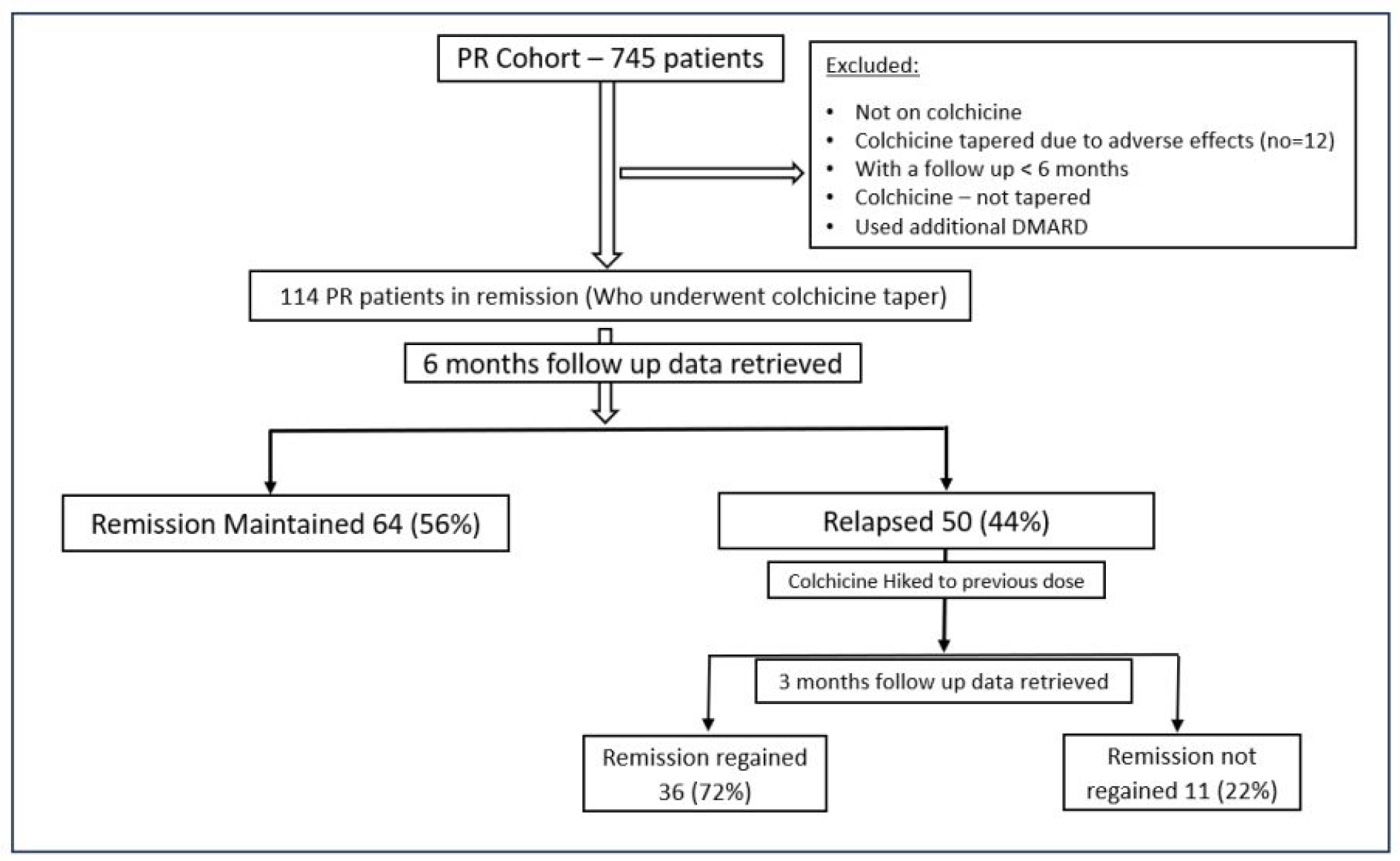
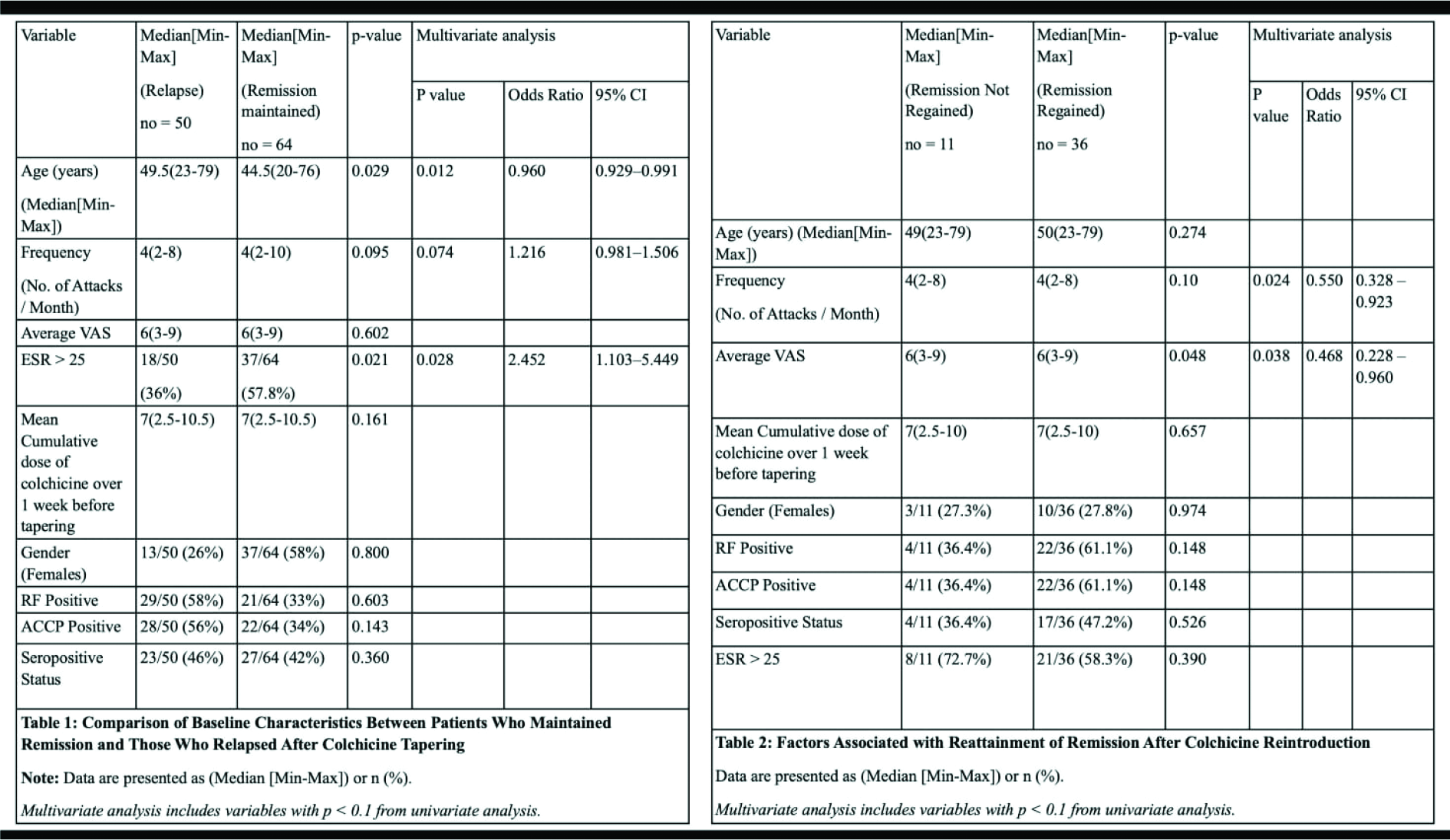
Results: Among 114 patients, 54 (47.4%) relapsed within 6 months of colchicine tapering. Of these, 75% regained remission after reintroduction of colchicine at the prior effective dose. Patients with younger age and elevated baseline ESR were more likely to be in remission even upon tapering. Seropositivity did not significantly influence relapse risk or response to reintroduction. Colchicine was effective in both seropositive and seronegative PR.
Conclusions: Relapse following colchicine tapering occurred in fewer than half of PR patients. Reinduction of remission in 75% of these patients upon reintroduction provides strong evidence supporting colchicine’s effectiveness in a subset of PR. These findings reinforce colchicine’s role as a key disease-modifying agent in PR. Prospective trials are warranted to validate these observations and guide tapering protocols.
Flowchart illustrating patient selection and clinical outcomes following colchicine dose tapering in PR.
REFERENCES: NIL.
Acknowledgments: NIL.
Disclosure of Interests: None declared.