fetching data ... 
Background: Angiogenesis is essential in the pathogenesis of joint inflammatory disorders. Gouty arthritis, one of the most common arthritis, is characterized by the deposition of monosodium urate (MSU) crystals in joints. Here we aimed to investigate the effect of MSU on angiogenesis in gouty arthritis.
Objectives: Here we aimed to investigate the effect of MSU on angiogenesis in gouty arthritis.
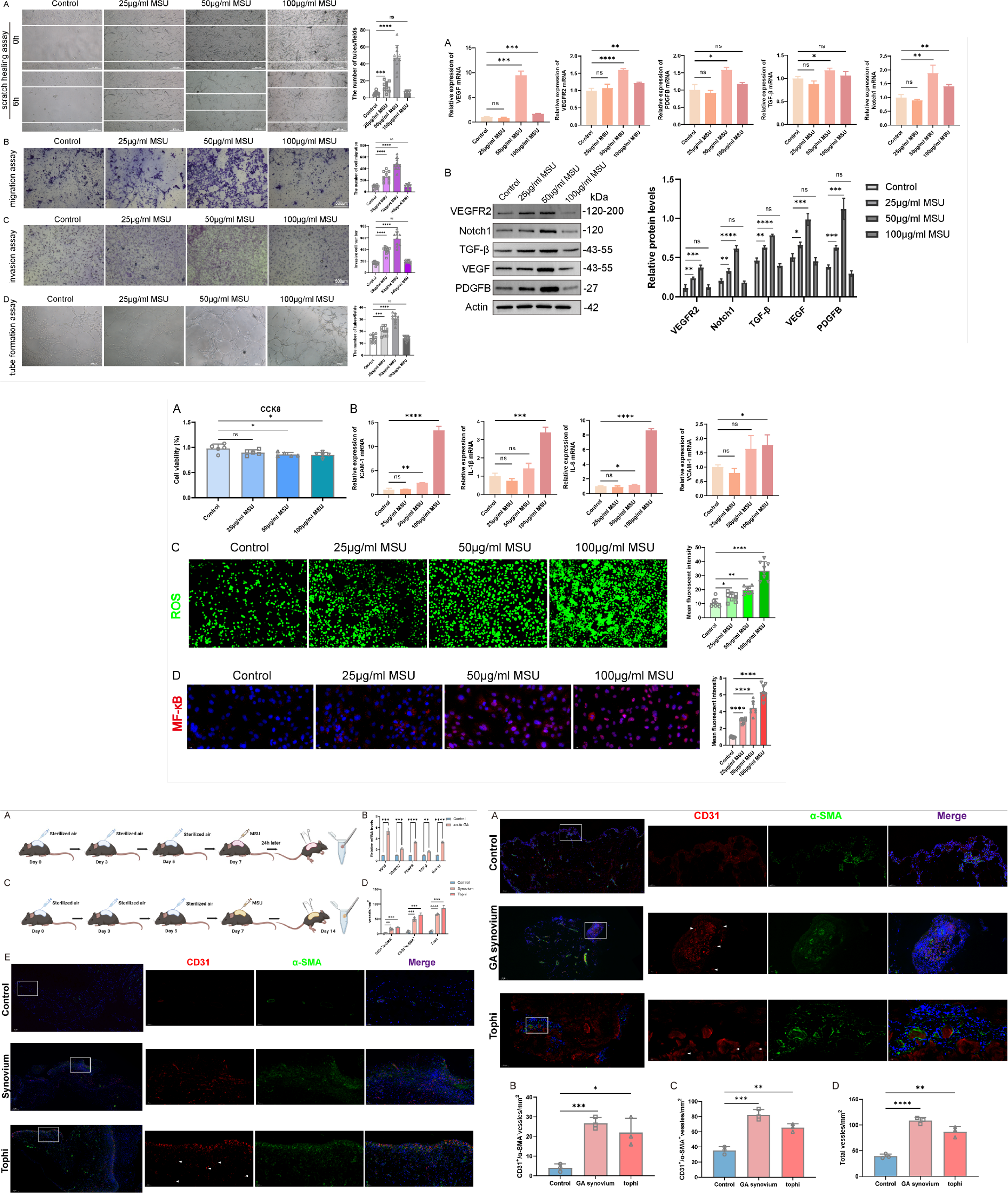
Methods: We induced acute gout inflammation in endothelial cells and studied the angiogenetic effect of different MSU concentrations on migration, invasion, tube formation, and expression of proangiogenic mediators in endothelial cells. Endothelial cell impairment induced by high MSU concentrations was also assessed by cell viability, expression of pro-inflammatory cytokines, and production of reactive oxygen species. Finally, to explore angiogenesis in vivo , acute and chronic gout air-pouch mouse models were established, and tissue samples from GA patients were acquired.
Results: Moderate MSU concentrations (25–50 μg/mL) promoted angiogenic phenotypes and the production of proangiogenic mediators in endothelial cells, while high MSU concentrations (100 μg/mL) induced endothelial cell impairment. Furthermore, we confirmed the effect of MSU on angiogenesis with in vivo acute and chronic gout models and observed angiogenesis in the synovium and fibrovascular zone of tophi in GA patients.
Conclusions: Our study identified and proved the angiogenic effect of MSU in acute and advanced gout in vivo and in vitro . Our results suggest that early intervention on MSU-induced angiogenesis can be undertaken in the early phase of gout to slow the irreversible joint damage of advanced gout.
REFERENCES: NIL.
Acknowledgments: NIL.
Disclosure of Interests: None declared.