fetching data ... 
Background: Arthritis is highly prevalent among the elderly population, and related factors, such as pain, stiffness, or reduced function, can potentially affect driving ability; however, the exact relationship between these factors, disease severity, and motor vehicle collision (MVC) risk remains uncertain. As a result, clinicians’ ability to assess and make safe and appropriate evidence-based recommendations among older drivers with arthritis is hindered, thus negatively impacting clinical care [1] .
Objectives: The study aimed to determine, in a large cohort of older drivers, whether individuals with moderate-to-severe osteoarthritis (OA) or rheumatoid arthritis (RA) are at greater risk of MVC and, if so, to identify which factors are most closely associated with that risk.
Methods: We used baseline demographic data from the prospective Candrive cohort study, a Canadian database that collected data on drivers aged 70 years and older over a 7-year period. Participants who self-reported no arthritis or mild osteoarthritis or rheumatoid arthritis were included in the “Control” group; those with self-reported moderate or severe osteoarthritis or rheumatoid arthritis constituted the combined “Arthritis” group. Analyses of factors contributing to MVC included demographics (age, biological sex, height, weight); cognition (Montreal Cognitive Assessment [MoCA] score); pain (Western Ontario and McMaster Universities Index [WOMAC] subscores); stiffness (WOMAC subscore); function (WOMAC subscore; Timed Up and Go test time); normal versus abnormal joint range of motion (ROM) and muscle strength. The number of self-reported MVCs within the first year of the Candrive study was defined as the primary outcome. Multivariable analysis corrected for age, sex, height, weight, and MoCA score.
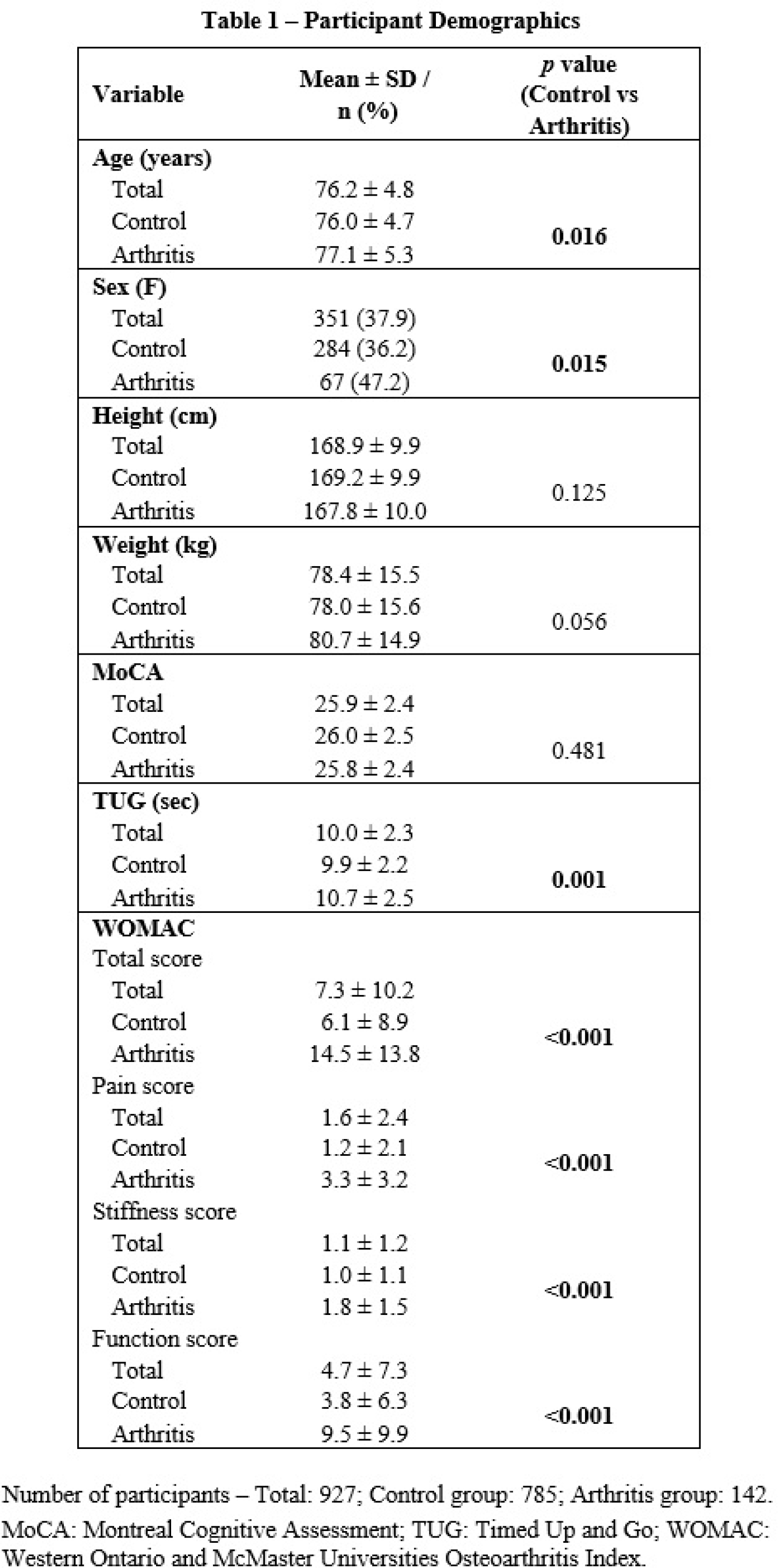
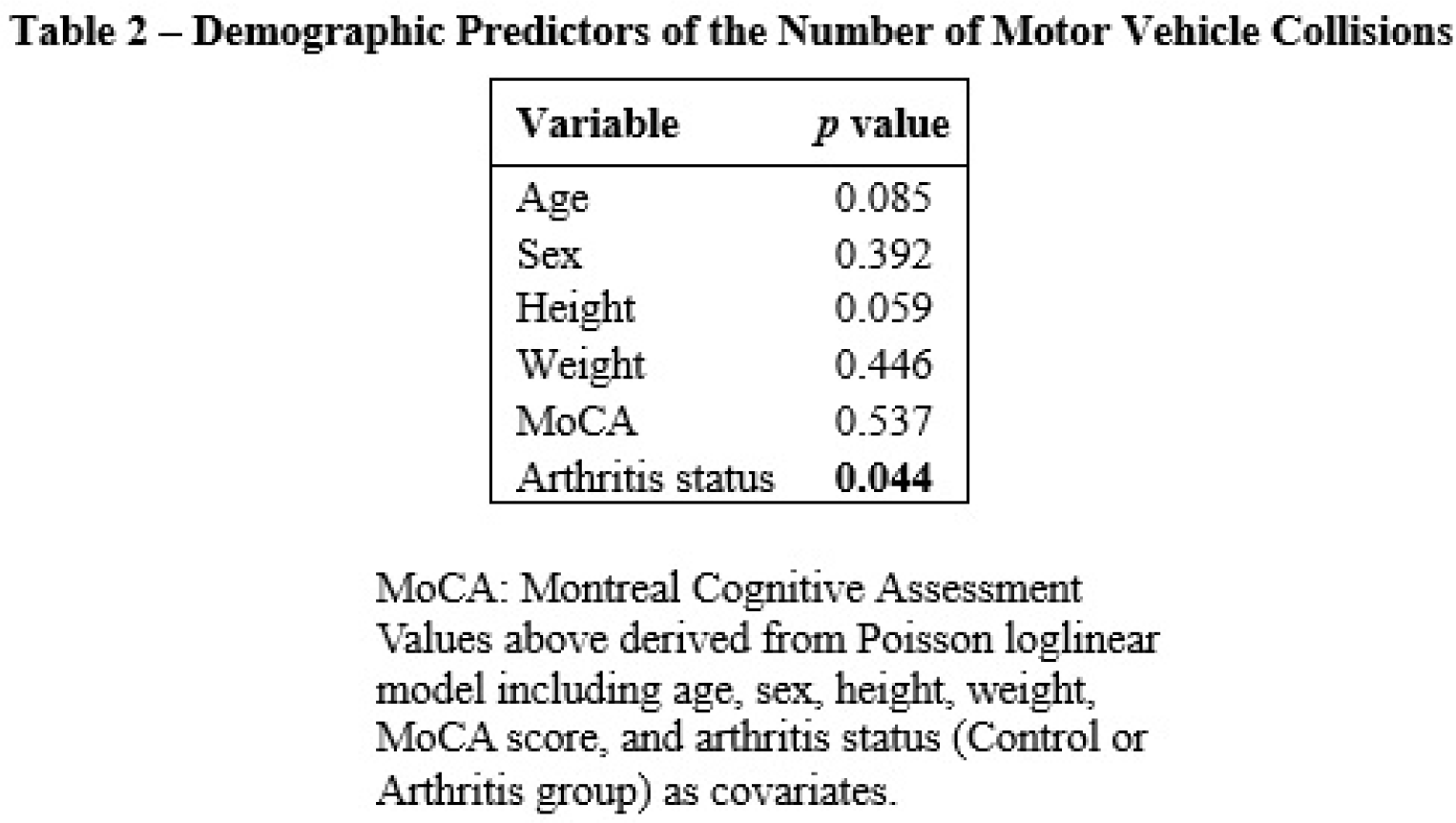
Results: The Control and Arthritis groups included 785 and 142 participants, respectively (Table 1). A higher proportion of participants in the Arthritis group experienced a MVC ( p = 0.047), corresponding to an odds ratio of 1.68 (95% confidence interval: 1.02-2.74). Moderate-to-severe arthritis status was also revealed to be the only variable significantly associated with the number of MVCs in a multivariate analysis ( p =0.044; Table 2). Abnormal joint ROM was significantly more frequent in the Arthritis group than in the Control group for specific movements (finger curl, ankle plantarflexion). Similarly, the Arthritis group displayed proportionally higher rates of abnormal muscle strength for shoulder adduction and abduction, hang grip, and hip flexion. Within the Arthritis group, no significant correlations were found between the occurrence of a MVC and various arthritis-related factors.
Conclusions: In a large cohort of older drivers ≥ 70 years, moderate-to-severe disease severity was associated with increased risk of MVC in a combined group of people with osteoarthritis and rheumatoid arthritis, independent of age. This exploratory study did not identify specific factors underlying this elevated risk over the one-year timeframe analyzed. Further investigation, including analysis of the longitudinal Candrive data, is warranted to identify these critical arthritis-related factors and thus better inform driving assessment and recommendations among older adults with arthritis.
REFERENCES: [1] Canadian Medical Association. Determining medical fitness to operate motor vehicles: CMA Driver’s Guide 10th Edition. Canadian Medical Association;2023.
[2] Marshall SC, Man-Son-Hing M, Bédard M, Charlton J, Gagnon S, Gélinas I, et al. Protocol for Candrive II/Ozcandrive, a multicentre prospective older driver cohort study. Accid Anal Prev 2013;61:245-52.
Acknowledgments: NIL.
Disclosure of Interests: None declared.