fetching data ... 
Background: Non-pharmacological interventions are increasingly recognised as central to comprehensive care for people living with systemic lupus erythematosus (SLE). However, evidence remains limited regarding their impact beyond physical outcomes, particularly in emotional experience, identity construction and patient agency. This study is grounded in Patient-Reported Outcomes (PROs) and PROMIS frameworks, focusing on pain, fatigue, mobility, energy and emotional wellbeing. It is theoretically informed by Sara Ahmed’s concept of affective economies and Laura Ahearn’s notion of situated agency, which conceptualises agency as socially mediated action embedded in historical, cultural and discursive contexts. From this perspective, language is understood as a form of action and agency emerges both individually and collectively through shared practices.
Objectives: To analyse how participation in adapted aquatic exercise is associated with emotional experience, identity positioning and situated patient agency in people living with SLE and other autoimmune conditions using patient-reported outcomes.
Methods: We conducted a mixed-methods multicentric study (2022–2025) across 10 cities in Mexico. The quantitative component included structured surveys from 265 participants, of whom 207 had a confirmed diagnosis of SLE. Surveys explored perceived changes in pain, fatigue, mobility, energy and emotional wellbeing. Data were analysed descriptively and stratified by years since diagnosis (1–3, 4–7, 8–10, 11+), following PRO methodology.
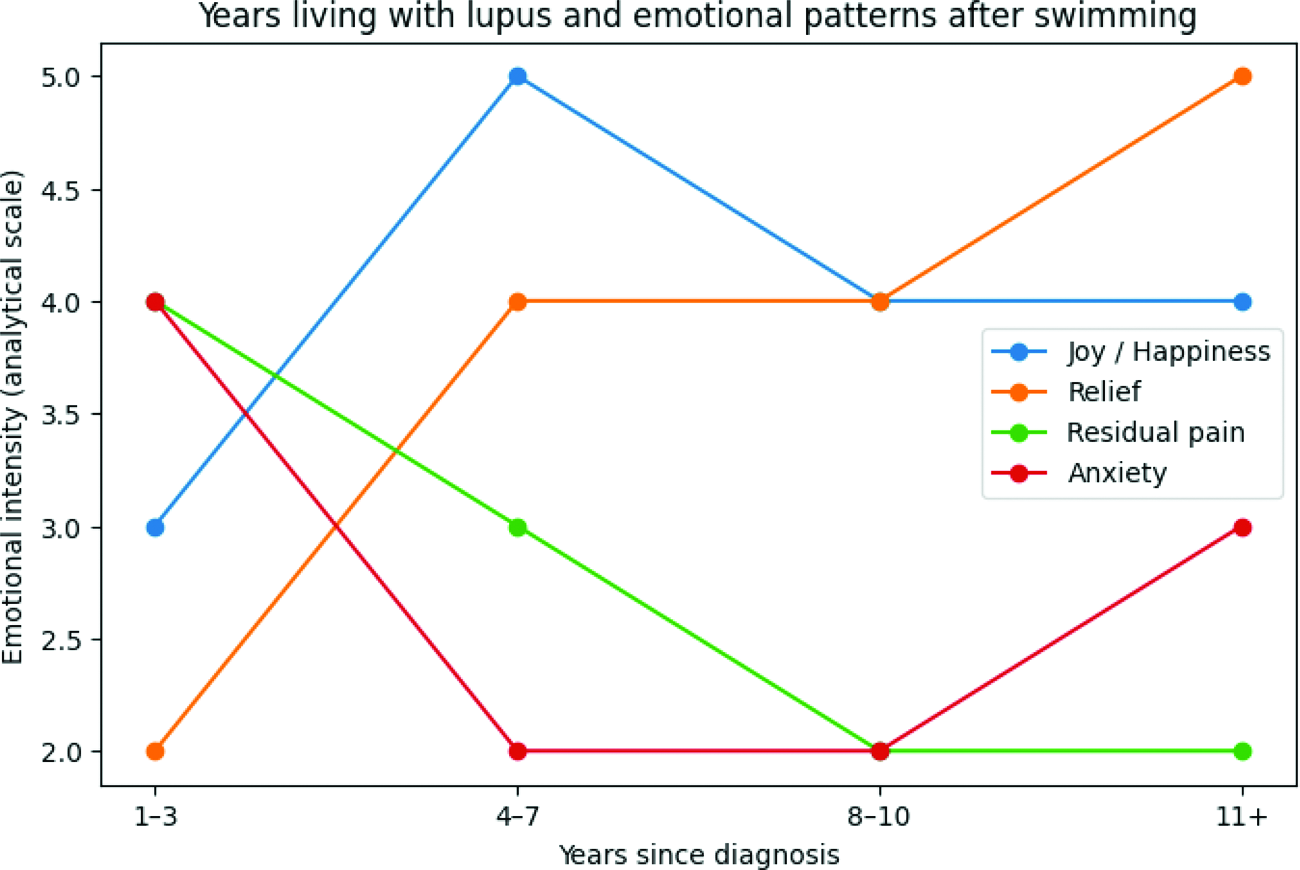
Results: Among participants with SLE (n=207), 71.5% were women and 28.5% men, with a mean time since diagnosis of 9.37 years. The most frequently reported perceived benefits after swimming were improved mobility/flexibility (32.65%), reduced pain (20.41%), increased energy (10.20%), better breathing/resistance (8.16%) and reduced inflammation (4.08%). Emotional outcomes were predominantly positive: joy/happiness (89.5%), reduced stress or anxiety (24.49%), hope or gratitude (5.3%) and peace or tranquillity (2.6%). Fear or anxiety prior to swimming was low (2.6%), suggesting a regulatory emotional effect of aquatic participation. Among participants with previous experience in the programme (22.31%), perceived improvements in mobility (50%) and pain reduction (22.22%) were higher, with joy predominating (71.43%). Emotional patterns varied according to time since diagnosis, showing greater positivity in the 4–7-year group and more affective heterogeneity in those living with SLE for over 11 years. Agency was expressed through motivations to participate, particularly supporting advocacy and disease visibility (5%), illustrating the collective dimension of agency (See Table 1. Perceived benefits, emotional outcomes and agency among people with SLE participating in aquatic activities). Additionally, as observed in Figure 1 ( Years living with lupus and emotional patterns after swimming ), emotional patterns after swimming vary according to years since diagnosis. Participants in the early stage (1–3 years) reported higher levels of residual pain and anxiety, along with lower perceptions of relief, suggesting an initial period of bodily and emotional adjustment. In contrast, individuals in the 4–7 year group showed the highest levels of joy and a marked reduction in anxiety, indicating a phase of greater bodily confidence and emotional regulation. Participants with 8–10 years since diagnosis displayed more stable emotional patterns, characterised by sustained relief and low pain intensity. Among those living with lupus for more than 11 years, relief reached its highest levels, while emotional responses became more heterogeneous, reflecting long-term processes of adaptation and resignification. Overall, the figure highlights a progressive transformation of emotional experience over time, where swimming functions as a regulatory practice that supports both physical relief and emotional wellbeing.
Conclusions: Adapted aquatic exercise is associated with positive patient-reported physical and emotional outcomes in people living with systemic lupus erythematosus as well as other autoimmune and rheumatic diseases. Swimming functions as a biopsychosocial space where emotions such as joy, relief and motivation circulate, shaping identity and collective belonging. From a situated agency perspective, agency emerges not only in individual decisions to participate but also through collective action and shared practices. These findings highlight the importance of integrating PROs and emotional dimensions into rheumatology care, supporting a more participatory and human-centred model.
Table 1. Perceived benefits, emotional outcomes and agency among people with SLE participating in aquatic activities
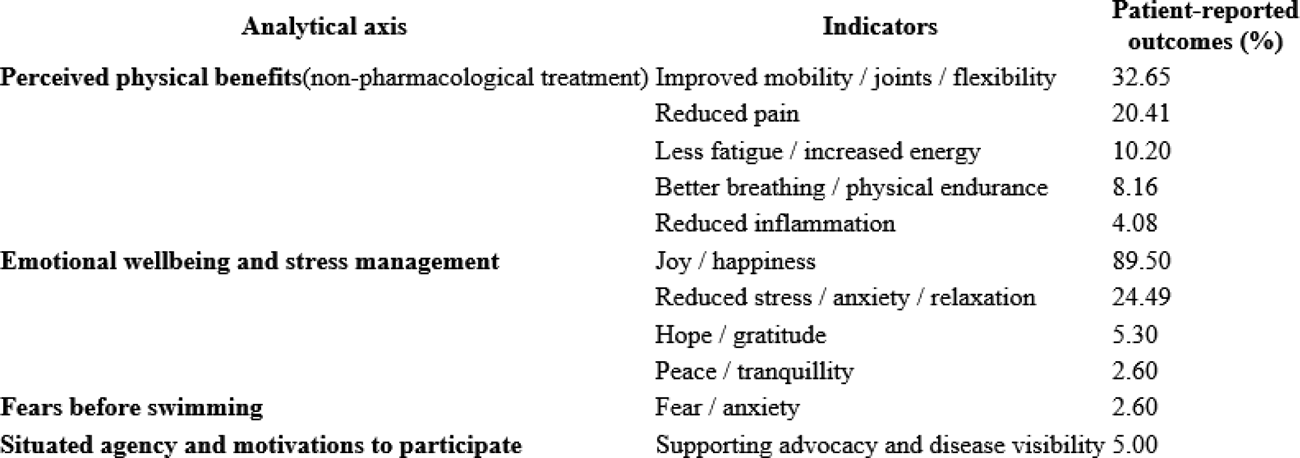
Source: Author’s own elaboration based on the CETLU multicentric study (2022–2025).
Years living with lupus and emotional patterns after swim
Source: Author’s own elaboration based on qualitative patterns derived from the CETLU multicentric study (2022–2025).
Note: This figure illustrates the relationship between years since diagnosis and emotional patterns reported after swimming. It shows how joy, relief, residual pain and anxiety vary across diagnostic stages (1–3, 4–7, 8–10 and 11+ years), highlighting a progressive transformation of emotional experience over time, with decreased pain and anxiety and increased relief and positive affect as years since diagnosis increase.
REFERENCES: NIL.
Acknowledgments: NIL.
Disclosure of Interests: None declared.