fetching data ... 
Background: Lupus nephritis (LN) is a severe complication of systemic lupus erythematosus (SLE) that lacks reliable non-invasive biomarkers for early detection and disease monitoring. Current diagnosis relies on invasive kidney biopsies, while serological markers cannot directly assess real-time kidney injury. Cell-free DNA (cfDNA), which carries tissue-specific methylation and fragmentation signatures, represents a promising non-invasive approach to assessing kidney involvement in LN.
Objectives: To investigate plasma cfDNA methylation and fragmentation signatures as potential LN biomarkers.
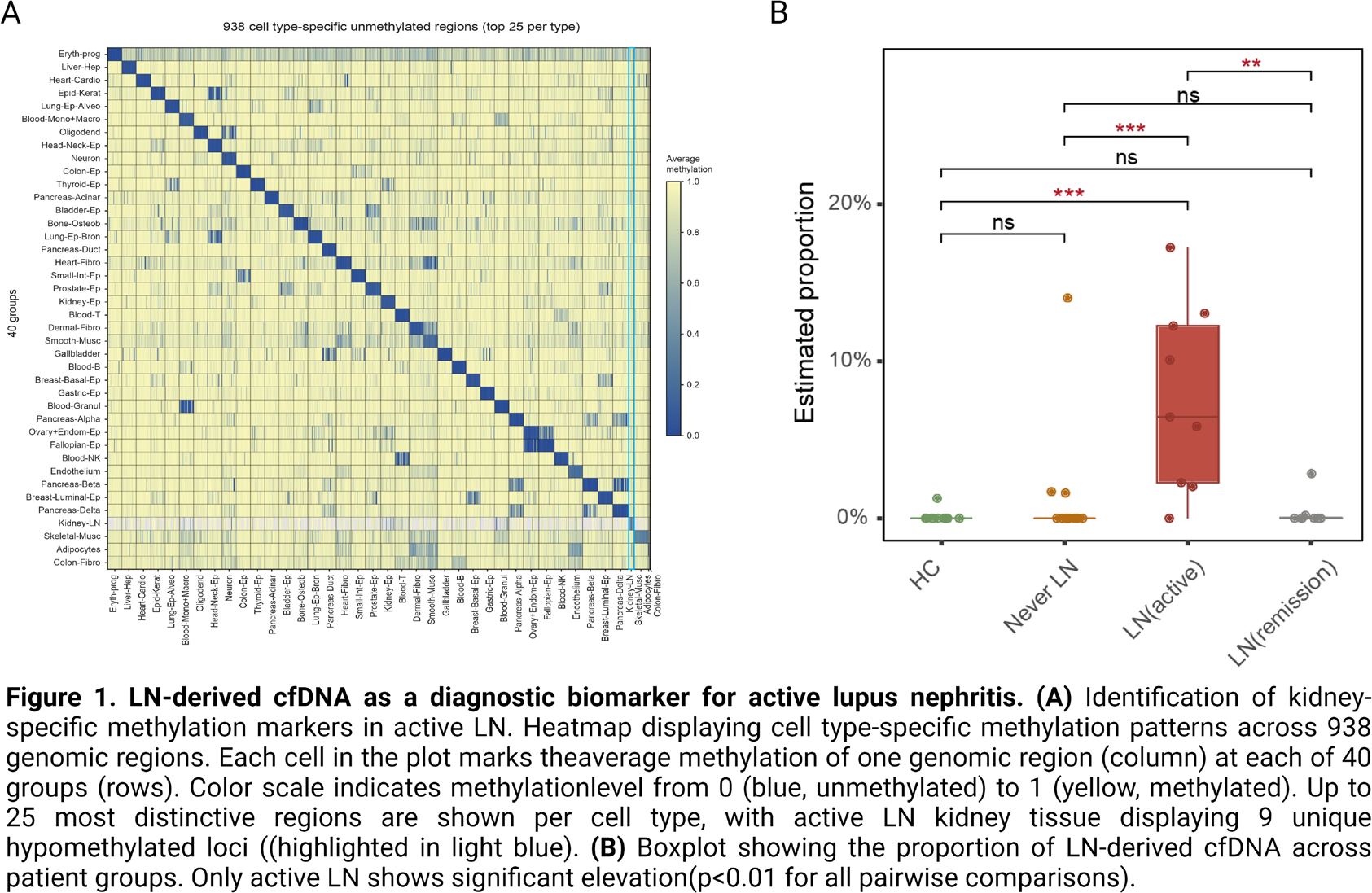
Methods: We performed whole-genome bisulfite sequencing (WGBS) on three kidney biopsy tissues from active LN patients and integrated these data with a public DNA methylation atlas of 205 WGBS samples from 39 purified human cell types. This generated an expanded reference atlas that captures kidney-specific methylation signatures in active LN. Using this reference, we performed whole-genome methylation sequencing of cfDNA from 53 plasma samples from 37 SLE patients (including six patients with paired longitudinal samples) and 10 healthy controls to estimate the fraction of LN-derived cfDNA. cfDNA fragment size distributions were also analyzed across all plasma samples.
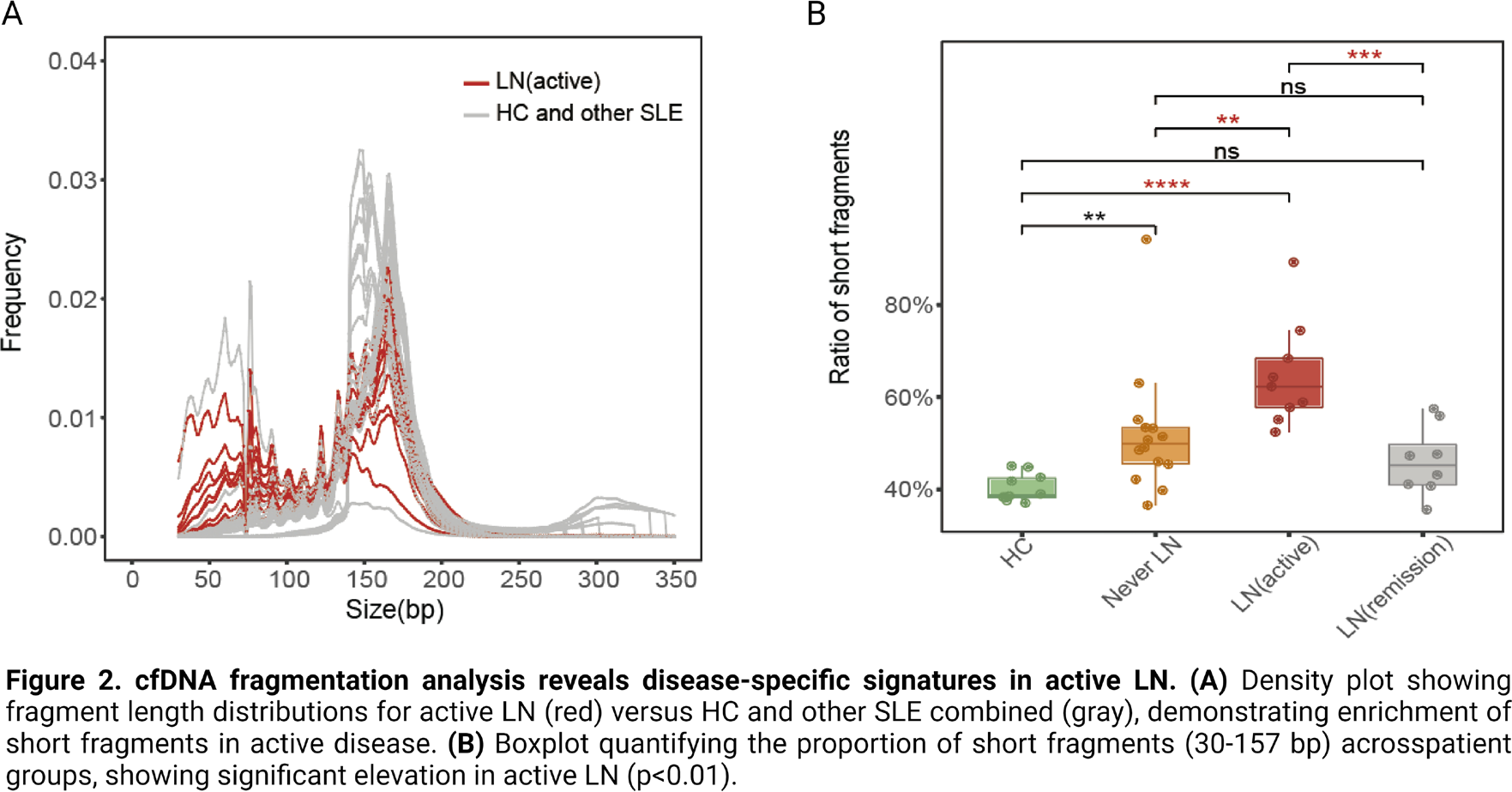
Results: We identified nine hypomethylated regions specific to active LN and constructed a comprehensive reference atlas encompassing 8,911 marker regions across the 39 cell types and active LN. LN-derived cfDNA was significantly elevated only in the active LN group compared to all other groups (all p < 0.01 for pairwise comparisons) and showed strong correlations with disease activity (rSLEDAI: Spearman’s rho = 0.74; anti-dsDNA: Spearman’s rho = 0.70; SLEDAI: Spearman’s rho = 0.61, all p < 0.001). LN-derived cfDNA demonstrated superior diagnostic performance over conventional biomarkers, with AUCs of 0.93 (active LN vs. other SLE) and 0.94 (active LN vs. LN in remission). Short cfDNA fragments (30-157 bp) were also significantly elevated in active LN (all p < 0.01 for pairwise comparisons), yielding comparable diagnostic accuracy (AUC = 0.89-0.94). Longitudinal analyses showed that both methylation- and fragmentation-based cfDNA markers decreased from active to remission phases and remained stable during sustained remission
Conclusions: Plasma cfDNA methylation and fragmentation profiles provide a direct, real-time, and non-invasive window into active LN, with strong potential to reduce reliance on invasive biopsies and enable precise monitoring of lupus disease activity.
REFERENCES: [1] Loyfer N, Magenheim J, Peretz A, et al. A DNA methylation atlas of normal human cell types. Nature . 2023;613:355–64. doi: 10.1038/s41586-022-05580-6.
[2] Chan RWY, Jiang P, Peng X, et al. Plasma DNA aberrations in systemic lupus erythematosus revealed by genomic and methylomic sequencing. Proc Natl Acad Sci U S A . 2014;111:E5302–11. doi: 10.1073/pnas.1421126111.
Acknowledgments: NIL.
Disclosure of Interests: None declared.