fetching data ... 
Background: Systemic lupus erythematosus (SLE) is a complex autoimmune disease driven by multifactorial genetic risk. Although large-scale genetic studies have identified more than 100 risk variants, each explains only a small fraction of disease heritability, and the global immunopathology arising from their cumulative effects remains unclear. Polygenic risk scores (PRS), which aggregate the effects of multiple risk alleles, provide a quantitative measure of an individual’s genetic susceptibility and can serve as a tool to explore the biological consequences of polygenic risk.
Objectives: This study aimed to assess how SLE-PRS influences immune system phenotypes in healthy individuals.
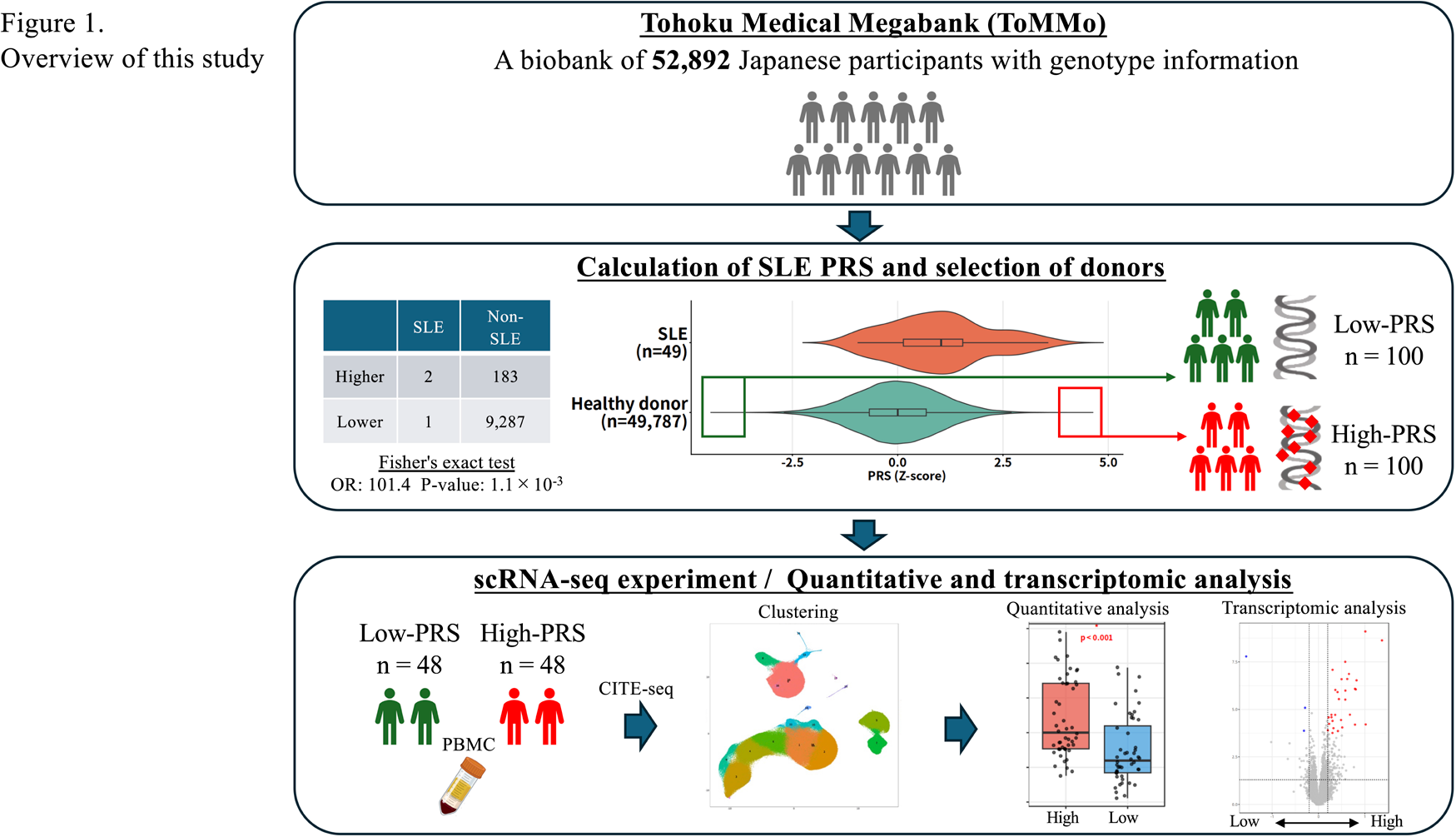
Methods: Genotype data from 52,892 participants in the Tohoku Medical Megabank, a community-based cohort in Japan, were analyzed to calculate SLE-PRS for each individual. From this population, we selected 200 healthy donors at the extremes of the PRS distribution (top and bottom 100). Cryopreserved peripheral blood mononuclear cells (PBMCs) from 96 of these donors were profiled using CITE-seq (Figure 1).
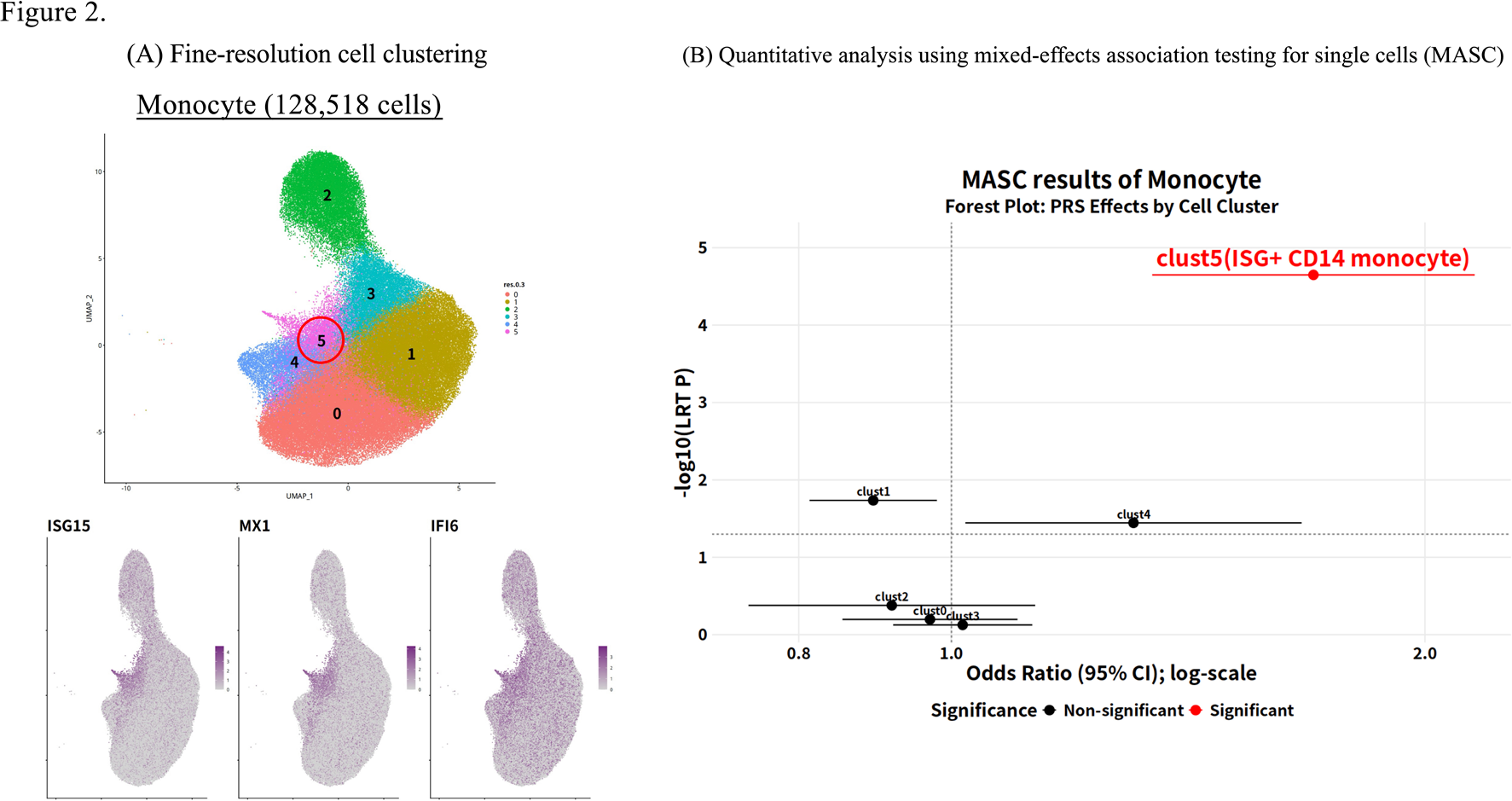
Results: A single-cell analysis of 737,350 PBMCs identified six major immune lineages, which were further subclustered into 60 transcriptionally distinct cell types. Quantitative analysis using mixed-effects association testing for single cells (MASC) revealed that donors with high-PRS exhibited a higher frequency of interferon-signature gene (ISG)-upregulated cell types compared with low-PRS donors across multiple lineages, including CD4 T cells (1.30% vs. 0.74%; OR = 1.49; adjusted P = 2.8 × 10 -2 ), B cells (2.10% vs. 1.11%; OR = 1.87; adjusted P = 9.2 × 10 -3 ), monocytes (6.03% vs. 3.70%; OR = 1.70; adjusted P = 1.3 × 10 -4 ), and dendritic cells (6.45% vs. 3.19%; OR = 2.59; adjusted P = 1.3 × 10 −2 ) (Figure 2). Transcriptomic analysis further demonstrated upregulation of type I interferon-related pathways, including interferon-α response and STAT1 signaling, across multiple immune cell types in the high-PRS group.
Conclusions: By comparing individuals with extreme polygenic risk, this study delineates the impact of SLE-PRS on immune cell phenotypes. Our findings highlight that an elevated polygenic burden for SLE promotes heightened type I interferon signaling in otherwise healthy individuals, providing insights into the global genetic pathology of SLE and suggesting potential opportunities for early intervention in genetically high-risk populations.
REFERENCES: NIL.
Acknowledgments: NIL.
Disclosure of Interests: Hajime Inokuchi: None declared, Masahiro Nakano: None declared, Kenichiro Asahara: None declared, Takahiro Arakawa: None declared, Tsugumi Kawashima: None declared, Nishino Takahiro: None declared, Haruka Takahashi: None declared, Hiroaki Hatano: None declared, Michihiro Kono: None declared, Bunki Natsumoto: None declared, Yuko Kaneko She reports having received payments from Pfizer, AbbVie, Eisai, Bristol Myers Squibb, Astellas Pharma, Asahi Kasei Pharma, Chugai Pharmaceutical, Novartis, Boehringer Ingelheim, Taisho Pharmaceutical, Mitsubishi Tanabe Pharma, GlaxoSmithKline, Eli Lilly, and Gilead Sciences., Kazuyoshi Ishigaki: None declared.