fetching data ... 
Background: Sex-specific differences in systemic lupus erythematosus (SLE) have been frequently studied in terms of organ manifestation and consequential damage, whereas few data exist in terms of patient-reported outcomes (PROs) [1].
Objectives: To compare PROs in women and men with SLE between 2011 and 2023 using data from the German National Database (NDB) of the Collaborative Arthritis Centres.
Methods: Data from patients in routine outpatient care were annually collected at 13 rheumatology facilities. PROs included disease activity (PatDA), global health, fatigue, sleeping disorders, pain, coping, emotional and physical well-being (all numeric rating scales, 0-10), WHO-5, sociodemographics, health behaviour, and work participation. Physicians reported disease activity (PhDA 0-10), comorbidity and treatments. Outcomes in 2023 and developments since 2011 were compared by proportions, categories of severity (NRS ≥ 4 moderate to severe) and box/violin plots. To compare proportions, odds ratios (OR) were calculated (% of men/% of women with the corresponding item being present).
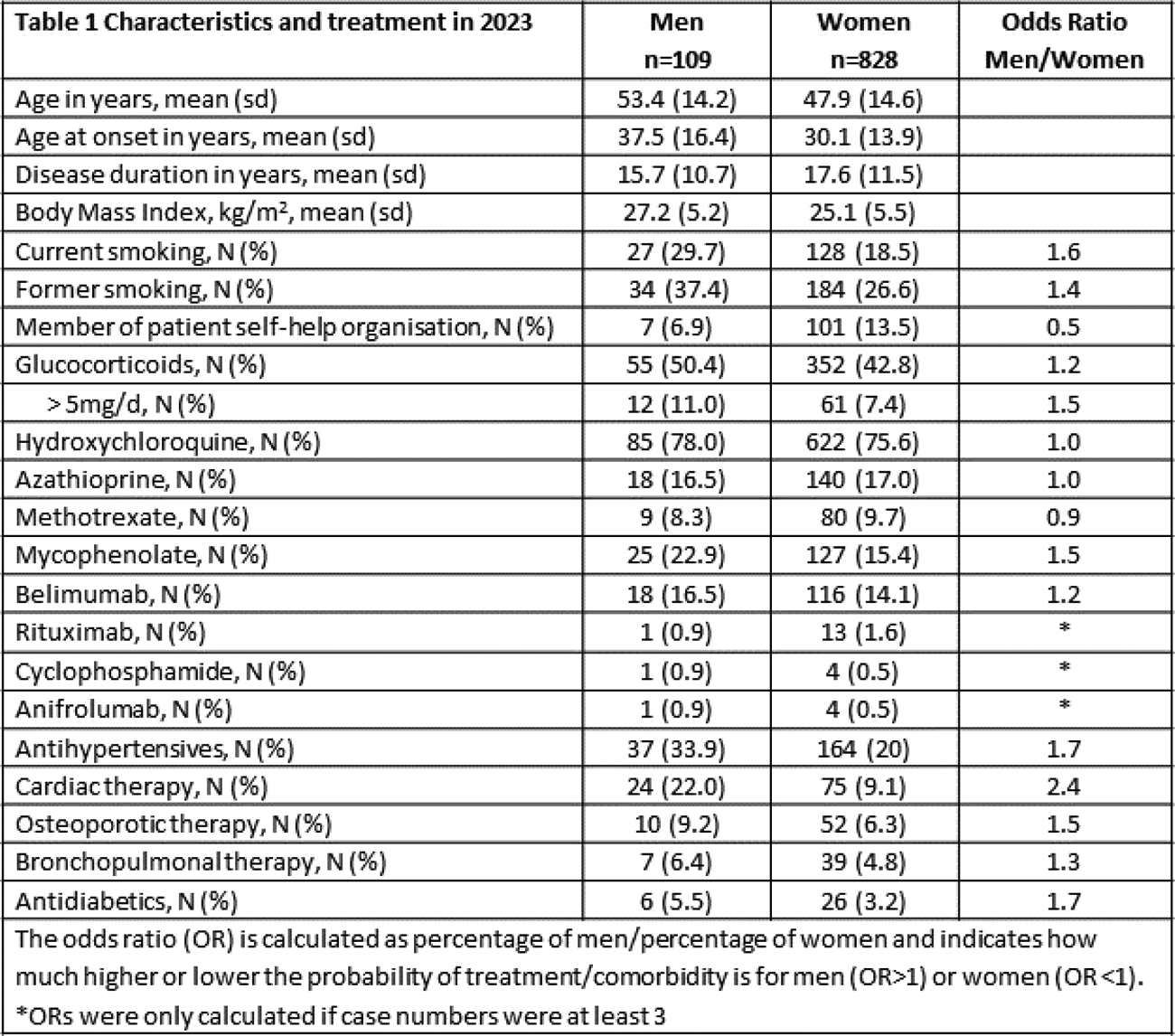
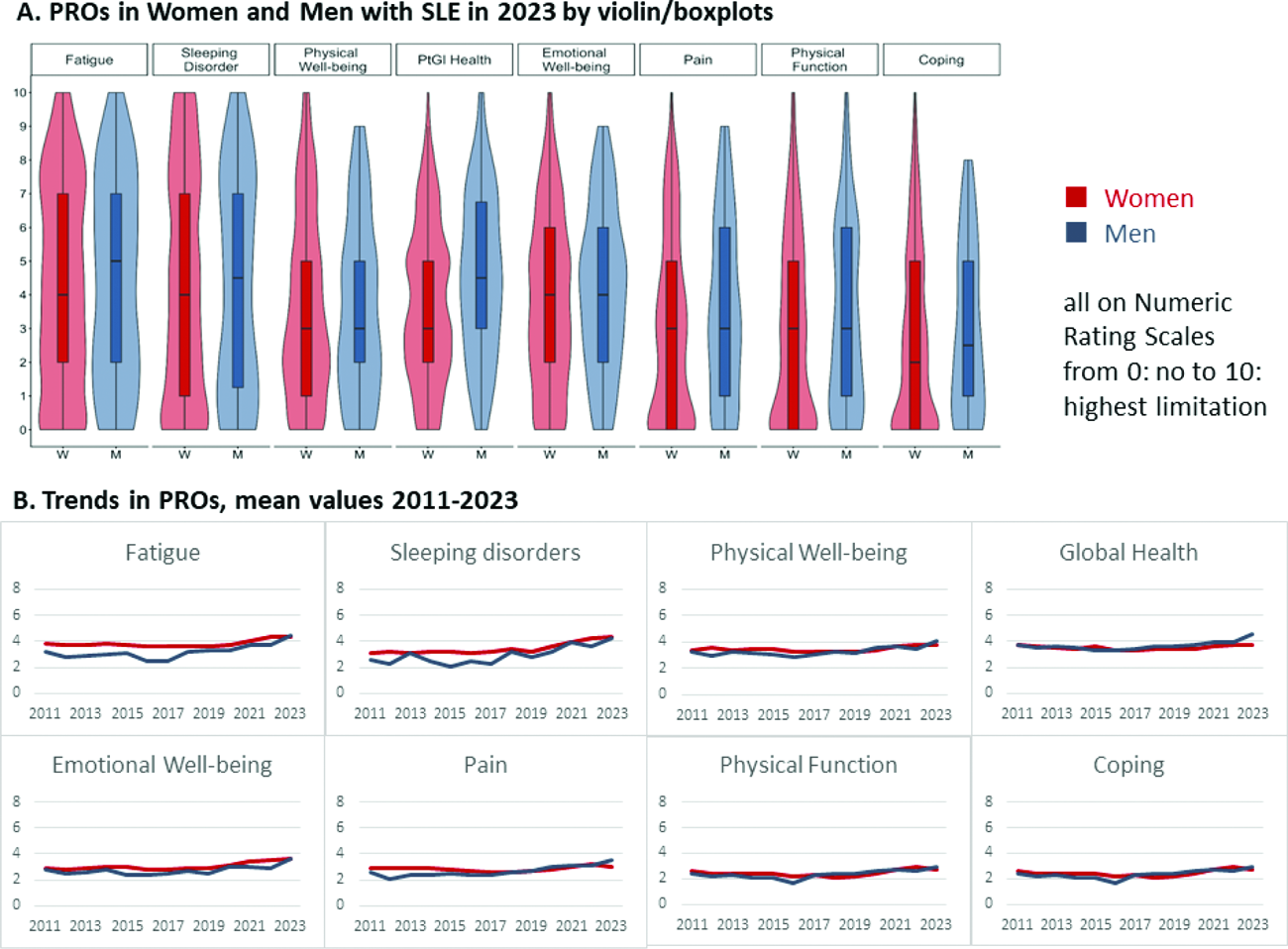
Results: In 2023, 109 men and 828 women with SLE were documented (table 1). Women and men assessed the various dimensions of disease burden in comparable ways (figure 1), with men most frequently rating global health (65% vs. 49%) and physical well-being (58% vs. 52%) as moderate to poor (≥4), and women most often rating fatigue (57% vs 56%) and sleeping disorders (both 54%) ≥4. Across the years, PROs deteriorated, particularly in men, with an increase in severity in terms of global health, fatigue, pain, and sleeping disorders since 2017. Women and men gave similar estimates of their disease activity, with the median being two points worse than the PhDA in recent years. Men more often had glucocorticoids, mycophenolate, and comorbidity medication than women. Men were more likely current smokers, less likely to engage in sports regularly for at least 1-2 hours per week (37% vs. 47%, OR 0.8), and were less likely members of a patient organisation (table 1). Employment rose equally to 65% in men and 64% in women, with men working in part-time less frequently (11% vs 47%, OR 0.2) than women. After 10 years disease duration, 21% of men and 18% of women had a disability pension.
Conclusions: Men and women with SLE report a wide range of disease burden despite improvements in physician-reported disease activity. Sex-related differences can be observed in health behaviour such as smoking and physical activities. In addition to disease activity and damage, physical and mental impairments and participation need to be monitored in both sexes.
REFERENCES: [1] Albrecht K, Troll W, Callhoff J, Strangfeld A, Ohrndorf S, Mucke J. Sex- and gender-related differences in systemic lupus erythematosus: a scoping review. Rheumatol Int. 2025 Jun 27;45(7):160. doi: 10.1007/s00296-025-05910-7.
Acknowledgments: NIL.
Disclosure of Interests: Katinka Albrecht: None declared, Katja Thiele: None declared, Tobias Alexander Abbvie, AstraZeneca, GSK, Martin Aringer AbbVie, AstraZeneca, GSK, Novartis, Roche, Gamal Chehab GSK, GSK, GSK, AstraZeneca, Johanna Mucke AstraZeneca, BMS, GSK, Roche, Novartis, AstraZeneca, GSK, Roche, Miltenyi, GSK, Jutta Richter: None declared, Susanna Spaethling-Mestekemper: None declared, Johanna Callhoff Janssen, Pfizer, Idorsia.