fetching data ... 
Background: Sjögren’s disease (SjD) is a systemic autoimmune disease associated with substantial symptom burden and impaired quality of life. While dryness is a hallmark feature, patients frequently report fatigue and multisystem involvement that may not be adequately addressed by existing educational and support resources.
Objectives: The objective of this survey was to identify and prioritize the unmet informational and support needs of individuals living with Sjögren’s Disease (SjD) from a patient perspective to inform the development of patient-centered resources.
Methods: An international, cross-sectional online survey was co-developed with patient partners and disseminated through patient networks. Adults with self-reported SjD completed multiple-choice questions assessing priority informational topics and preferred support formats, with optional open-text responses capturing lived experiences. Quantitative data were analyzed descriptively. Qualitative responses were analyzed using thematic analysis.
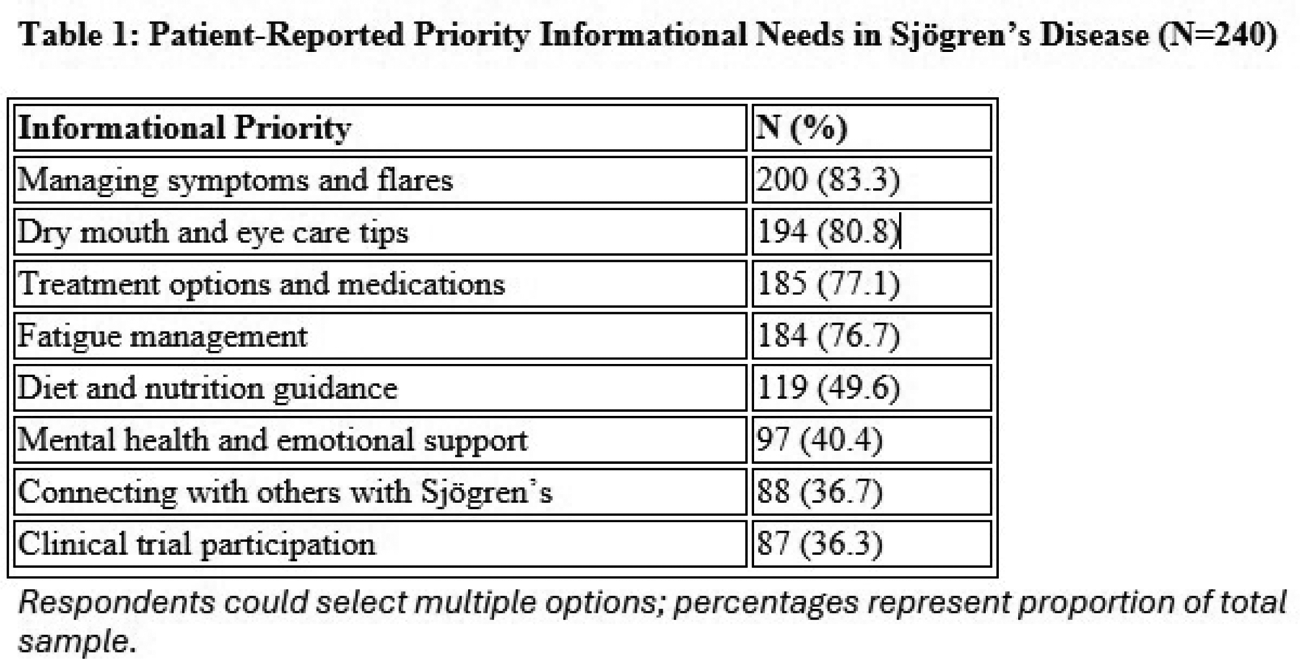
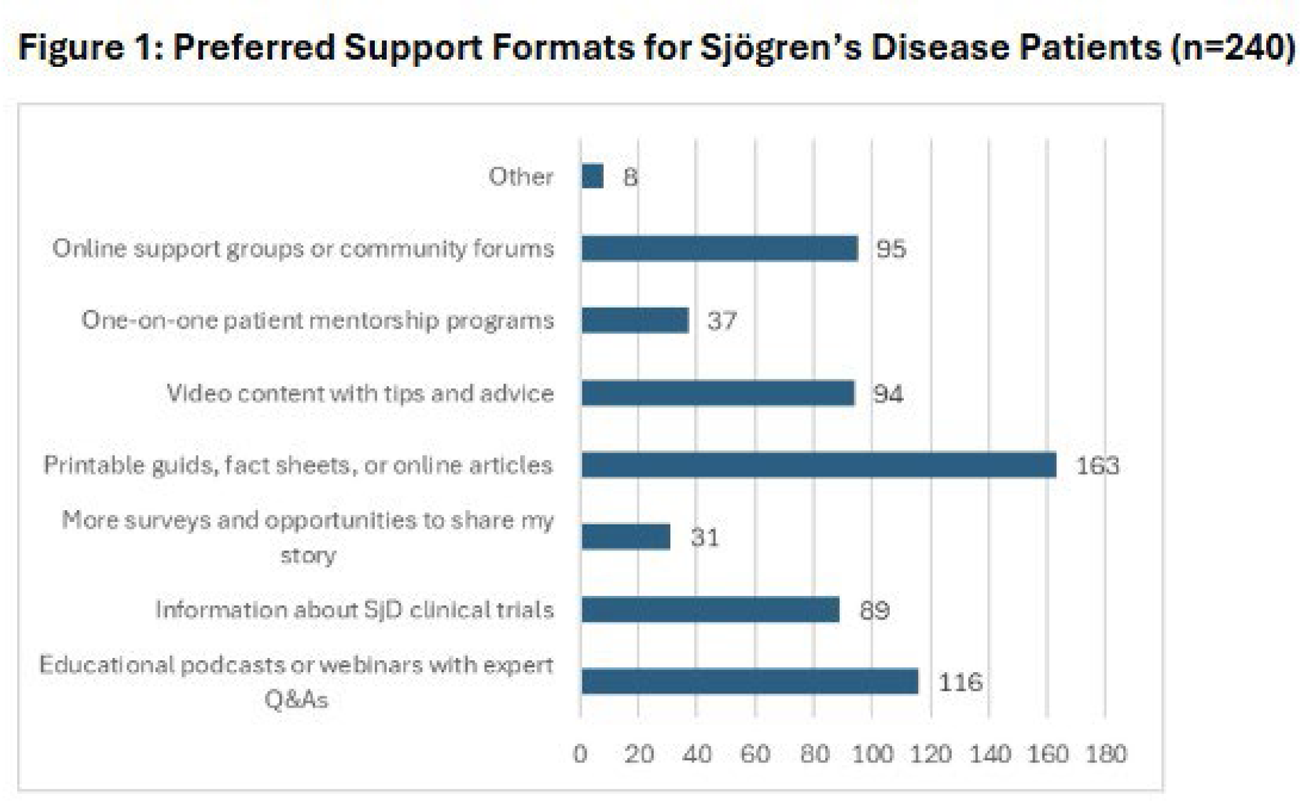
Results: Of 240 survey respondents, 83.3% identified management of symptoms and disease flares as their top informational priority. Other highly ranked needs included strategies for managing dry mouth and dry eye (80.8%), treatment options and medications (77.1%), and fatigue management (76.7%). Diet and nutrition guidance was prioritized by nearly half (49.6%) of respondents, while mental health support (40.4%), peer connection opportunities (36.7%), and clinical trial participation (36.3%) received lower priority. Table 1 displays priority informational needs. When considering formats for support, printable guides, fact sheets, or online articles were most preferred, endorsed by 67.9% of participants. This was followed by educational podcasts or webinars with expert Q&As (48.3%), online support groups or community forums (39.6%), and video content with tips and advice (39.2%). Figure 1 displays preferred support formats. Manual thematic analysis of 64 open-text responses illuminated three central unmet needs. First, many participants reported inadequate recognition of systemic disease manifestations (musculoskeletal, neurological, gastrointestinal symptoms and fatigue) in both clinical care and educational resources. A significant gap in guidance for disease management during hormonal transitions, particularly menopause, was identified with multiple respondents reporting symptom exacerbations linked to hormonal fluctuations. Third, respondents described challenges stemming from limited therapeutic options and the complexity of communicating multisystem symptoms, highlighting a need for better support in navigating treatment decisions and clinical encounters.
Conclusions: This patient-perspective survey highlights gaps between patient-reported needs in SjD and the current focus of available educational and support resources. Addressing systemic symptoms, fatigue, and life-stage–specific challenges may improve the relevance and impact of future patient-centered initiatives.
REFERENCES: NIL.
Acknowledgments: NIL.
Disclosure of Interests: None declared.