fetching data ... 
Background: Hydroxychloroquine (HCQ) and chloroquine (CQ), both known as antimalarial drugs, have become fundamental therapeutic elements in systemic lupus erythematosus (SLE) in these decades. However, their specific benefits on organs or in a large cohort of Chinese SLE patients haven’t been elucidated.
Objectives: This retrospective multicenter study sought to examine the potential protective roles of antimalarials in a large retrospect multicenter study of SLE patients in China.
Methods: Data were collected from 1372 patients’ first and following hospitalizations during 1999 to 2009. Laboratory variables, medications, disease activity, organ involvements, and survival statuses were analysed according to antimalarial usage.
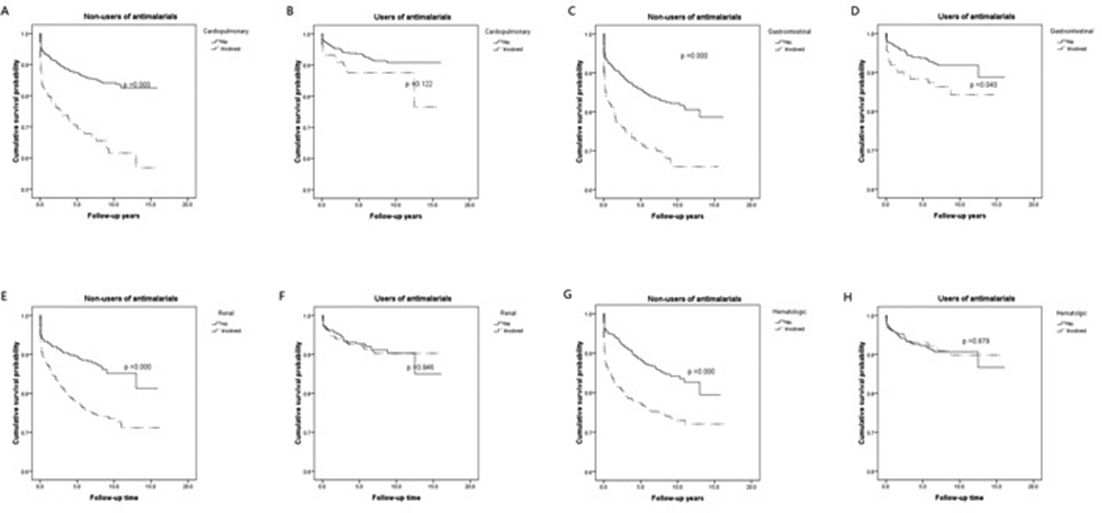
Results: Antimalarials improved the survival of SLE patients as an independent predictor (HR 0.503, p=0.000). Using antimalarials protected patients with longer disease duration (>2 years), SLEDAI (>15) on admission, high SLEDAI (>10) on discharge, organ involvements (cardiopulmonary, gastrointestinal, renal, hematologic), anti-dsDNA positive, and no application of cyclophosphamide. In second hospitalisation, compared to non-users, SLE patients who had been treating with antimalarial drugs had lower levels of total cholesterol (TC) (4.47 (0.13) mmol/L vs 5.03 (0.21) mmol/L, p=0.027) and less chance of anaemia (46.5% vs 58.2%, p=0.033).
Conclusions: Using antimalarials benefits outcomes of SLE patients through multiple facets in Chinese patients.
Disclosure of Interest: None declared
DOI: 10.1136/annrheumdis-2018-eular.3073