fetching data ... 
Background: The Spondyloarthritides (SpA) and inflammatory bowel disease (IBD) share common aetiopathogenetic and clinical manifestations. Vedolizumab, a humanised IgG1 monoclonal antibody to α4β7 integrin, has been approved for the treatment of inflammatory bowel disease (IBD) and inhibits α4β7 integrin at the gut level. Vedolizumab therapy for IBD has been associated with mild SpA related features including sacroiliitis and synovitis. Herein, we report the emergence of severe SpA under therapy with Vedolizumab.
Objectives: We conducted a clinical evaluation of 7 vedolizumab treated patients with IBD that developed severe active SpA and/or enthesopathy with the aim of characterising the vedolizumab associated SpA/entheseal flares.
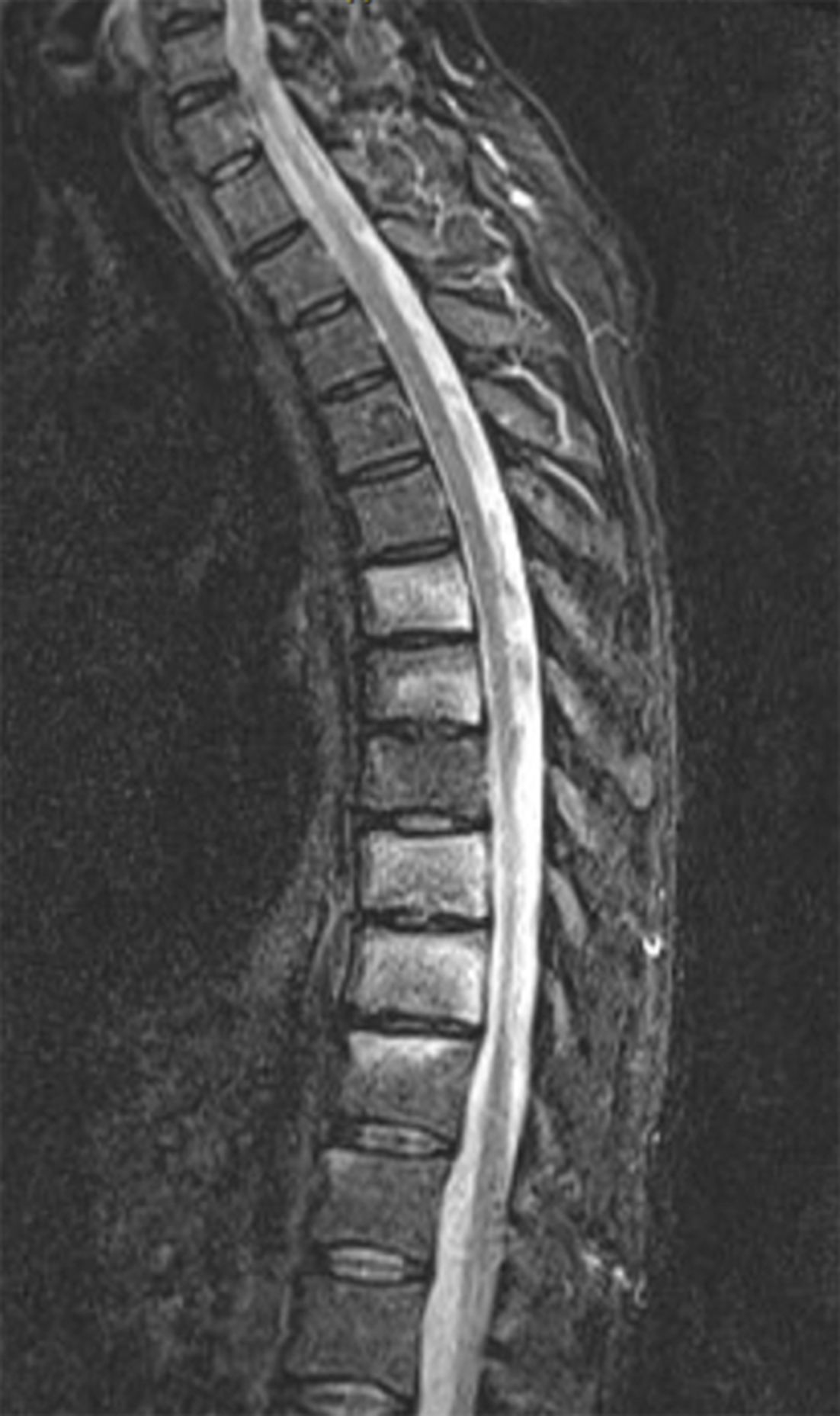
Methods: Vedolizumab treated IBD patients with SpA/enthesopathy were identified across four hospitals. We identified clinical, biochemical and imaging characteristics within routine case records as part of a clinical evaluation.
Results: We identified 6/7 subjects that developed de novo SpA/enthesopathy and 1/7 (subject 1) with a severe flare of pre-existing SpA. There were 3/7 patients hospitalised due to the severity of skeletal disease. The median time from vedolizumab initiation to flare was 10 weeks (table 1 below). Subject 4 developed new-onset SpA with severe spinal vertebral end-plate oedema (T6–12) and inflammatory Romanus lesions (L3–4) (image below). Acute sacroiliitis was identified on MRI in 3 subjects, one of which showed evidence of radiographic bilateral grade 2 sacroiliitis. In at least 4 cases the IBD disease activity was considered to be low or well controlled. Following vedolizumab discontinuation, so far 3 patients have switched to alternative biologic therapies including certolizumab pegol, golimumab, and 1 subject to sulphasalazine.
Subject number |
1 |
2 |
3 |
4 |
5 |
6 |
7 |
|---|---|---|---|---|---|---|---|
Age, M/F |
28, M |
48, M |
33, F |
50, M |
35, F |
40, F |
21, F |
Hospitalised |
Y |
N |
N |
N |
Y |
Y |
N |
Vedolizumab exposure (weeks) |
14 |
20 |
20 |
6 |
8 |
10 |
5 |
SpA type |
per+axSpA (MRI+ve, perifacetal spinal vertebral oedema) |
per+axSpA (acute sacroiliitis MRI+ve) |
axSpA (MRI+ve sacroiliitis) |
nr-axSpA (MRI+ve, extensive thoracolumar vertebral oedema/osteitis and inflammatory corner lesions) |
nr-axSpA |
Enthesitis/periostitis distal tibio-fibular (MRI+ve) |
per+axSpA (MRI+ve and XR+ve sacroliliitis)) |
HLA-B27 |
N |
NA |
NA |
N |
Y |
NA |
N |
Smoker (cpd) |
15 |
NA |
NA |
25 |
N |
NA |
N |
EIMs (Uveitis, PsO) |
N |
N |
PsO |
N |
PsO |
N |
N |
IBD activity |
Low |
NA |
NA |
High |
Low |
Low |
Low/well controlled |
CRP at flare (mg/l) |
216 |
<5 |
<5 |
24 |
24 |
28 |
55 |
Concomitant immunosuppressive therapy |
MTX 15 mg s/c/week |
AZA 150 mg/day |
OC (Pred 0.5 mg/day |
Nil |
Nil |
OC (4 mg Pred) |
Nil |
Conclusions: This case series demonstrates severe vedolizumab associated SpA/enthesopathy that resulted in hospitalised cases. The severity of vedolizumab related SpA flares is relatively severe disease in comparison to the literature. We recognise that vedolizumab is efficacious in IBD, however our observations highlight the need to monitor symptoms to identify patients that develop axial or peripheral SpA several weeks from commencing vedolizumab.
Disclosure of Interest: None declared
DOI: 10.1136/annrheumdis-2018-eular.5649