fetching data ... 
Background: Systemic lupus erythematosus(SLE) patients, especially patients with lupus nephritis have poor vascular endothelial function and increased cardiovascular(CV) mortality.
Meanwhile, several studies showed hydroxychloroquine(HCQ) has effect on reduction in lipids and thrombosis(1), but the mechanism is unclear.
Objectives: We examined effect of HCQ on adipocytokine expression in SLE patients.
Methods: 52 SLE patients with low disease activity started with HCQ were analyzed before and 3 months after HCQ treatment. 21 SLE patients has past history of lupus nephritis. Serum S100 proteins and adipocytokines were measured by ELISA, and serum inflammatory ctytokine levels were evaluated by Multiplex assay (TNF-α, IL-6, VEGF-A).
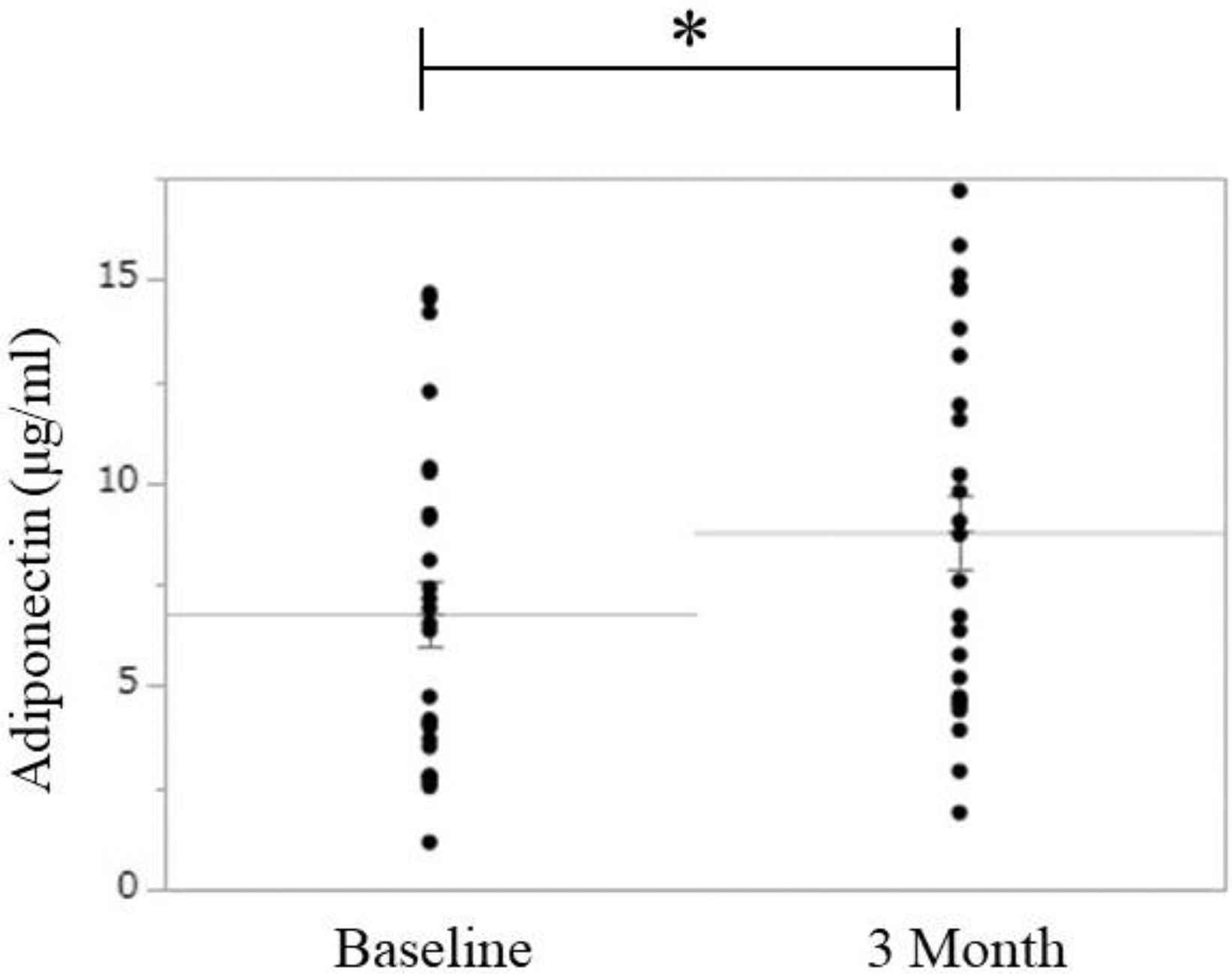
Results: Serum adiponectin level was increased significantly 3 months after HCQ treatment compared with those at baseline (mean change 1.35,
Serum adiponectin levels at baseline were compared with levels after 3 months of HCQ treatment. Serum adiponectin levels significantly decreasing during HCQ treatment in SLE patients. For statistical analyses * p <0.0001, P value: Wilcoxon signed-rank test
Conclusion: A HCQ could reduce the risk factors for atherosclerosis along with control of SLE disease activity.
REFERENCES:
[1]Wallace DJ, et al. Cholesterol-lowering effect of hydroxychloroquine in patients with rheumatic disease: reversal of deleterious effects of steroids on lipids. Am J Med. 1990; 89: 322-6.
Disclosure of Interests: None declared